Broussonetia, Genus, papyrifera, Species,
- Genus & species
paper mulberry
Overview
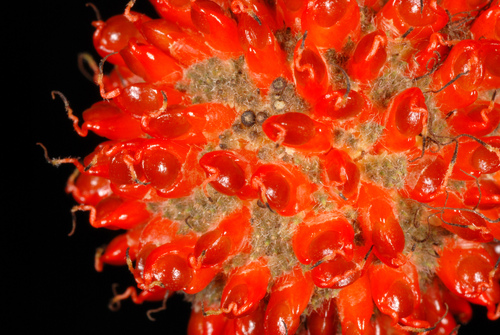
Broussonetia papyrifera is a fast-growing, deciduous tree in the Moraceae reaching 30-50 feet (9-15 m) tall with a broad, spreading crown. The leaves are variable, 4-8 inches (10-20 cm) long, ranging from heart-shaped and unlobed to deeply two- or three-lobed on the same tree, rough like sandpaper above and softly hairy beneath. The species is dioecious: male trees bear drooping catkins 2-3 inches (5-8 cm) long in spring, while female trees carry round flower heads that ripen into globular orange-red fruit about 0.8 inch (2 cm) across in summer. It spreads quickly by root suckers and seed and resprouts after cutting, forming dense thickets that crowd out other plants. It is listed as invasive across much of the southeastern United States and other warm regions. Hardy in USDA zones 7-10, it grows in full sun to partial shade and tolerates poor, compacted, and urban soils. The inner bark has long been used to make paper and barkcloth in East Asia and the Pacific. Native to East Asia, Broussonetia papyrifera is now naturalized widely outside its range.
Native Range
Broussonetia papyrifera is native to East Asia, including China, Japan, Korea, and Taiwan, and was spread early across the Pacific islands for fiber. It has naturalized in North America, Europe, Africa, and South America.Suggested Uses
Grown for fast shade and screening in difficult urban sites and for its fiber, though its suckering, invasive habit limits its use to places where spread can be contained. In many regions native or non-invasive trees are planted instead.How to Identify
Appearance
Size & Dimensions
Height30' - 50'
Width/Spread30' - 45'
Bloom Information
Male catkins and female flower heads appear in spring, typically April to May, on separate trees. Male catkins are drooping and 2-3 inches (5-8 cm) long, while female heads are round. Female trees ripen orange-red fruit through summer.
Detailed Descriptions
Flower Description
green to creamFoliage Description
green, turning yellow in fallGrowing Conditions
Sun Requirements
Requires 6-10 hours of direct sunlight daily
• Full Sun: 6+ hours of direct sunlight
• Partial Shade: 3-6 hours of direct sunlight
• Full Shade: Less than 3 hours of direct sunlight
Care & Maintenance
Care Guide
Broussonetia papyrifera grows in full sun to partial shade and tolerates a wide range of soils, including poor, compacted, dry, and urban ground, across a pH of 5.0-7.5. It grows quickly and needs little care once established. It spreads aggressively by root suckers and seed and resprouts after cutting, so it can move into surrounding ground. Removing suckers and seedlings limits the spread. It tolerates drought, pollution, and heat. It needs no fertilizer.Pruning
Prune in winter while dormant to shape the tree and remove dead wood. Cutting the trunk prompts vigorous suckering from the roots and base. Digging out root suckers through the season holds the spread in check.Pruning Schedule
Prune: January
winter