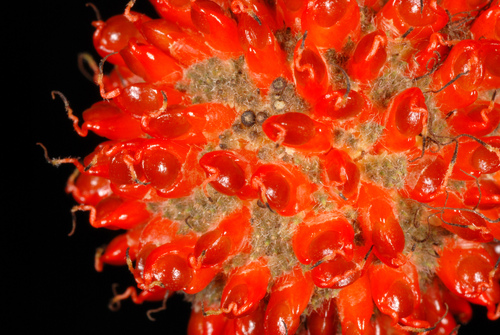
Broussonetia, Genus, spp., Multiple species,
- Genus
- Multiple species
paper mulberry
Overview
Broussonetia is a small genus of about four to eight deciduous trees and shrubs in the mulberry family (Moraceae), native to eastern Asia and the Pacific. The species most often grown is B. papyrifera, the paper mulberry, cultivated for centuries for the inner bark, which is made into paper in East Asia and into barkcloth (tapa) across the Pacific. Plants are fast-growing, reaching 30 to 50 feet (9 to 15 m) tall with a broad, often suckering crown. The leaves are rough-textured and variable, broadly oval to deeply lobed even on the same branch, 3 to 8 inches (8 to 20 cm) long. Most species are dioecious: male plants bear drooping catkins while female plants carry round flower heads that ripen to soft, orange-red compound fruits. Broussonetia tolerates poor soils, heat, drought, and pollution, and grows quickly from seed, root suckers, and fragments. These same traits make B. papyrifera invasive in the southeastern United States and other warm regions, where it forms dense thickets along roadsides and disturbed land.
Native Range
Broussonetia is native to eastern Asia, including China, Japan, Korea, and Taiwan, with its range extended across the Pacific and into Southeast Asia through long cultivation. It grows in lowland forest, forest margins, and disturbed ground.Suggested Uses
Used for fast shade and screening on difficult sites, and historically grown as a fibre crop for paper and barkcloth. The dense, suckering growth stabilises poor or disturbed soil but can overwhelm small gardens. It is planted with caution, or left out, where it is classed as invasive.How to Identify
Appearance
Size & Dimensions
Height30' - 50'
Width/Spread25' - 40'
Bloom Information
Flowering occurs in spring, around April to May, before or with the emerging leaves. Male catkins shed wind-borne pollen, while female heads on separate trees develop through early summer into round, orange-red fruits. The fruit is soft and short-lived.
Detailed Descriptions
Foliage Description
greenGrowing Conditions
Sun Requirements
Requires 6-10 hours of direct sunlight daily
• Full Sun: 6+ hours of direct sunlight
• Partial Shade: 3-6 hours of direct sunlight
• Full Shade: Less than 3 hours of direct sunlight
