Brachythecium, Genus, albicans, Species,
- Genus & species
whitish feather-moss
Northern Hemisphere temperate and boreal zones
SunFull Sun – Part Shade
Overview
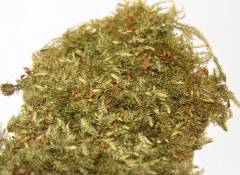
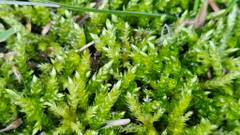
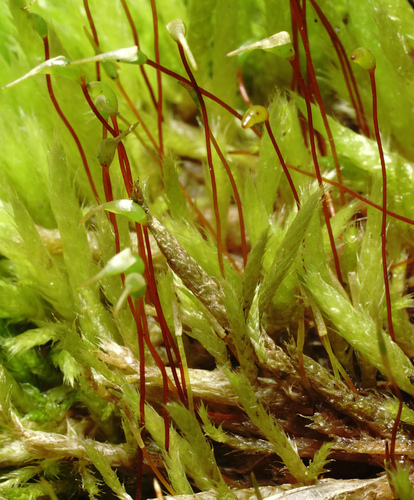
Brachythecium albicans is a creeping pleurocarpous moss that forms loose, pale green to whitish-green mats, the colour giving rise to the common name whitish feather-moss. Individual shoots are 2-8 cm (0.8-3.1 in) long, irregularly branched, and spread horizontally across the ground. The stem leaves are triangular to lance-shaped, 1.5-2.5 mm (0.06-0.10 in) long, tapering to a long slender point, with a single nerve (costa) reaching about two-thirds of the leaf length and faint lengthwise pleats when dry. It colonises dry, open, sandy and disturbed ground, including coastal dunes, heathland, sandy grassland, roadside banks, and gravel, often where competition from larger plants is sparse. During drought the mats dry to a whitish, brittle state and revive after rain. Sporophytes are produced only occasionally; when present the reddish seta is 1-2 cm (0.4-0.8 in) tall and bears an inclined, cylindrical capsule that sheds spores in spring. The pale colour, sandy habitat, and irregular branching separate it from greener relatives. It spreads slowly and does not persist on compacted, waterlogged, or deeply shaded ground.
Native Range
Brachythecium albicans is native across the temperate and boreal regions of the Northern Hemisphere, including much of Europe, northern and central Asia, and North America. It grows on dry, open, sandy ground and has scattered occurrences in the Southern Hemisphere.Suggested Uses
Used as a low groundcover on sandy banks, green roofs, and in dune-stabilisation plantings. It binds loose sand and holds open, sunny sites where taller plants struggle.How to Identify
Appearance
Colors
Foliage Colors
Fall Foliage Colors
Bloom Information
As a moss, B. albicans does not flower; it reproduces by spores. Sporophytes form irregularly and are absent from many colonies. When produced, the reddish seta is 1-2 cm (0.4-0.8 in) tall and carries an inclined cylindrical capsule that releases spores in spring.
Detailed Descriptions
Foliage Description
pale whitish-greenGrowing Conditions
Sun Requirements
Requires 4-10 hours of direct sunlight daily
• Full Sun: 6+ hours of direct sunlight
• Partial Shade: 3-6 hours of direct sunlight
• Full Shade: Less than 3 hours of direct sunlight
Water & Climate
Water Needs
Drought Tolerance
Drought tolerant when established