Brachyglottis, Genus, spp., Multiple species,
- Genus
- Multiple species
daisy bush
Overview
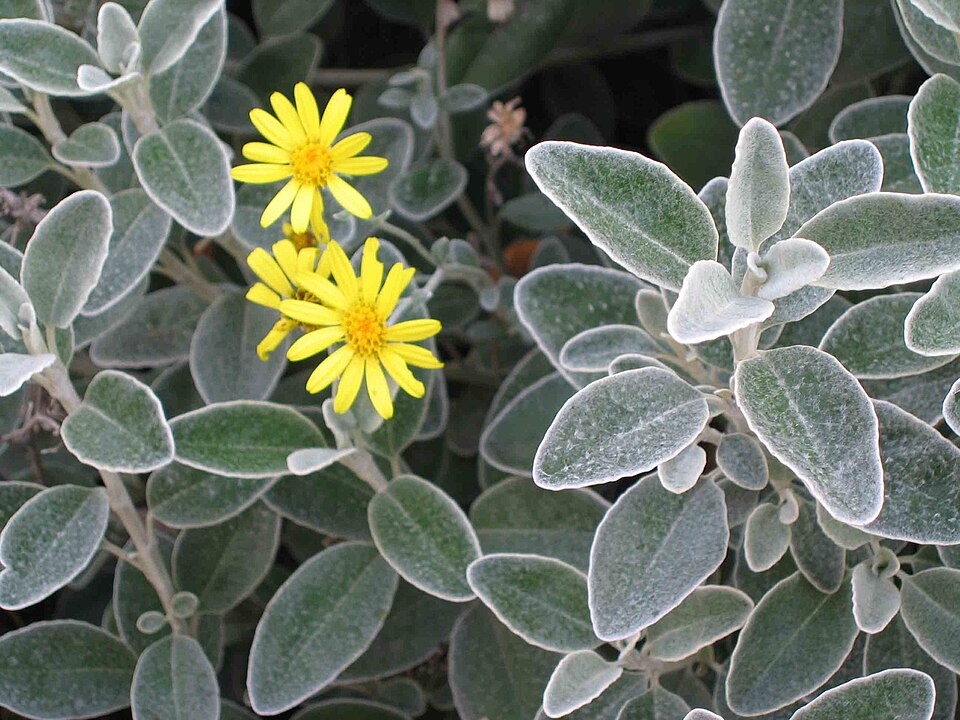
Brachyglottis is a genus of about 30 species of evergreen shrubs, small trees, and perennials, the great majority native to New Zealand with a few in Tasmania. The shrubby, gray-leaved members grown in gardens form low, spreading mounds 2-4 feet (0.6-1.2 m) tall and as wide or wider, clothed in oval, leathery leaves that are gray-green above and coated with white felt beneath. New shoots and flower buds are also white-felted, an adaptation to the windy, salt-laden coasts where many species grow. Yellow daisy flowers appear in summer in branched clusters held above the foliage. The genus ranges from these compact coastal shrubs to forest trees such as B. repanda, which reaches 16-23 feet (5-7 m). The shrubby kinds tolerate wind, salt spray, and drought once established, but they are damaged by hard frost and decline in cold, wet winter soils. The yellow flower heads are sometimes removed in bud where gray foliage alone is wanted. Plants grow quickly to mature size in three to four years and need full sun and free-draining soil to hold a dense, gray habit.
Native Range
Native chiefly to New Zealand, on coasts, scrub, and forest margins, with a small number of species in Tasmania and the surrounding region.Suggested Uses
Planted in coastal and gravel gardens, on sunny banks, and as low, informal hedging in mild climates. The gray foliage is used to contrast with darker or green-leaved plantings. Plants are not reliable in cold-winter or wet, shaded sites.How to Identify
Appearance
Size & Dimensions
Height2' - 4'
Width/Spread3' - 5'
Colors
Bloom Information
Yellow daisy flowers open in summer, roughly June to August, in branched clusters above the leaves. The buds are conspicuously white-felted for weeks before they open. Flowering lasts several weeks, after which the heads fade to brown seed clusters.
Detailed Descriptions
Foliage Description
gray-green above, white-felted beneathGrowing Conditions
Sun Requirements
Requires 6-12 hours of direct sunlight daily
• Full Sun: 6+ hours of direct sunlight
• Partial Shade: 3-6 hours of direct sunlight
• Full Shade: Less than 3 hours of direct sunlight
Care & Maintenance
Care Guide
Plants grow in full sun on light, sharp-draining soil and tolerate poor, sandy, or chalky ground. They establish from container plants set out in spring, and once rooted they tolerate drought, wind, and coastal salt. Cold below about 15 F (-9 C) and wet winter soils are the main hazards, so the shrubby kinds suit mild, maritime climates. Light annual trimming keeps the mound dense and the foliage silver. Overfed or shaded plants grow open and lose their gray coloring. Foliage of these species contains compounds that are toxic if eaten.Pruning
Stems are trimmed back by a few inches after flowering, or in spring, to hold a compact shape. Plants tolerate cutting into older wood if they grow open, though hard renewal is slower to refurnish. Removing flower buds before they open is optional where only the foliage is wanted.Container Growing
Suitable for container growing
Minimum container size: 5 gallons