Bossiaea, Genus, obcordata, Species,
- Genus & species
spiny bossiaea
Overview
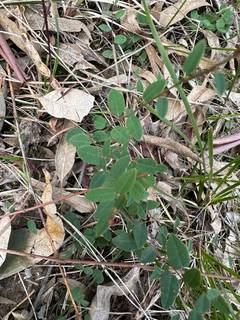
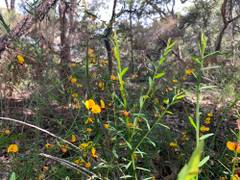
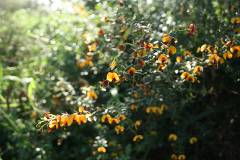
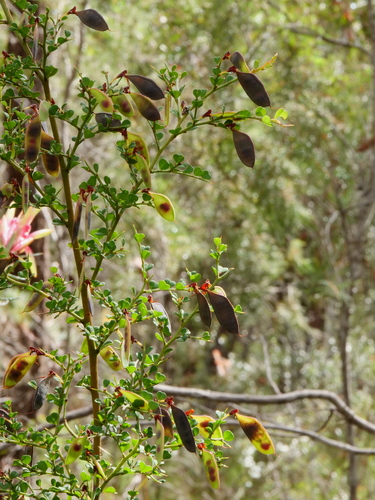
Bossiaea obcordata is a wiry, spreading shrub 1-5 feet (0.3-1.5 m) tall with rigid, often spine-tipped branchlets that give it a prickly habit. The small leaves are 0.2-0.5 inch (5-12 mm) long and obcordate, broad and notched at the tip, arranged alternately along green angular stems that carry out some photosynthesis. Pea flowers about 0.4 inch (10 mm) across appear singly in the upper leaf axils in spring, with yellow to orange standard petals marked red toward the centre and a dark keel. Flat pea pods 0.6-1.2 inches (1.5-3 cm) long follow and split to release several seeds. The shrub grows on poor, free-draining soils in dry sclerophyll forest and heath and resprouts or regenerates from seed after fire. Its rigid spine-tipped stems make it dense and impenetrable but also limit handling. It is native to southeastern Australia and tolerates drought and low fertility once established.
Native Range
Bossiaea obcordata is native to southeastern Australia, occurring in New South Wales, Victoria, and Tasmania. It grows in dry sclerophyll forest, woodland, and heath on shallow, sandy or rocky soils of low fertility.Suggested Uses
Used in native and habitat gardens, dry banks, and revegetation of poor sandy soils. The dense spiny habit forms a low barrier and shelters small birds. Suited to water-wise plantings in warm-temperate climates.How to Identify
Appearance
Size & Dimensions
Height1' - 5'
Width/Spread1' - 5'
Bloom Information
Flowers in spring, mainly September to November in its native range. The pea flowers open along the upper stems over several weeks. Flat pods follow and ripen through early summer.
Detailed Descriptions
Flower Description
yellow-orange with red markingsFoliage Description
greenGrowing Conditions
Sun Requirements
Requires 5-10 hours of direct sunlight daily
• Full Sun: 6+ hours of direct sunlight
• Partial Shade: 3-6 hours of direct sunlight
• Full Shade: Less than 3 hours of direct sunlight
Care & Maintenance
Care Guide
Grows in full sun to light shade on sharply drained sandy or gravelly soils of low fertility. Tolerates drought once established and needs little or no supplementary water. Low-phosphorus conditions suit this Australian native, while rich, wet soils shorten its life. The shrub is grown from seed treated to break dormancy, often by scarification or brief heat. It withstands occasional fire by resprouting or regenerating from the soil seed bank. The rigid spine-tipped stems make close work around the plant awkward.Pruning
A light trim after flowering keeps the shrub compact, though the spiny stems make detailed pruning slow. Older plants tolerate harder cutting back to encourage fresh growth. Pruning is done after the spring flush so the next season buds are retained.Container Growing
Suitable for container growing
Minimum container size: 3 gallons