Overview
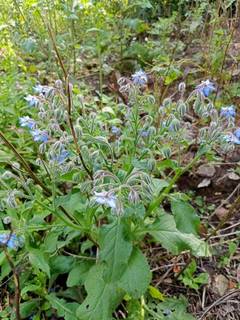
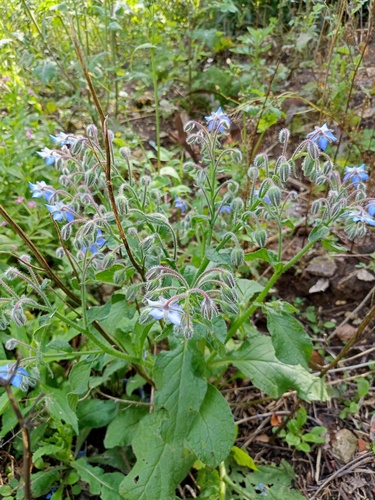
Borago is a small genus of bristly herbs in the borage family (Boraginaceae), native to the Mediterranean region and adjacent Europe and western Asia. The familiar species, Borago officinalis, called borage, is an annual reaching 12-36 inches (30-90 cm) tall, with hollow, hairy stems and large, wrinkled, coarsely hairy leaves that smell faintly of cucumber. In summer the branched stems carry nodding clusters of five-petalled, star-shaped flowers, usually bright blue with a cone of black anthers at the centre, though pink and white forms occur. A perennial species, Borago pygmaea, trails and produces pale blue bells. Borago grows quickly in full sun on most well-drained soils and self-seeds freely, often returning year after year from dropped seed. The flowers are visited heavily by bees, and the young leaves and flowers of borage have a long history of culinary and herbal use. Plants are coarse and short-lived, can flop in rich soil or shade, and the bristly foliage may irritate skin.
Native Range
Native to the Mediterranean Basin and parts of Europe and western Asia, in disturbed ground, field margins, and rocky slopes. Borago officinalis is widely naturalised beyond its native range as a garden escape.Suggested Uses
Grown in herb gardens, vegetable plots as a pollinator and companion plant, and informal borders. The edible blue flowers are used to decorate drinks and salads, and the plant draws bees through summer.How to Identify
Appearance
Size & Dimensions
Height1' - 3'
Width/Spread9" - 1'6"
Bloom Information
Detailed Descriptions
Foliage Description
GreenGrowing Conditions
Sun Requirements
Requires 6-12 hours of direct sunlight daily
• Full Sun: 6+ hours of direct sunlight
• Partial Shade: 3-6 hours of direct sunlight
• Full Shade: Less than 3 hours of direct sunlight
Water & Climate
Water Needs
Drought Tolerance
Drought tolerant when established
Care & Maintenance
Care Guide
Borago grows in full sun on most well-drained soils and tolerates poor, dry ground once established. It is easily raised from seed sown where it is to grow, as it resents root disturbance when transplanted. Plants self-seed freely and may need thinning to control spread. Rich soil or shade produces lush, floppy growth with fewer flowers. Little feeding or watering is needed in open, sunny sites.Pruning
No woody pruning is needed. Cutting plants back after the first flush can prompt fresh growth and a second round of flowers. Removing spent plants before all seed drops limits self-sowing.Container Growing
Suitable for container growing
Minimum container size: 3 gallons
Toxicity
Non-toxicPlanting Guide
Planting Methods & Timing
Planting Method
direct sow
Direct Sow Timing
After last frost in spring
Days to Maturity
50–70 days
Plant Spacing
18 inches
Companion Planting
Good Companions