Borago, Genus, officinalis, Species,
- Genus & species
borage
Eastern Mediterranean and Middle East; disturbed sites, roadsides, and agricultural land
SunFull Sun – Part Shade
Overview
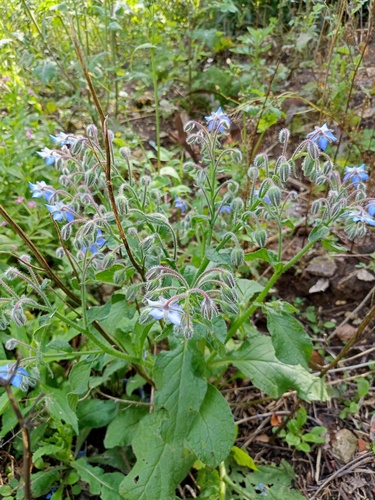
Borago officinalis is borage (starflower), an upright annual herb growing 18-30 inches (45-75 cm) tall and 12-18 inches (30-45 cm) wide. Bright blue star-shaped flowers 0.75 inch (2 cm) with a prominent black anther cone at the center, nodding, in May-October (20 weeks). The flowers are edible (cucumber-like flavor) and turn from pink in bud to bright blue when open. Dull gray-green ovate leaves 3-6 inches (7-15 cm) covered in coarse bristly hairs (hispid). In Boraginaceae. Officinalis = of the apothecary. Native to the eastern Mediterranean. An annual herb — direct-sow seed 2-4 weeks before last frost; germinates in 7-14 days. Self-sows prolifically — once established, it reappears annually from dropped seed. This aggressive self-sowing is the primary maintenance limitation. Does not transplant well (taproot). Young leaves are edible when cooked. Contains pyrrolizidine alkaloids in the leaves — potentially hepatotoxic in large quantities over prolonged use (the flowers are considered safe in small culinary amounts). Deer-resistant. Drought-tolerant. Zones: grown as a cool-season annual. Full sun. Growth rate is fast.
Native Range
Native to the eastern Mediterranean and Middle East. Found on disturbed sites, roadsides, and agricultural land.Suggested Uses
Grown in herb gardens, vegetable gardens (companion plant for tomatoes and squash), pollinator gardens, and edible flower gardens, spaced 12-18 inches (30-45 cm). Edible flowers. Self-sows. Bee plant. Deer-resistant.How to Identify
Appearance
Size & Dimensions
Height1'6" - 2'6"
Width/Spread1' - 1'6"
Bloom Information
Detailed Descriptions
Flower Description
Bright blue (occasionally white), star-shaped, 0.75 inch (2 cm), 5-pointed, with a prominent black anther cone at the center; nodding; edibleFoliage Description
Dull gray-green, simple, ovate, 3-6 inches (7-15 cm), covered in coarse bristly hairs (hispid); a rough sandpaper-like textureGrowing Conditions
Sun Requirements
Requires 6-10 hours of direct sunlight daily
• Full Sun: 6+ hours of direct sunlight
• Partial Shade: 3-6 hours of direct sunlight
• Full Shade: Less than 3 hours of direct sunlight
Care & Maintenance
Care Guide
Full sun to partial shade (6-10 hours). Well-drained soil pH 6.0-7.5. Drought-tolerant. Direct-sow 2-4 weeks before last frost. Does not transplant well. Self-sows prolifically. Contains pyrrolizidine alkaloids in leaves (limit consumption). Flowers edible in small amounts. Deer-resistant.Pruning
Remove spent flower clusters to extend bloom or allow self-sowing. The plant becomes floppy and sprawling in mid to late summer — stake or allow to lean on neighbors. Pull and compost the plant after it finishes in fall.Pruning Schedule
Prune: May–June
late spring
Toxicity Warning
Toxic to pets and humansPlanting Guide
Planting Methods & Timing
Planting Method
direct sow
Direct Sow Timing
Sow outdoors 2-4 weeks before last expected frost. Seeds germinate in 7-14 days at 55-70°F (13-21°C). Thin to 12-18 inches (30-45 cm). Does not transplant well (taproot).
Days to Maturity
55–65 days
Plant Spacing
15 inches
Companion Planting
Good Companions