Billardiera, Genus, fusiformis, Species,
- Genus & species
Australian bluebell
Overview
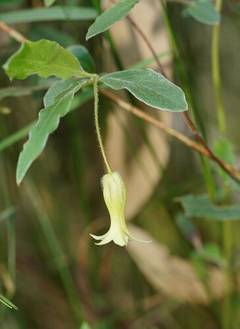
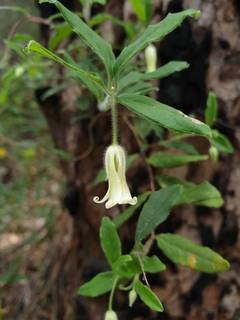
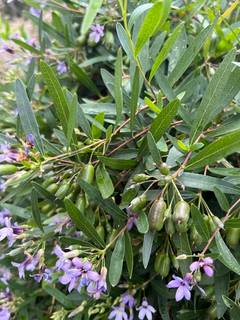
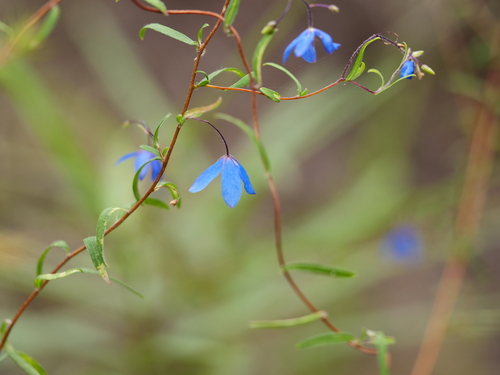
Billardiera fusiformis is an evergreen twining climber in the Pittosporaceae family with slender stems reaching 5-8 feet (1.5-2.4 m), often used as a low scrambling shrub when unsupported. The narrow lance-shaped leaves are 0.8-2 inches (2-5 cm) long, glossy green, and scattered along the wiry stems. Nodding clusters of bright blue, bell-shaped flowers 0.4-0.6 inch (1-1.5 cm) long hang from the stems through summer and into autumn. Cylindrical blue to purple berries 0.6-1 inch (1.5-2.5 cm) long follow and hold many small seeds. Growth is moderate to rapid, and the plant flowers within 1-2 years from seed. The twining stems need a support to climb or sprawl over low shrubs. Outside its native range it can self-seed into bushland, and it is treated as an environmental weed in parts of eastern Australia.
Native Range
Native to southwestern Western Australia, where it grows in jarrah forest, woodland, and coastal heath on sandy and gravelly soils. Widely cultivated and naturalized in southeastern Australia and other warm-temperate regions.Suggested Uses
Grown on low trellises, fences, and over rocks and small shrubs, spaced 3-5 feet (0.9-1.5 m) apart, and as a sprawling container plant. The summer flowers draw native bees. The self-seeding habit limits its use near bushland in mild climates.How to Identify
Appearance
Size & Dimensions
Height5' - 8'
Width/Spread3' - 5'
Bloom Information
Detailed Descriptions
Foliage Description
glossy greenGrowing Conditions
Sun Requirements
Requires 5-10 hours of direct sunlight daily
• Full Sun: 6+ hours of direct sunlight
• Partial Shade: 3-6 hours of direct sunlight
• Full Shade: Less than 3 hours of direct sunlight
Care & Maintenance
Care Guide
Grows in full sun to part shade on free-draining sandy or loamy soil with a support to twine on. Water during dry spells; established plants tolerate short dry periods but grow more steadily with some moisture. Light frost damages the soft stem tips, though the plant recovers in spring. Tip pruning keeps the growth dense and within bounds. The plant self-seeds and can spread into bushland in mild climates.Pruning
Tip pruning through the growing season keeps the climber dense and limits its spread. Cutting back after flowering removes developing berries and reduces self-seeding. The plant reshoots readily from cut stems in warm weather.Pruning Schedule
Prune: April–May
fall
Container Growing
Suitable for container growing
Minimum container size: 3 gallons