Billardiera, Genus, cymosa, Species,
- Genus & species
sweet apple-berry
Overview
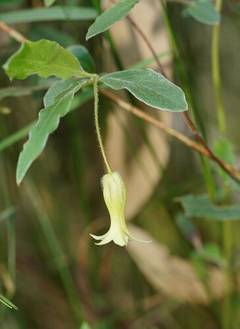
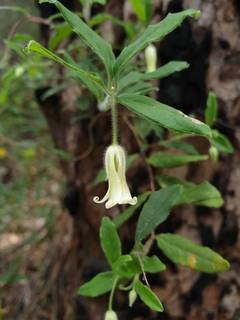
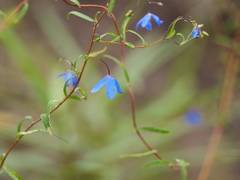
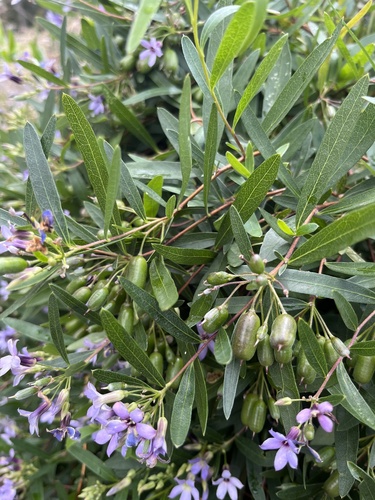
Billardiera cymosa is a light twining shrub or scrambling climber reaching 3-10 feet (1-3 m), with slender wiry stems that wind through nearby shrubs or over a support. The narrow leaves are 0.4-1.2 inches (1-3 cm) long, dull green, with slightly wavy margins. Bell-shaped flowers about 0.4-0.6 inch (10-15 mm) long hang in small clusters from spring into summer, opening cream to pale blue and ageing to pink or mauve. The flowers are followed by cylindrical, soft-skinned berries 0.4-0.8 inch (1-2 cm) long that ripen purple-blue and have a sweet, edible pulp. Growth is moderate, and the wiry stems need a host or trellis to climb, as the plant cannot support itself. It tolerates dry, sandy soils once established but flowers and fruits less in deep shade.
Native Range
Native to southern Australia, including South Australia, western Victoria, and inland New South Wales. Grows in mallee, dry woodland, and heath on sandy and rocky soils, scrambling through low shrubs in semi-arid and coastal districts.Suggested Uses
Grown on low trellises, fences, and through open shrubs in native and dry-climate gardens, and in bush-food plantings for its sweet edible berries. Suits sandy, free-draining sites at 24-36 inch (60-90 cm) spacing along a support. Its light twining habit suits weaving through established shrubs rather than covering large structures.How to Identify
Appearance
Size & Dimensions
Height3' - 10'
Width/Spread2' - 5'
Bloom Information
Detailed Descriptions
Flower Description
cream to blue, ageing pinkFoliage Description
dull greenGrowing Conditions
Sun Requirements
Requires 5-10 hours of direct sunlight daily
• Full Sun: 6+ hours of direct sunlight
• Partial Shade: 3-6 hours of direct sunlight
• Full Shade: Less than 3 hours of direct sunlight
Care & Maintenance
Care Guide
Grows in full sun to part shade in light, free-draining sandy or rocky soil and tolerates dry conditions once established. Water through the first year while the root system develops; mature plants need little water except in extended drought. A trellis, fence, or host shrub is needed, as the wiry stems climb by twining and cannot stand alone. Frost-hardy to about 25°F (-4°C) in well-drained sites. Root rot develops in heavy, wet soils. Few pests trouble it, and it regrows after light frost damage to the stem tips.Pruning
Stems are trimmed after fruiting to keep the plant within its support and to remove tangled or dead growth. Light tip-pruning in spring promotes branching. The plant tolerates cutting back to renew straggly old stems.Pruning Schedule
Prune: February–March
summer
Container Growing
Suitable for container growing
Minimum container size: 5 gallons