Bigelowia, Genus, spp., Multiple species,
- Genus
- Multiple species
rayless goldenrod
Overview
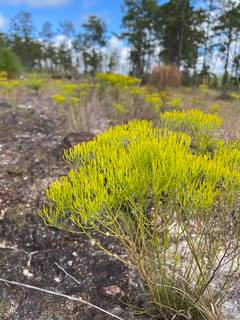
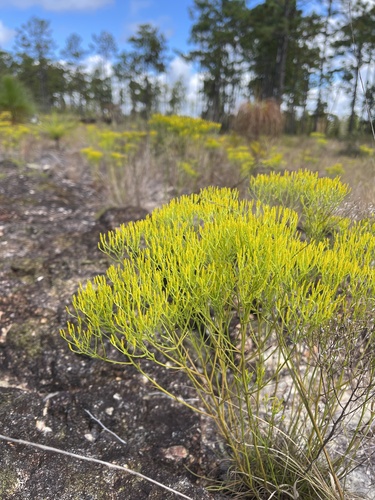
Bigelowia is a small genus of perennial herbs in the aster family (Asteraceae), native to the southeastern United States. The two species, Bigelowia nudata and Bigelowia nuttallii, grow from a woody crown and form dense basal tufts of narrow, almost grass-like leaves. Slender, nearly leafless flowering stems rise 12-24 inches (30-60 cm) to carry flat-topped clusters of small yellow flower heads in late summer and autumn. The heads lack the spreading ray florets of true goldenrods, so the bloom reads as a tight, button-like cluster, which gives the plants the name rayless goldenrod. Bigelowia grows in open pine flatwoods, bogs, savannas, and rocky glades, often on thin or seasonally wet soils in full sun. The narrow, grass-like evergreen tufts remain through winter in mild climates. Plants tolerate poor, infertile ground and periodic moisture but decline in rich, shaded, or heavily watered sites. The late flowers are a nectar source for bees and small butterflies near the end of the season.
Native Range
Native to the southeastern United States, from the Carolinas and Florida west to Texas. Bigelowia grows in pine flatwoods, wet savannas, bogs, and sandstone or granite glades.Suggested Uses
Grown in rock gardens, gravel gardens, native plant borders, and restored pine savanna and bog plantings. The narrow tufts and late yellow flowers combine with native grasses and autumn-blooming perennials.How to Identify
Appearance
Size & Dimensions
Height1' - 2'
Width/Spread8" - 1'6"
Bloom Information
Flat-topped clusters of yellow flower heads open in late summer and autumn, roughly August to October. The bloom comes late in the season, after many summer perennials have finished. Seed heads follow and persist into winter.
Detailed Descriptions
Foliage Description
GreenGrowing Conditions
Sun Requirements
Requires 6-10 hours of direct sunlight daily
• Full Sun: 6+ hours of direct sunlight
• Partial Shade: 3-6 hours of direct sunlight
• Full Shade: Less than 3 hours of direct sunlight
Care & Maintenance
Care Guide
Bigelowia grows in full sun on poor, sandy, rocky, or seasonally wet soils with sharp surface drainage. It tolerates drought once established as well as periodic flooding in its native flatwoods. Rich soils, shade, and heavy irrigation cause weak, floppy growth and reduce flowering. Plants are propagated by seed or by division of the woody crown in spring. Little feeding is needed, and the evergreen tufts need minimal upkeep.Pruning
Spent flowering stems are cut back in late autumn or late winter. The evergreen basal tufts are left in place year-round. No other pruning is needed.Pruning Schedule
Prune: February & November
fallwinter
Container Growing
Suitable for container growing
Minimum container size: 2 gallons