Image 1 of 19
1 / 19
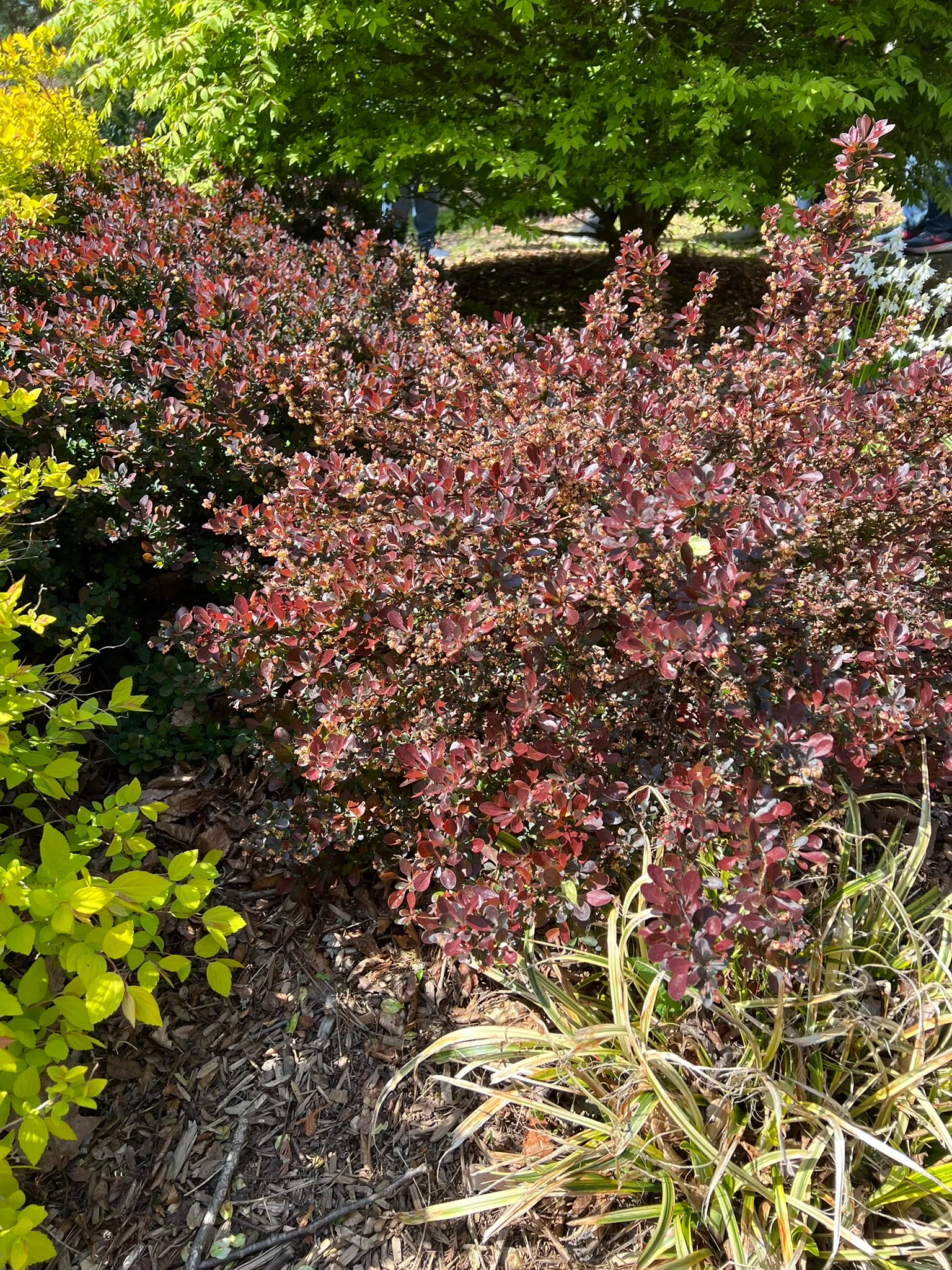
Berberis thunbergii atropurpurea 'Atropurpurea Nana'
crimson pygmy barberry
Japan and eastern Asia (species); garden selection
Overview
Berberis thunbergii f. atropurpurea 'Atropurpurea Nana', also sold as 'Crimson Pygmy' and 'Little Favourite', is a compact deciduous shrub growing 18-24 inches (45-60 cm) tall and 24-30 inches (60-75 cm) wide, forming a dense rounded mound of thorny stems. The small spoon-shaped leaves are deep red-purple through spring and summer, holding colour in full sun and turning greener in shade, then deepening to crimson and orange-red in autumn before falling. Sharp single spines line the stems. Pale yellow flowers tinged red hang in small clusters in mid spring, followed by glossy red oblong berries that persist into winter. It grows in full sun to part shade on most well-drained soils and tolerates drought, urban conditions, and hard pruning. B. thunbergii and its cultivars are listed as invasive across many northeastern and midwestern United States, where seed spread by birds has led to nursery bans and restrictions in several states. The dwarf size and dense thorns make the plant slow to need pruning but awkward to handle and weed around. Foliage colour is weakest in deep shade.
Native Range
Berberis thunbergii, Japanese barberry, is native to Japan and eastern Asia, where it grows in mountain scrub and open woodland. This dwarf purple-leaved form is a garden selection. The species is widely naturalized in North America and is regulated as invasive in several US states.Suggested Uses
Planted as low hedging, edging, mass groundcover on banks, and in foundation and gravel plantings where the purple foliage and thorny habit deter foot traffic. It suits containers and is grown for season-long leaf colour. Plants are spaced 18-24 inches (45-60 cm) apart for cover.How to Identify
Appearance
Size & Dimensions
Height1'6" - 2'
Width/Spread2' - 2'6"
Reaches mature size in approximately 5 years
Bloom Information
Pale yellow red-tinged flowers open in mid spring, roughly April to May, in small hanging clusters along the stems. They last about two weeks and are followed by red berries in autumn. The flowers are small and partly hidden by the emerging foliage.
Detailed Descriptions
Foliage Description
red-purpleGrowing Conditions
Sun Requirements
Requires 6-12 hours of direct sunlight daily
• Full Sun: 6+ hours of direct sunlight
• Partial Shade: 3-6 hours of direct sunlight
• Full Shade: Less than 3 hours of direct sunlight
Care & Maintenance
Care Guide
Grow in full sun to part shade on any well-drained soil; foliage colour is richest in full sun and fades toward green in shade. Established plants tolerate drought, poor soil, and urban pollution with little care. It withstands clipping and renovation, regrowing densely from old wood. Wet, poorly drained ground is the main weakness. In regions where the species is invasive, removing berries before they ripen reduces self-seeding. Thorns make handling and weeding around the plant difficult.Pruning
Little pruning is needed beyond shaping. Any trimming is done in late winter or early spring before growth starts, cutting stems to keep the rounded mound. Overgrown plants are renovated hard and regrow from the base.Pruning Schedule
J
F
M
A
M
J
J
A
S
O
N
D
early spring
Container Growing
✓ Suitable for container growing
Minimum container size: 3 gallons