Bellis, Genus, perennis, Species,
- Genus & species
lawn daisy
Europe, North Africa, and western Asia
Overview
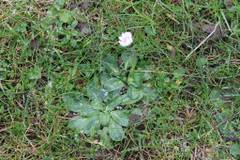
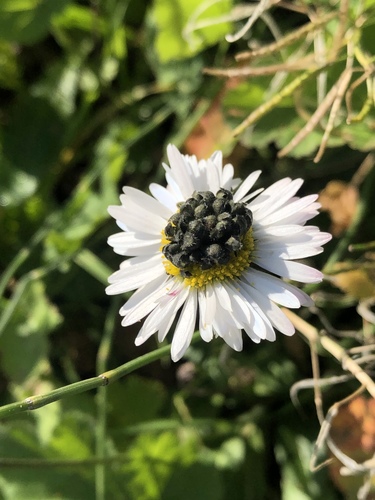
Bellis perennis is a low, rosette-forming perennial in the aster family, growing 2-6 inches (5-15 cm) tall and spreading to form patches in turf and open ground. The spoon-shaped leaves, 0.4-1.6 inches (1-4 cm) long, form a flat basal rosette pressed against the soil, with shallow-toothed margins and a slightly hairy surface. From late winter through fall it sends up leafless flower stalks, each topped by a single head 0.6-1.2 inches (1.5-3 cm) across with a yellow central disc ringed by white rays that are often flushed pink or red on the undersides. The heads open in daylight and close at night and in dull weather. The plant spreads by short rhizomes and by seed, persisting in mown lawns because its flat rosettes sit below the cutting height. It grows across a wide range of soils in full sun to partial shade, favoring cool, moist conditions, and flowers most heavily in spring and fall. In hot summers flowering slows and the rosettes may die back, resuming when temperatures drop. Cultivated forms with larger, double, or fully pink to red heads are grown as bedding and edging plants. The foliage and flowers are not toxic and the young leaves are edible.
Native Range
Bellis perennis is native to Europe, North Africa, and western Asia. It has naturalized across North America, Australia, and other temperate regions, where it grows in lawns, meadows, and disturbed grassland.Suggested Uses
Bellis perennis and its double-flowered cultivars are grown as edging, in containers, and in spring bedding displays, often paired with other cool-season plants. In lawns the species appears as a low-growing volunteer that tolerates mowing. Its compact rosettes suit it to the front of beds and to gaps in paving.How to Identify
Appearance
Size & Dimensions
Height2" - 6"
Width/Spread4" - 9"
Bloom Information
Flowering runs over a long season, from late winter through fall in mild climates and concentrated in spring and early summer in colder areas. The white-and-yellow heads open singly on short stalks and close in the evening and in overcast weather. Cool, moist conditions extend the bloom, while summer heat slows it.
Detailed Descriptions
Flower Description
white with yellow center, often pink-backedFoliage Description
greenGrowing Conditions
Sun Requirements
Requires 4-8 hours of direct sunlight daily
• Full Sun: 6+ hours of direct sunlight
• Partial Shade: 3-6 hours of direct sunlight
• Full Shade: Less than 3 hours of direct sunlight
Care & Maintenance
Care Guide
Bellis perennis grows in full sun to partial shade in moist, well-drained soils and tolerates regular mowing once established. It needs little care, drawing on a shallow root system, and keeps growing steadily where moisture is even in spring and fall. In lawns it spreads by seed and short rhizomes and persists below mowing height as flat rosettes. Bedding cultivars are usually grown as biennials or short-lived perennials, set out in fall or early spring for spring bloom. Plants decline in hot, dry summers and recover as cool weather returns. Removing spent heads before seed forms limits self-seeding into surrounding turf.Pruning
Removing spent flower heads before they set seed reduces spreading into lawns and beds. In bedding use, shearing tired plants after the main spring flush can prompt a second flush in fall. No other pruning is needed for this low-growing plant.Pruning Schedule
Prune: June
summer
Container Growing
Suitable for container growing
Minimum container size: 1 gallons