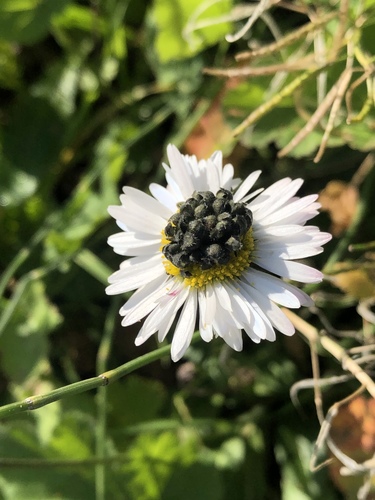
Bellis, Genus, spp., Multiple species,
- Genus
- Multiple species
daisies
Europe, the Mediterranean, and North Africa
Overview
Bellis is a genus of about 8 to 10 low-growing annual and perennial herbs in the daisy family (Asteraceae), native to Europe, the Mediterranean, and North Africa. Plants form flat rosettes of small, spoon-shaped leaves 0.5-2 in (1.3-5 cm) long, from which rise leafless stalks 2-8 in (5-20 cm) tall, each carrying a single daisy flower head. The heads are 0.5-1.5 in (1.3-4 cm) across, with white ray florets, often flushed pink or red, surrounding a yellow disk; garden forms include fully double and pompon types in deeper pinks and reds. B. perennis, the common or English daisy, grows in lawns and grassland across Europe and has naturalized worldwide, flowering for much of the year in mild climates. The plants close their flowers at night and in dull weather. The genus favors cool, moist conditions and fades in summer heat. Common daisy is often treated as a lawn weed because it spreads by seed and short rhizomes and resists mowing.
Native Range
Bellis is native to Europe, the Mediterranean basin, and North Africa, growing in meadows, lawns, grassy slopes, and open woodland. B. perennis, the common daisy, has spread far beyond this range and is now naturalized across much of the temperate world. The genus is most at home in cool, moist, temperate grassland.Suggested Uses
Planted in spring bedding, edging, containers, rock gardens, and short flowering lawns, where the low rosettes and bright daisies suit cool-season displays. The flowers draw early bees and other pollinators. Spaced 6-9 in (15-23 cm) apart in cool, moist sites.How to Identify
Appearance
Size & Dimensions
Height2" - 8"
Width/Spread4" - 9"
Bloom Information
Bellis flowers over a long cool season, mainly from early spring into early summer, and again in autumn where summers are mild. In frost-free regions B. perennis can flower nearly year-round. Each head lasts about a week, opening in sun and closing at night and in dull weather.
Detailed Descriptions
Flower Description
White, pink, or red with a yellow centerFoliage Description
GreenGrowing Conditions
Sun Requirements
Requires 4-8 hours of direct sunlight daily
• Full Sun: 6+ hours of direct sunlight
• Partial Shade: 3-6 hours of direct sunlight
• Full Shade: Less than 3 hours of direct sunlight
Care & Maintenance
Care Guide
Bellis grows in full sun to part shade in moist, fertile, well-drained soil at a soil pH from about 6.0 to 7.5 and grows strongly in cool conditions. Plants flower freely in spring but slow and may die back in hot, dry summers, returning when temperatures fall. Perennial species are hardy across USDA zones 4-8 and are often grown as cool-season bedding or biennials. Few pests affect the genus, though aphids and powdery mildew appear in crowded plantings. The common daisy self-seeds and spreads in lawns, which some gardeners welcome and others manage as a weed.Pruning
Faded flower heads are removed to prolong bloom and limit self-seeding. Plants are sheared after the main spring flush to tidy the rosette. Clumps are lifted and divided every year or two to keep them vigorous.Container Growing
Suitable for container growing
Minimum container size: 1 gallons
