Bellardia, Genus, viscosa, Species,
- Genus & species
yellow glandweed
Overview
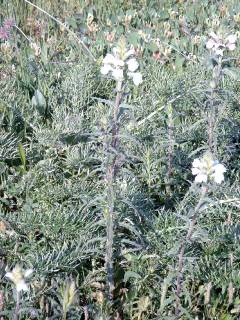
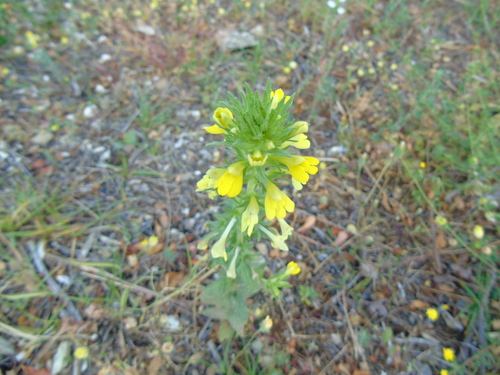
Bellardia viscosa is an erect annual herb 8-24 inches (20-60 cm) tall, growing on a single mostly unbranched stem that is sticky with glandular hairs throughout. The leaves are lance-shaped, 0.75-2 inches (2-5 cm) long, opposite below and alternate above, toothed, green, and glandular-hairy. Bright yellow two-lipped flowers about 0.75-1 inch (2-2.5 cm) long open in a leafy spike at the top of the stem from late spring into summer. The flowers are followed by small capsules holding numerous tiny seeds. Like many in its family, it is a root hemiparasite, attaching to the roots of grasses and other plants to draw water and nutrients while still producing its own green foliage. It germinates with winter and spring moisture, flowers, and dies by summer. Native to Mediterranean grasslands, it has naturalized in seasonally moist pastures, roadsides, and disturbed open ground in several regions and can spread where it is not wanted.
Native Range
Native to the Mediterranean region and western Europe. Widely naturalized in western North America, southern South America, Australia, and New Zealand, where it grows in seasonally moist pastures, grasslands, roadsides, and disturbed ground.Suggested Uses
Rarely planted, as it is a hemiparasitic annual that appears spontaneously in grasslands and pastures. It has no common ornamental use and is managed as a weed in some regions. Where present, it occurs among grasses on seasonally moist ground.How to Identify
Appearance
Size & Dimensions
Height8" - 2'
Width/Spread4" - 8"
Bloom Information
Detailed Descriptions
Foliage Description
GreenGrowing Conditions
Sun Requirements
Requires 6-8 hours of direct sunlight daily
• Full Sun: 6+ hours of direct sunlight
• Partial Shade: 3-6 hours of direct sunlight
• Full Shade: Less than 3 hours of direct sunlight
Water & Climate
Water Needs
Care & Maintenance
Care Guide
Grows in full sun on seasonally moist soils among grasses and other host plants, whose roots it taps for water and nutrients. As a hemiparasitic annual it is rarely cultivated and usually appears on its own in suitable ground. It needs moisture through spring growth and dies as soils dry in summer. The plant can spread by abundant seed and is treated as a weed in some pastures and rangelands. Plants are pulled or mown before seed set where control is wanted. Few pests affect it.Pruning
No pruning is practiced. Where it is unwanted, plants are pulled or cut before seed matures to limit spread. Otherwise plants die and dry on their own after seeding.Toxicity: Not assessed
UnknownPlanting Guide
Planting Methods & Timing
Planting Method
direct sow