Image 1 of 5
Plant Reference
1 / 5
Belamcanda, Genus, chinensis, Species,
- Genus & species
blackberry lily
Overview
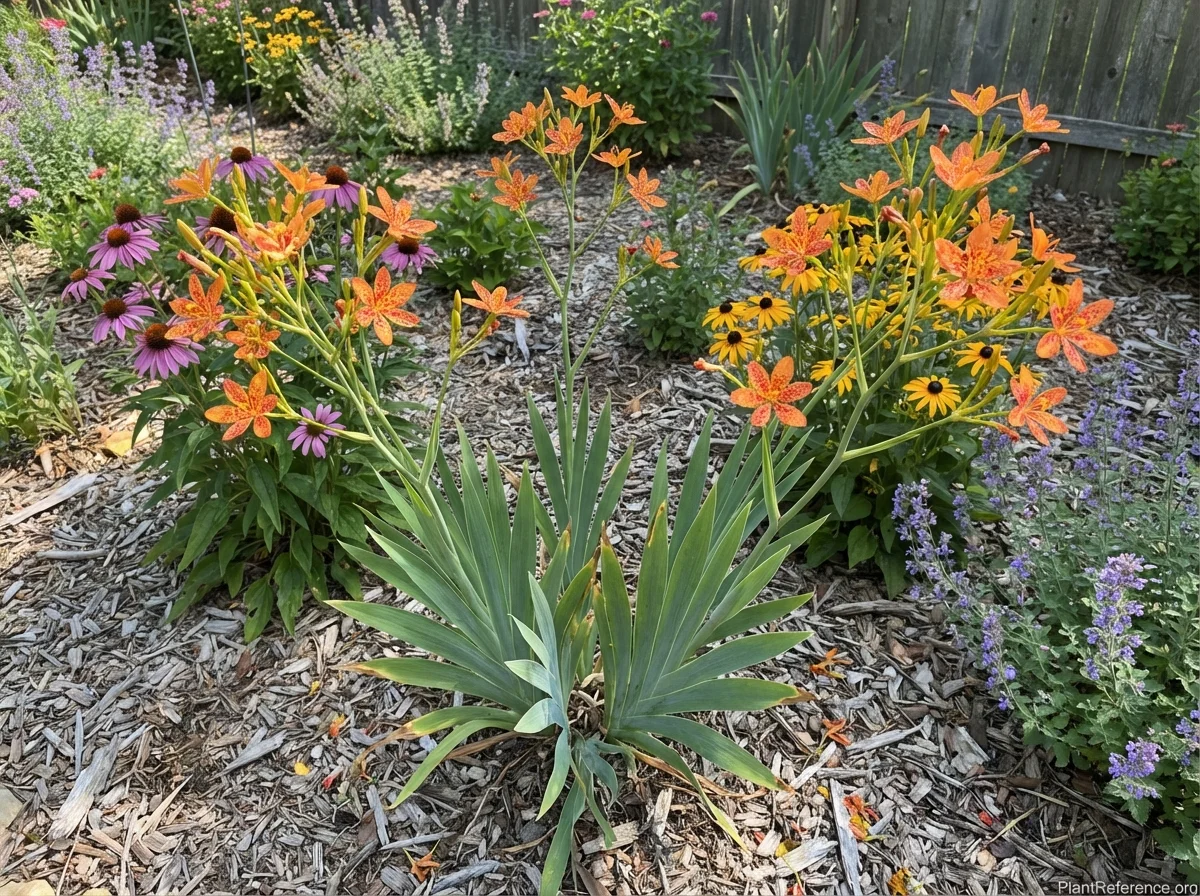
Iris domestica (syn. Belamcanda chinensis) is the blackberry lily (leopard flower), a deciduous perennial growing 24–48 inches (60–120 cm) tall and 12–18 inches (30–45 cm) wide. Orange 6-tepaled flowers 2 inches (5 cm) with red spots (leopard-spotted) in midsummer — each flower lasts one day, but a succession of buds produces 3–4 weeks of bloom. The common name 'blackberry lily' references not the flower but the seed display: the seed pods split open in fall to reveal clusters of glossy black seeds resembling a blackberry. Medium green sword-shaped (iris-like) leaves 10–18 inches (25–45 cm) in a flat fan. In the iris family (Iridaceae). Reclassified from Belamcanda chinensis to Iris domestica based on molecular phylogenetics — the flat sword-shaped leaf fan and the rhizomatous root confirm the iris family placement. × Pardancanda norrisii (candy lily) is the intergeneric hybrid with Iris dichotoma, combining the spotted flowers with a wider color range. Rhizomatous. All parts contain iridin — toxic to humans and animals (GI irritant). Sharp drainage — crown rot in wet winter soil. Drought-tolerant once established. Native to China, Japan, Korea, and India. Deer-resistant (toxic). Full sun. Zones 5–9. Growth rate is moderate.
Native Range
Native to China, Japan, Korea, and India. Naturalized in parts of eastern North America.Suggested Uses
Grown in borders and containers in zones 5–9. The leopard-spotted flowers and the blackberry seed pods are the two-season features. Sharp drainage. All parts toxic. Deer-resistant.How to Identify
Appearance
Size & Dimensions
Height2' - 4'
Width/Spread1' - 1'6"
Bloom Information
Midsummer (July–August), lasting 3–4 weeks (individual flowers last one day, succession of buds). Orange leopard-spotted flowers. The blackberry-like seed clusters in fall are the secondary feature.
Detailed Descriptions
Flower Description
Orange with red spots (leopard-spotted), 6-tepaled, 2 inches (5 cm), each flower lasting one dayFoliage Description
Medium green, sword-shaped (iris-like), 10-18 inches (25-45 cm), in a flat fanGrowing Conditions
Sun Requirements
Requires 5-10 hours of direct sunlight daily
• Full Sun: 6+ hours of direct sunlight
• Partial Shade: 3-6 hours of direct sunlight
• Full Shade: Less than 3 hours of direct sunlight
Care & Maintenance
Care Guide
Full sun to partial shade. Sharp drainage — crown rot in wet winter soil. Reclassified from Belamcanda to Iris. All parts toxic (iridin). Leave seed pods for the blackberry seed display. Drought-tolerant. Deer-resistant. Zones 5–9.Pruning
Cut dead foliage to the ground in early spring (March). Leave the blackberry-like seed pods through fall and winter for the ornamental display. Remove only after the seeds have dispersed or in spring cleanup.Pruning Schedule
Prune: March
early spring
Container Growing
Suitable for container growing
Minimum container size: 3 gallons