Bebbia, Genus, spp., Multiple species,
- Genus
- Multiple species
Sweetbush
Overview
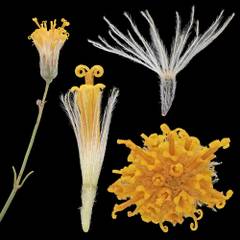
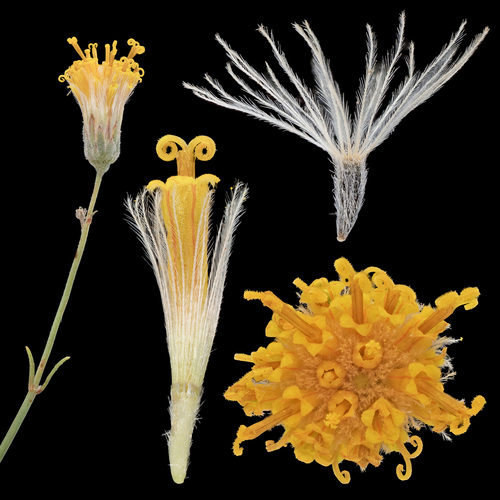
Bebbia is a small genus of rounded desert shrubs in the sunflower family Asteraceae, native to the arid southwestern United States and Mexico. Plants form intricately branched, broom-like mounds 2-4 feet (0.6-1.2 m) tall and as wide, with rough, brittle green stems that carry out much of the photosynthesis. Leaves are few, narrow, 0.4-1.5 inches (1-4 cm) long, and often drop early, leaving the green stems bare for much of the year. The flower heads, about 0.5 inch (1.3 cm) across, hold only yellow disk florets without ray petals and give off a honey-like scent. Heads appear over a long warm season and are followed by tufted, bristly seeds carried on the wind. Plants bloom most heavily after rain and draw numbers of butterflies. Growth is moderate, and the brittle stems break easily in wind or under browsing. Foliage and stems are drought-deciduous, with leaves shed and growth paused in the driest spells.
Native Range
Native to the Mojave, Sonoran, and Chihuahuan deserts of the southwestern United States and northern Mexico, including California, Nevada, Arizona, New Mexico, and Texas. Plants grow in dry washes, rocky slopes, canyon walls, and roadsides, often where extra runoff collects, from near sea level to about 5,000 feet (1,500 m).Suggested Uses
Grown in desert and dry-climate gardens, native and pollinator plantings, and revegetation of disturbed arid ground, spaced 3-4 feet (0.9-1.2 m) apart. The long bloom and honey-scented heads draw butterflies and native bees. Plants suit hot, dry, low-water sites and tolerate poor soil but look bare and twiggy in dry dormancy.How to Identify
Appearance
Size & Dimensions
Height2' - 4'
Width/Spread2' - 4'
Bloom Information
Flowering occurs over a long warm season, from spring through autumn, peaking after rain at any time from March to October. Individual heads last about a week, with new heads opening in flushes that follow rainfall. Bloom slows in drought and resumes when moisture returns.
Detailed Descriptions
Foliage Description
greenGrowing Conditions
Sun Requirements
Requires 6-12 hours of direct sunlight daily
• Full Sun: 6+ hours of direct sunlight
• Partial Shade: 3-6 hours of direct sunlight
• Full Shade: Less than 3 hours of direct sunlight
Care & Maintenance
Care Guide
Plants grow in full sun in fast-draining sandy, gravelly, or rocky soils and need little to no irrigation once established. Established shrubs are deeply drought-tolerant and survive on desert rainfall, while overwatering and poor drainage cause root rot. Plants tolerate intense heat and reflected sun but are damaged by hard frost below about 20 F (-7 C). The brittle stems break under heavy browsing or wind, and plants resprout from the base after damage. Few pests trouble them in dry conditions. Cutting back hard in late winter renews the dense twiggy form.Pruning
Cut plants back by up to half in late winter to renew the dense, twiggy growth and remove broken stems. Light shearing after a bloom flush can prompt more flowering when moisture allows. Plants resprout from the base, tolerating fairly hard renewal pruning.Pruning Schedule
Prune: January–February
winter
Container Growing
Suitable for container growing
Minimum container size: 5 gallons