Balsamorhiza, Genus, sagittata, Species,
- Genus & species
arrowleaf balsamroot
Overview
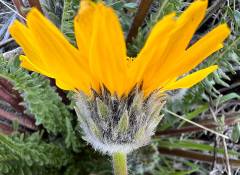
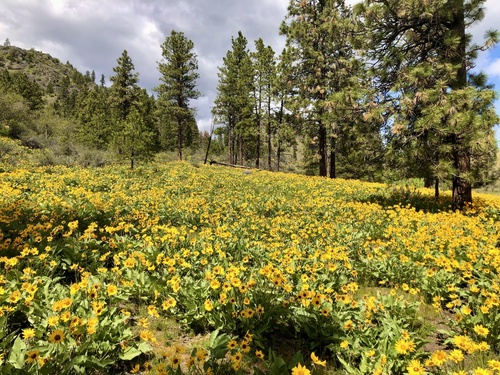
Balsamorhiza sagittata is a herbaceous perennial in the sunflower family, growing from a thick woody taproot that can extend 8 feet (2.4 m) into the soil. It forms a basal clump of arrowhead-shaped leaves 8-12 inches (20-30 cm) long, covered in dense silvery hairs that give the foliage a gray-green cast. In late spring, leafless stalks 12-24 inches (30-60 cm) tall carry yellow flower heads 2.5-4 inches (6-10 cm) across, each with 8-25 ray florets around a yellow central disk. Over many years a single crown spreads into a clump 12-24 inches (30-60 cm) wide. The deep taproot stores water and carbohydrates, letting the plant regrow after drought and fire. It grows across sagebrush steppe, open foothills, and ponderosa pine slopes from British Columbia south to California and east into the Rocky Mountains. Foliage withers and the plant goes dormant by midsummer on dry sites, with fresh growth emerging the following spring. The depth of the taproot makes established plants difficult to move once set.
Native Range
Native to western North America, ranging from British Columbia and Alberta south through the Great Basin to California and east to Colorado. It occupies sagebrush steppe, bunchgrass grassland, and open coniferous woodland at 1,000-9,000 feet (300-2,700 m).Suggested Uses
Grown in native, water-wise, and rock gardens, and used in restoration of dry meadows and sagebrush steppe. Suited to sunny slopes and unirrigated borders in regions with cold winters and dry summers.How to Identify
Appearance
Size & Dimensions
Height1' - 2'
Width/Spread1' - 2'
Colors
Flower Colors
Foliage Colors
Bloom Information
Detailed Descriptions
Foliage Description
silvery gray-greenGrowing Conditions
Sun Requirements
Requires 6-12 hours of direct sunlight daily
• Full Sun: 6+ hours of direct sunlight
• Partial Shade: 3-6 hours of direct sunlight
• Full Shade: Less than 3 hours of direct sunlight