Balsamorhiza, Genus, spp., Multiple species,
- Genus
- Multiple species
balsamroots
Overview
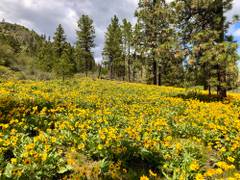
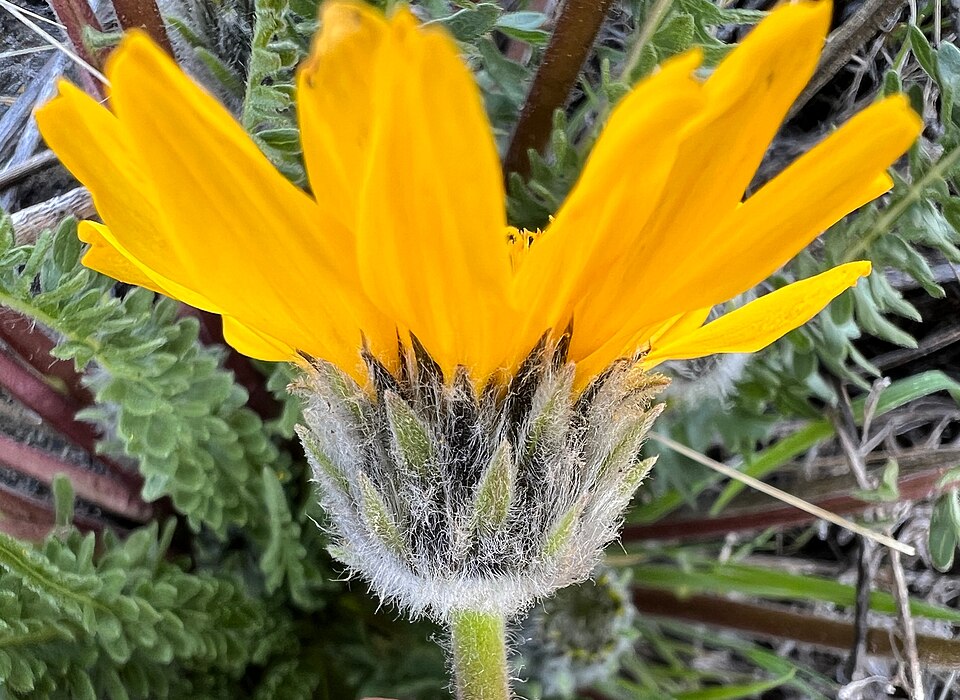
Balsamorhiza is a genus of about 12 species of long-lived perennial herbs in the daisy family, native to western North America. Plants grow from a thick, woody, resinous taproot and form clumps of large, often silvery-haired basal leaves, many of them arrowhead-shaped and 10-40 cm (4-16 in) long. In spring each clump sends up leafless or sparsely leafy stalks 20-80 cm (8-32 in) tall, each bearing a single sunflower-like head with yellow ray and disc florets 5-10 cm (2-4 in) across. Species grow in sagebrush steppe, dry meadows, open woodland, and rocky foothills, where the deep taproot reaches moisture and stores food through summer dormancy. The roots and seeds were an important food and medicine for Indigenous peoples of the region. Plants are slow to establish from seed, deeply rooted, and difficult to transplant, which limits their use in conventional gardens. B. sagittata, the arrowleaf balsamroot, carpets hillsides across the interior West in spring.
Native Range
Balsamorhiza is native to western North America, from British Columbia south through the interior western United States to California, Arizona, and New Mexico. Species grow in sagebrush steppe, dry grassland, open conifer woodland, and rocky slopes.Suggested Uses
Balsamorhiza is planted in native, prairie, and water-wise gardens, on dry banks, and in restoration of sagebrush and grassland habitats. The spring flowers support native bees and other pollinators, and the seed feeds birds. The deep taproot suits permanent, undisturbed plantings.How to Identify
Appearance
Size & Dimensions
Height8" - 2'8"
Width/Spread1' - 2'
Bloom Information
Flowering occurs in spring and early summer, roughly April-June, with bloom following snowmelt and earlier at lower elevations. Each clump carries its yellow heads over two to four weeks. Plants set seed and the foliage often dies back by midsummer.
Detailed Descriptions
Foliage Description
green to silver-greenGrowing Conditions
Sun Requirements
Requires 6-12 hours of direct sunlight daily
• Full Sun: 6+ hours of direct sunlight
• Partial Shade: 3-6 hours of direct sunlight
• Full Shade: Less than 3 hours of direct sunlight