Backhousia, Genus, citriodora, Species,
- Genus & species
Lemon myrtle
Overview
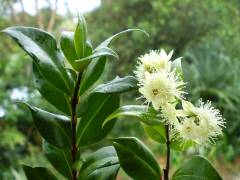
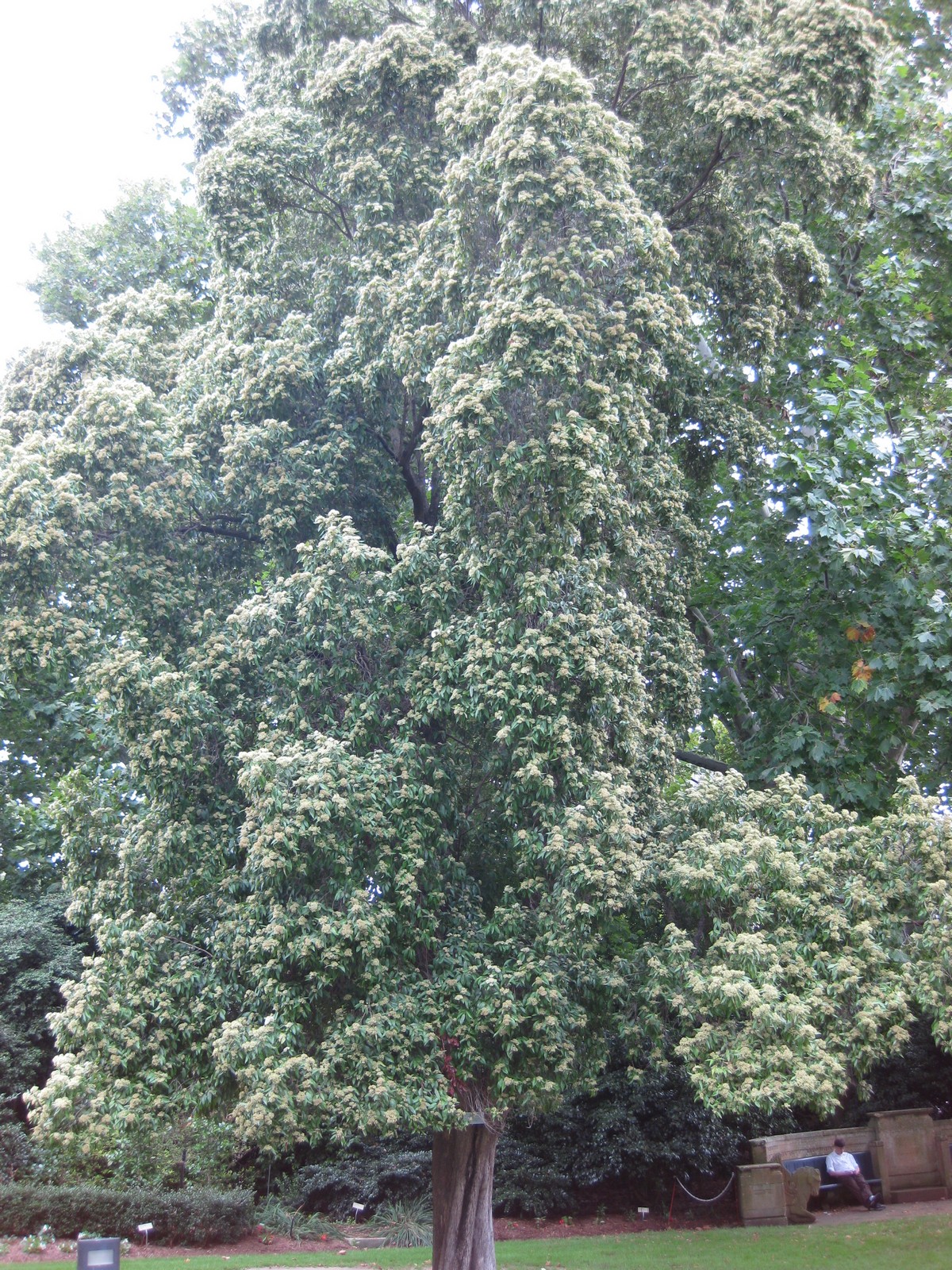
Backhousia citriodora is an evergreen tree reaching 10-25 feet (3-8 m) in cultivation and up to 65 feet (20 m) in rainforest, with a dense rounded crown and a trunk 8-16 inches (20-40 cm) across on old specimens. Leaves are opposite, lance-shaped, 2-4 inches (5-10 cm) long and 0.8-1.2 inches (2-3 cm) wide, glossy dark green above and paler beneath, with wavy margins and oil glands visible when held against the light. Crushed leaves release a lemon scent, and the leaf oil holds 90-98 percent citral against 3-5 percent in the peel oil of lemon, Citrus limon. Cream-white flowers 0.3-0.4 inch (8-10 mm) across open in dense clusters 2-3 inches (5-8 cm) wide at the shoot tips through summer and autumn, each flower carrying about 20 stamens longer than its petals. The calyx stays on the fruit, turns brown, and holds on the branch for 3-4 months after flowering. Growth is 12-20 inches (30-50 cm) per year in warm humid conditions and under 8 inches (20 cm) per year in dry or cool sites. New growth is damaged below 28F (-2C) and young plants die below 25F (-4C). Myrtle rust, caused by Austropuccinia psidii, infects soft new growth, and repeated attacks kill shoot tips and cut leaf yield.
Native Range
Native to coastal Queensland, Australia, from the Brisbane region north to Mackay and inland to the Bunya Mountains. Grows in subtropical and tropical rainforest and on rainforest margins, on basalt-derived and alluvial soils from sea level to 2,600 feet (800 m). Rainfall across the natural range is 40-80 inches (1,000-2,000 mm) per year, concentrated in summer.Suggested Uses
Grown as a commercial crop for dried culinary leaf and citral-rich essential oil in Queensland and northern New South Wales, where plantings are harvested by mechanical coppicing. Planted as a specimen tree at 15-20 foot (4.5-6 m) spacing and as a clipped hedge at 3-4 foot (0.9-1.2 m) spacing in frost-free gardens, and grown in containers of 20 gallons (76 L) in regions where winter temperatures fall below 28F (-2C). Undiluted leaf oil causes skin irritation in patch testing at citral concentrations above 1 percent.How to Identify
Appearance
Size & Dimensions
Height10' - 25'
Width/Spread8' - 15'
Colors
Bloom Information
Flowers open through summer and autumn, November to March in coastal Queensland and June to October in USDA zones 10-11 of the Northern Hemisphere. Clusters open over 4-6 weeks, and individual flowers hold 7-10 days before the petals drop. Seed-grown trees begin flowering in their fourth or fifth year, cutting-grown plants in their second or third. Flowering is lighter in the year after hard coppicing.
Detailed Descriptions
Foliage Description
Glossy dark greenGrowing Conditions
Sun Requirements
Requires 4-10 hours of direct sunlight daily
• Full Sun: 6+ hours of direct sunlight
• Partial Shade: 3-6 hours of direct sunlight
• Full Shade: Less than 3 hours of direct sunlight
Care & Maintenance
Care Guide
Water twice weekly through the first two years and weekly in summer thereafter; leaves curl and drop after 2-3 weeks without water at temperatures above 86F (30C). Moisture-retentive but free-draining soil at pH 5.0-6.5 matches the rainforest origin, and growth slows above pH 7.5 with yellowing between the leaf veins. Shade for 2-4 hours a day suits plants under 6 feet (1.8 m), while larger trees take full sun in humid climates and scorch in dry inland heat. Myrtle rust from Austropuccinia psidii produces yellow spore masses on new growth in humid weather above 68F (20C); cutting out infected tips and thinning the crown to move air through it slows the spread. Scale insects and sooty mold build up on shaded interior branches. Nitrogen at 2 ounces per square yard (60 g per square meter) in spring, in a low-phosphorus formulation, supports the annual growth flush.Pruning
Tip pruning of the outer 4-6 inches (10-15 cm) of each shoot two or three times a year holds plants at hedge height and produces the leaf flushes harvested for culinary use. Whole plants are coppiced to 12-24 inches (30-60 cm) above ground in commercial leaf production, and regrowth reaches 5 feet (1.5 m) within 12-18 months. Cuts into wood over 2 inches (5 cm) thick close slowly and open the trunk to borers in humid areas. Pruning between late autumn and early spring leaves soft regrowth exposed to cold damage below 28F (-2C).Pruning Schedule
Prune: April–June
late springsummer
Container Growing
Suitable for container growing
Minimum container size: 20 gallons