Backhousia, Genus, spp., Multiple species,
- Genus
- Multiple species
lemon myrtle
Overview
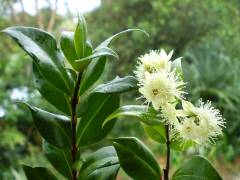
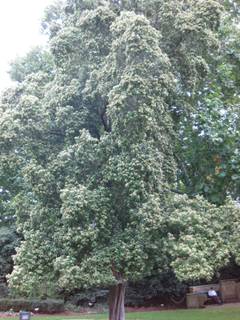
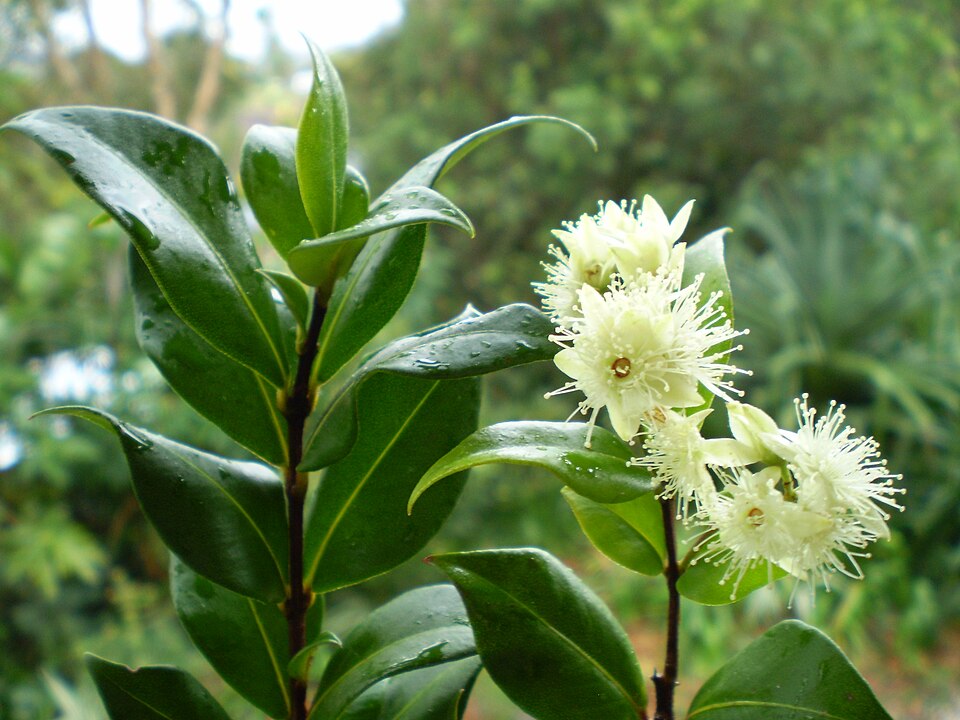
Backhousia is a genus of evergreen aromatic shrubs and trees in the family Myrtaceae, native to eastern Australia. Plants range from large shrubs 6-15 feet (1.8-4.5 m) tall to trees 30-65 feet (9-20 m) high, with dense, rounded crowns. Leaves are opposite, simple, 1.5-5 inches (4-13 cm) long, glossy green, and dotted with oil glands that release a strong scent when crushed; the fragrance varies by species from lemon in B. citriodora to aniseed in B. anisata. Small flowers, each about 0.2-0.3 inch (5-8 mm) across, are cream to white with many spreading stamens and are massed in branched clusters at the shoot tips. The persistent papery sepals enlarge around the small dry fruit. Plants are evergreen and grow slowly to moderately, taking several years to reach flowering size. Most species are frost-sensitive, with foliage damaged below about 28 F (-2 C). The aromatic leaves of B. citriodora are harvested commercially as a culinary herb and as a source of citral-rich essential oil.
Native Range
Native to eastern Australia, chiefly the subtropical and tropical rainforests of Queensland and New South Wales. Plants grow in moist, sheltered forest and along watercourses, typically below about 3,300 feet (1,000 m) in frost-free or near-frost-free climates.Suggested Uses
Grown as evergreen screening and specimen shrubs in frost-free gardens and as a culinary herb plant, spaced 6-12 feet (1.8-3.7 m) apart. B. citriodora is grown commercially for lemon-scented leaves and oil. Smaller plants are kept in containers of at least 10 gallons (38 L) and overwintered under cover in cool climates.How to Identify
Appearance
Size & Dimensions
Height6' - 65'
Width/Spread5' - 30'
Bloom Information
Flowering occurs mainly in late spring and summer, from November to February in the native range and in late spring to summer in Northern Hemisphere cultivation. The cream flower clusters open over 3-6 weeks. Flowering is heaviest on plants in full sun and may be sparse in shade.
Detailed Descriptions
Flower Description
cream to whiteFoliage Description
greenGrowing Conditions
Sun Requirements
Requires 6-10 hours of direct sunlight daily
• Full Sun: 6+ hours of direct sunlight
• Partial Shade: 3-6 hours of direct sunlight
• Full Shade: Less than 3 hours of direct sunlight
Care & Maintenance
Care Guide
Plants grow in full sun to light shade in moist, well-drained, fertile soil with a slightly acidic to neutral pH. Watering is needed through dry spells, especially while plants establish, as the genus comes from moist forest rather than arid country. Plants are frost-sensitive and may be cut back or killed below about 28 F (-2 C), and container growing allows them to be moved under cover in cold regions. Foliage holds its scent year-round and is harvested in any season in B. citriodora. Myrtle rust, a fungal disease, attacks new growth of several species and is the main health concern. Established plants tolerate light pruning and respond with bushier growth.Pruning
Prune after flowering to shape the plant and encourage dense, leafy growth for foliage harvest. Plants tolerate regular tip pruning and can be kept as a clipped shrub or hedge. Cutting into bare old wood resprouts slowly, so renewal is done in stages.Pruning Schedule
Prune: February–March
summer
Container Growing
Suitable for container growing
Minimum container size: 10 gallons