Astragalus, Genus, purshii, Species,
- Genus & species
woollypod milkvetch
Western United States and western Canada
Overview
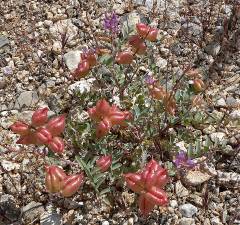
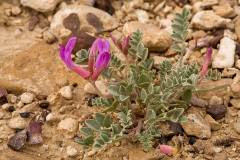
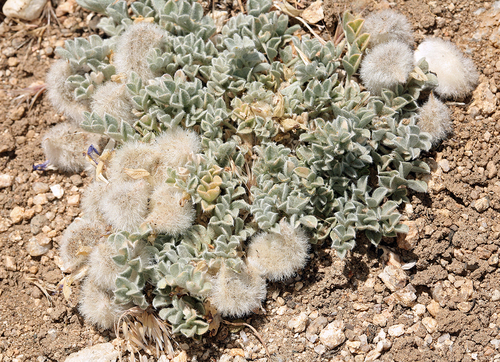
Astragalus purshii is a low, cushion- to mat-forming perennial 1-4 inches (2.5-10 cm) tall and 4-12 inches (10-30 cm) wide, growing from a branched woody base. Leaves are pinnately compound, 1-4 inches (2.5-10 cm) long, with 5-15 oval leaflets each 0.1-0.4 inch (3-10 mm) long, densely covered in silvery-white hairs that give the whole plant a gray, woolly surface. Pea-like flowers 0.5-0.9 inch (12-22 mm) long appear in short clusters of 3-9 from April to June, ranging from pink-purple to whitish or cream, often with a darker keel. The seed pods are 0.4-1 inch (1-2.5 cm) long, curved, and densely covered in long white wool, the source of the common name. The plant dies back to the woody base in summer drought and regrows in spring. A deep taproot reaches into dry soils. Growth is slow, and plants may take 3-4 years to reach flowering size from seed. Flowering is reduced in shaded sites.
Native Range
Native to western North America across the Great Basin, Columbia Plateau, and northern Rocky Mountains, from British Columbia south to California and east to the Dakotas. Grows in dry sagebrush steppe, rocky slopes, and open pine woodland in well-drained gravelly or sandy soils at 1,000-9,000 feet (300-2,700 m).Suggested Uses
Grown in rock gardens, scree beds, and dryland native plantings, spaced 8-12 inches (20-30 cm) apart. Suited to xeric and water-conserving gardens in regions with dry summers. Short-lived and difficult to establish in heavy or irrigated soils.How to Identify
Appearance
Size & Dimensions
Height1" - 4"
Width/Spread4" - 1'
Bloom Information
Flowers from April to June, beginning earlier at lower elevations and in warm springs and later at high elevations. Individual flower clusters last about 2 weeks, and the colony flowering period spans 4-6 weeks. Dry, hot conditions shorten the bloom period.
Detailed Descriptions
Flower Description
pink-purple to creamFoliage Description
silvery-greenGrowing Conditions
Sun Requirements
Requires 6-12 hours of direct sunlight daily
• Full Sun: 6+ hours of direct sunlight
• Partial Shade: 3-6 hours of direct sunlight
• Full Shade: Less than 3 hours of direct sunlight
Care & Maintenance
Care Guide
Grows in full sun in lean, gravelly or sandy, sharply drained soil. Water sparingly; established plants are adapted to dry conditions and rot in soils that hold moisture or under summer irrigation. Neutral to alkaline soils suit it, matching its native sagebrush habitat. As a legume it forms nitrogen-fixing root associations and needs no supplemental feeding. Crown and root rot develop in wet, poorly drained ground. Plants tolerate transplanting poorly once the taproot forms and are usually started from seed in place.Pruning
No pruning is required. Spent flower stalks and dried pods can be removed after seed drop if self-seeding is not wanted. Damaged growth can be trimmed away in spring as new shoots emerge from the woody base.Pruning Schedule
Prune: April
early spring