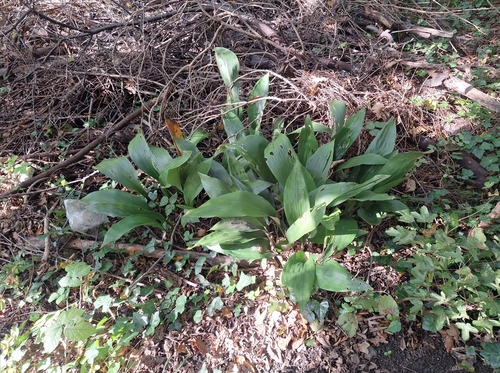
Aspidistra, Genus, spp., Multiple species,
- Genus
- Multiple species
Overview
Aspidistra is a genus of about 100 rhizomatous evergreen perennials in the asparagus family, native to eastern and southeastern Asia. Leaves arise singly from a creeping underground rhizome, each a lance-shaped to oblong blade 12-30 inches (30-75 cm) long on an upright stalk, deep glossy green and leathery; some forms are spotted or striped with cream. A. elatior, cast-iron plant, forms slowly spreading clumps 24-36 inches (60-90 cm) tall. Fleshy bell- to star-shaped flowers, dull maroon to purple, about 0.5-1 inch (1.3-2.5 cm) across, open at or just below soil level in spring and are easily hidden by the foliage. They are pollinated by small ground-dwelling invertebrates and fungus gnats. New leaves unfurl one at a time through the growing season, and the clump widens only a few inches a year. Plants tolerate deep shade, low light, and long gaps between watering. Direct sun scorches and bleaches the leaves, and cold below about 20F (-7C) damages the foliage.
Native Range
Native to China, Japan, Taiwan, Vietnam, and the eastern Himalaya, where species grow as understorey plants on the floor of shaded broadleaf and bamboo forest in humus-rich soils.Suggested Uses
Grown as a groundcover and edging in deep shade under trees and in shaded courtyards, spaced 12-18 inches (30-45 cm) apart. Long grown as a container and indoor plant for low-light rooms. Cut leaves are used in floral arrangements and last for weeks in water.How to Identify
Appearance
Size & Dimensions
Height1' - 3'
Width/Spread1'6" - 3'
Bloom Information
Maroon to purple flowers open at soil level in spring, mainly March through May. Each flower lasts 1-2 weeks, and the bloom is hidden among the leaves. Flowering is sparse on plants in deep shade or in containers.
Detailed Descriptions
Flower Description
dull maroon to purpleFoliage Description
deep glossy green, sometimes spotted or striped creamGrowing Conditions
Sun Requirements
Tolerates up to 3 hours of direct sunlight daily
• Full Sun: 6+ hours of direct sunlight
• Partial Shade: 3-6 hours of direct sunlight
• Full Shade: Less than 3 hours of direct sunlight
Care & Maintenance
Care Guide
Plants grow in part to deep shade in humus-rich, well-drained soil and tolerate low light, dry spells, and a wide pH range. Direct sun, especially in dry air, scorches and bleaches the leaves. Watering is moderate in the growing season and reduced in winter, as soggy soil rots the rhizome. Spider mites and scale insects can settle on indoor plants in dry air. Old or damaged leaves are cut at the base to keep the clump tidy. Clumps are divided in spring every few years, each division carrying several leaves and a section of rhizome.Pruning
Tattered, yellowed, or scorched leaves are cut to the base at any season. No regular pruning is otherwise needed. Division in spring renews crowded clumps and produces new plants.Pruning Schedule
spring
Container Growing
Suitable for container growing
Minimum container size: 3 gallons
