Arthropodium, Genus, milleflorum, Species,
- Genus & species
pale vanilla lily
Overview
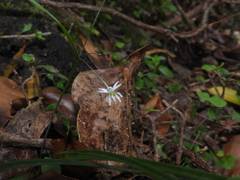
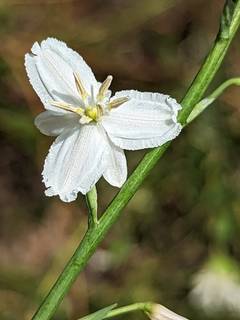
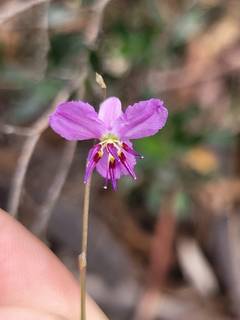
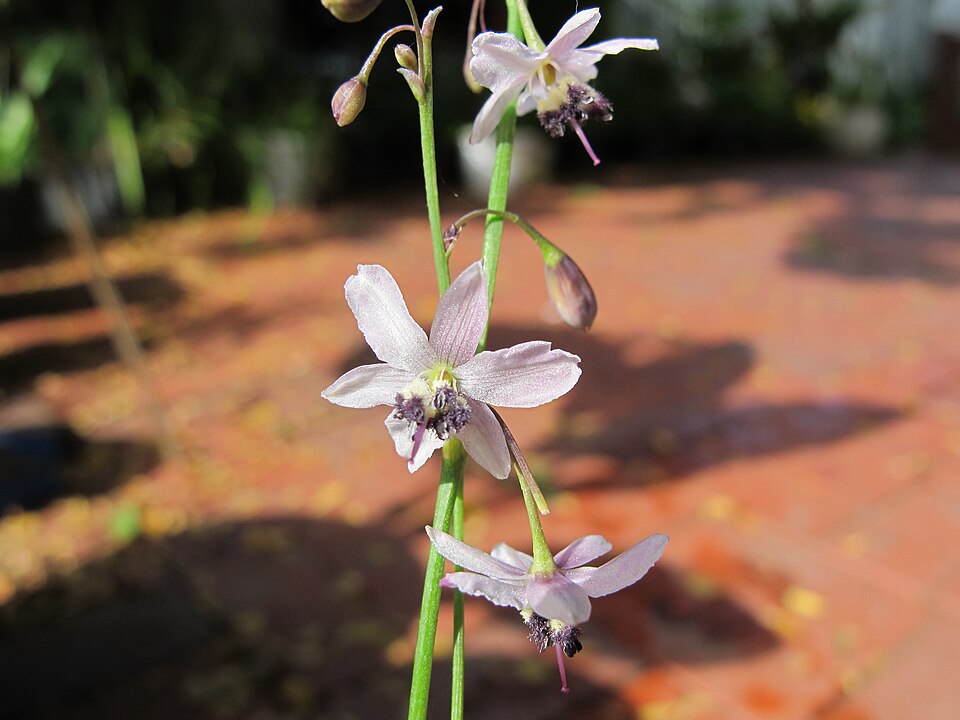
Arthropodium milleflorum is a tuberous perennial herb reaching 16-39 inches (40-100 cm) tall in flower, with a basal clump of grass-like leaves 8-20 inches (20-50 cm) long and 0.2-0.4 inch (5-10 mm) wide. Leaves are flat, soft, and channelled, mid-green to grey-green, dying back in cold or dry seasons. Flowering stems are branched, rising above the foliage and carrying many small flowers in an open panicle. Each flower is 0.4-0.6 inch (10-15 mm) across with six pale lilac to white tepals and fringed central filaments, opening for a single day. Flowers are followed by small three-chambered capsules holding black seeds. The plant grows from a cluster of fleshy, swollen roots that store water and carbohydrate, allowing it to survive dry summers and regrow from the rootstock. Growth is fastest in spring; foliage may yellow and collapse during prolonged drought, with regrowth after autumn rain. In colder parts of its range the plant is dormant through winter. The display lasts several weeks as new flowers open in succession.
Native Range
Native to south-eastern Australia, occurring in New South Wales, Victoria, Tasmania, South Australia, and the Australian Capital Territory, with scattered records in Queensland. Grows in grassland, grassy woodland, and open forest, often in moist depressions and along watercourses from sea level to subalpine elevations above 4,900 feet (1,500 m).Suggested Uses
Grown in cottage gardens, native and meadow plantings, and grassland restoration, spaced 12-16 inches (30-40 cm) apart. Suited to moist borders and the margins of ponds where summer moisture is retained. Grows in containers of at least 2 gallons (8 L) with free-draining mix.How to Identify
Appearance
Size & Dimensions
Height1'4" - 3'3"
Width/Spread8" - 1'
Colors
Bloom Information
Flowers from November to February in its native range, corresponding to late spring through summer. Individual flowers open for a single day, but a branched stem produces a succession of flowers over 4-6 weeks. Flowering is reduced in dry summers and more prolonged where soil moisture is retained.
Detailed Descriptions
Flower Description
pale lilac to whiteFoliage Description
mid-green to grey-greenGrowing Conditions
Sun Requirements
Requires 4-8 hours of direct sunlight daily
• Full Sun: 6+ hours of direct sunlight
• Partial Shade: 3-6 hours of direct sunlight
• Full Shade: Less than 3 hours of direct sunlight
Care & Maintenance
Care Guide
Grows in full sun to part shade in moist, well-drained soil. Regular watering through the first growing season helps establish the root system; established plants draw on their fleshy roots and tolerate seasonal dry periods, though foliage dies back early in drought. Foliage yellows and collapses with the onset of cold or dry conditions and regrows from the rootstock after rain. Snails and slugs feed on young foliage in spring. Plants self-seed where soil is left undisturbed and can be divided in autumn or early spring when dormant. Growth is slow from seed, with flowering usually beginning in the second year.Pruning
Requires no formal pruning. Spent flowering stems can be cut back to the base after seed set to limit self-seeding. Collapsed foliage can be removed once it has yellowed, which does not affect regrowth from the rootstock.Pruning Schedule
Prune: March–April
fall
Container Growing
Suitable for container growing
Minimum container size: 2 gallons