Armoracia, Genus, rusticana, Species,
- Genus & species
Horseradish
Southeastern Europe and western Asia
Overview
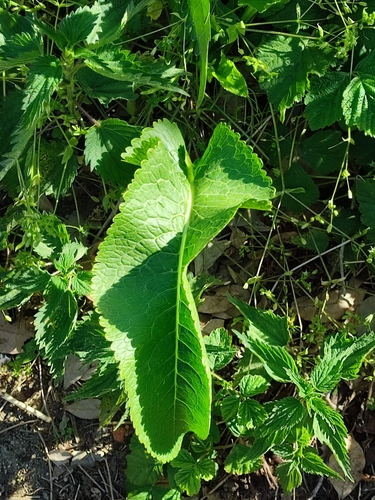
Armoracia rusticana is a vigorous herbaceous perennial 2-5 feet (60-150 cm) tall, grown for its thick, white, pungent taproot. The large basal leaves are dock-like, oblong, 1-3 feet (30-90 cm) long, with wavy toothed margins and long stalks, rising in a coarse clump from the crown. In late spring and summer it sends up branched stems bearing many small four-petalled white flowers typical of the cabbage family, though seed is rarely set. The plant spreads mainly from its deep, brittle roots, and even small root fragments left in the soil regrow into new plants. The grated root carries a sharp, hot flavor from mustard oils released when the tissue is cut. It grows on a wide range of soils in cool temperate regions. A limitation in the garden is its invasive root system, which makes the plant persistent and hard to remove once established.
Native Range
Armoracia rusticana is native to southeastern Europe and western Asia. It has been cultivated for centuries and has naturalized widely across Europe, North America, and other temperate regions, often persisting on old garden sites and waste ground.Suggested Uses
Armoracia rusticana is grown in vegetable gardens and herb beds for its pungent root, which is grated as a condiment. It is often planted in a sunken container or isolated bed to contain its spreading roots. The leaves are edible when young, and the flowers supply nectar for early insects.How to Identify
Appearance
Size & Dimensions
Height2' - 5'
Width/Spread2' - 3'
Bloom Information
Detailed Descriptions
Foliage Description
greenGrowing Conditions
Sun Requirements
Requires 6-8 hours of direct sunlight daily
• Full Sun: 6+ hours of direct sunlight
• Partial Shade: 3-6 hours of direct sunlight
• Full Shade: Less than 3 hours of direct sunlight
Care & Maintenance
Care Guide
Armoracia rusticana grows in full sun to part shade in deep, moist, fertile soil that allows the roots to develop, tolerating a soil pH from about 6.0 to 7.5. It is fully hardy and adapts to most soils, though loose, stone-free ground produces straighter roots. Plants grow from root cuttings set in spring and are lifted in autumn or winter once the roots have thickened. The species spreads strongly from root fragments, so it is often confined to a dedicated bed or container. Top growth dies down in winter and regrows from the crown in spring. Lifting the whole root each year limits unwanted spread.Pruning
Pruning is limited to removing the large outer leaves as they age and cutting back flower stems to direct energy into the roots. Top growth is cleared away after it dies down in autumn. Lifting and dividing the roots each year keeps the clump in check.Container Growing
Suitable for container growing
Minimum container size: 5 gallons