Armoracia, Genus, spp., Multiple species,
- Genus
- Multiple species
Southeastern Europe and western Asia
Overview
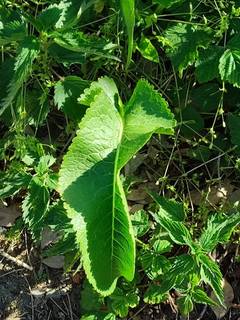
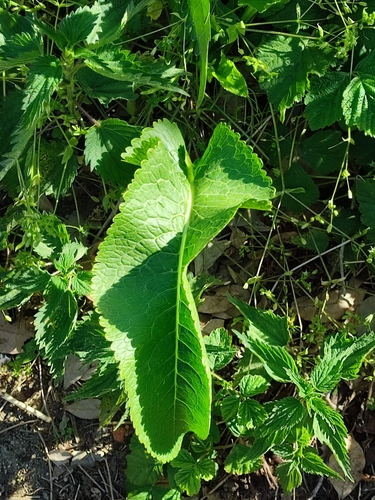
Armoracia is a genus of about three coarse, deep-rooted perennials in the cabbage family. The widely grown A. rusticana, horseradish, forms a clump of large oblong basal leaves 12-24 inches (30-60 cm) long with crinkled, toothed margins on stout petioles, the whole clump reaching 24-48 inches (60-120 cm) tall. Flowering stems rise to 36-60 inches (90-150 cm), bearing branched clusters of small white four-petaled flowers in late spring and summer; many cultivated plants set little or no viable seed. The thick white taproot is pungent, containing sinigrin that releases sharp-smelling allyl isothiocyanate when cut. A. aquatica, lake cress, is an aquatic North American species with finely divided submerged leaves. Roots spread laterally, and fragments left in the soil regrow, so colonies enlarge year to year and can persist after removal. Foliage dies back to the root in winter and reappears in spring. Leaves may be holed by flea beetles and the caterpillars of cabbage-family pests. The mustard oils in root and foliage can cause digestive upset in dogs, cats, and horses.
Native Range
A. rusticana is native to southeastern Europe and western Asia and is now naturalized across temperate Europe, North America, and Asia. A. aquatica is native to eastern and central North America in ponds, slow streams, and marshes. Plants grow in moist, fertile lowland soils and disturbed ground.Suggested Uses
Grown in kitchen gardens and herb beds as a perennial root crop, spaced 18-24 inches (45-60 cm) apart. The spreading roots suit a confined bed or a buried container that limits lateral growth. Large leaves and tall flower stems also place it at the back of informal borders.How to Identify
Appearance
Size & Dimensions
Height2' - 4'
Width/Spread2' - 3'
Bloom Information
White flowers appear from late spring into summer, roughly May through July in temperate zones. In A. rusticana flowering stems are often produced but seed set is sparse or absent. Bloom lasts 3-5 weeks. Cool spring weather lengthens the flowering period.
Detailed Descriptions
Foliage Description
deep greenGrowing Conditions
Sun Requirements
Requires 6-10 hours of direct sunlight daily
• Full Sun: 6+ hours of direct sunlight
• Partial Shade: 3-6 hours of direct sunlight
• Full Shade: Less than 3 hours of direct sunlight
Care & Maintenance
Care Guide
Plants grow in full sun to part sun in deep, moist, fertile soil and tolerate a wide pH range. Established roots withstand drought, but leaves wilt and scorch in prolonged dry heat. Root fragments left in the ground regrow, so the clump expands and is difficult to fully remove once established. Flea beetles pit the leaves in spring, and cabbage-family caterpillars chew the foliage in summer. Roots are lifted in autumn after frost, when pungency is highest. Mustard oils in the root and leaves can cause drooling, vomiting, and digestive upset in dogs, cats, and horses.Pruning
Old flowering stems are cut back after bloom to direct energy to the root. Tattered or frosted leaves are removed in late autumn. Lifting and dividing the crown every 1-2 years limits the spread of the running roots.Pruning Schedule
summerfall
Container Growing
Suitable for container growing
Minimum container size: 5 gallons