Image 1 of 10
1 / 10
© No machine-readable author provided. Curtis Clark assumed (based on copyright claims)., some rights reserved (CC-BY-SA) · Wikimedia Commons
Aristolochia, Genus, californica, Species,
- Genus & species
California Dutchman's pipe
Overview
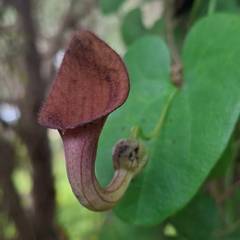
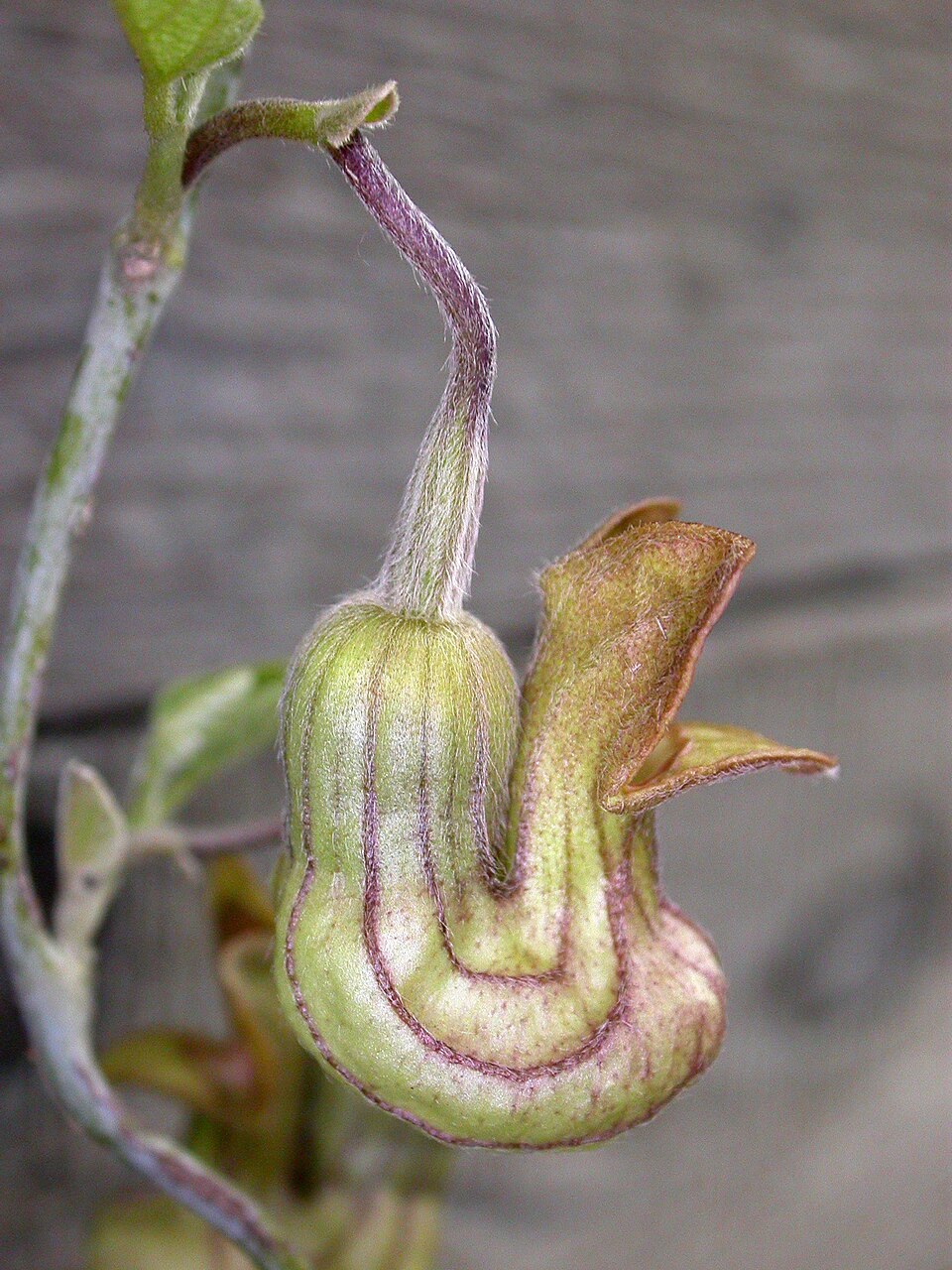
Aristolochia californica is a deciduous woody vine that climbs 6-12 feet (1.8-3.7 m) by twining around supports. From late winter into early spring it produces curved, pipe-shaped flowers about 1-1.5 inches (2.5-3.8 cm) long, pale green with maroon and white veining, that appear before or with the new leaves. The flowers bend into a U-shape and trap small flies that pollinate them. Heart-shaped leaves emerge after bloom, 2-5 inches (5-13 cm) long, on stems that turn woody with age. The vine is native to northern and central California, where it grows in canyons, streambanks, and shaded woodland along watercourses. It grows in partial to full shade in moist, well-drained soil and goes dormant in winter, dropping its leaves. All parts contain aristolochic acid, which is toxic if eaten and is a kidney toxin and carcinogen in mammals. The foliage is the sole larval food of the California pipevine swallowtail butterfly, whose caterpillars store the plant's toxins. Establishment is slow, and young vines may take several years to flower. Hardy in USDA zones 8-10.
Native Range
Aristolochia californica is native to northern and central California, primarily in the Coast Ranges, Sacramento Valley, and Sierra Nevada foothills. It grows along streams, in canyons, and in shaded woodland margins below 1,500 feet (450 m).Suggested Uses
Used on trellises, arbors, and fences in shaded native and woodland gardens. Planted to support populations of the pipevine swallowtail butterfly. Spaced 4-6 feet (1.2-1.8 m) apart where vines are grown along a structure.How to Identify
Appearance
Size & Dimensions
Height6' - 12'
Width/Spread3' - 6'
Bloom Information
Detailed Descriptions
Flower Description
Green with maroon veinsFoliage Description
GreenGrowing Conditions
Sun Requirements
Requires 2-6 hours of direct sunlight daily
• Full Sun: 6+ hours of direct sunlight
• Partial Shade: 3-6 hours of direct sunlight
• Full Shade: Less than 3 hours of direct sunlight
Care & Maintenance
Care Guide
Grow in partial to full shade in moist, well-drained soil with steady moisture through the growing season. Provide a trellis, fence, or shrub for the twining stems to climb. Water regularly in the first few years, as the vine grows poorly in dry soil. It dies back in winter and resumes from the woody base in spring. Plants are slow to establish and may not flower for two to three years. All parts contain aristolochic acid and are toxic if eaten.Pruning
Prune in late winter while dormant to remove dead stems and shape the vine. Cut back overgrown stems to keep the plant within its support. Heavy pruning during the growing season reduces flowering the following year.Pruning Schedule
Prune: January–February
winter