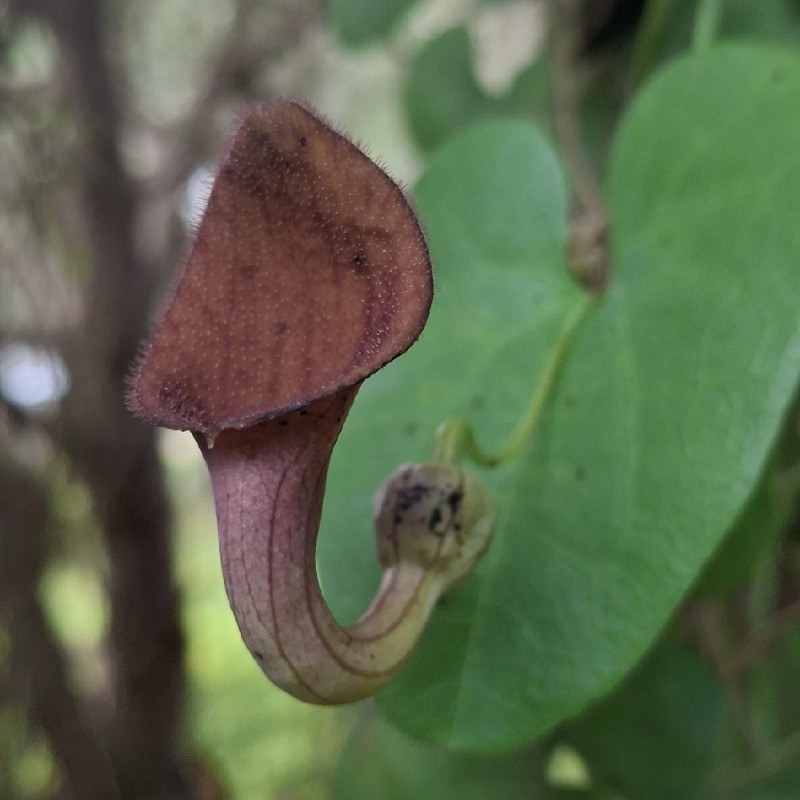
Aristolochia, Genus, spp., Multiple species,
- Genus
- Multiple species
pipevines and birthworts
Pantropical and warm-temperate; Americas, Asia, Africa, and Europe
Overview
Aristolochia is a large genus of roughly 400 to 500 species of climbing vines and herbaceous perennials in the family Aristolochiaceae, distributed across tropical and warm-temperate regions worldwide. Climbing species twine to 3-10 m (10-33 ft), while herbaceous species form clumps 0.3-1 m (1-3.3 ft) tall. The leaves are usually heart-shaped and 5-30 cm (2-12 in) long. The flowers give the genus its character: a curved, tubular perianth shaped like a pipe or siphon, often swollen at the base into a chamber and flared into a mottled purple-brown, maroon, or yellow-green limb at the mouth. These flowers briefly trap small flies, which pollinate them before being released. Flower size ranges from under 2 cm (0.8 in) in temperate species to more than 30 cm (12 in) in tropical A. gigantea. The fruit is a ribbed capsule that splits to release flat, stacked seeds. Aristolochia foliage is the larval food of swallowtail butterflies in the genus Battus. All parts contain aristolochic acid, a compound linked to kidney damage and urinary-tract cancers in humans, which limits any culinary or medicinal use.
Native Range
Native across tropical and warm-temperate parts of the Americas, Asia, Africa, and Europe. The genus reaches its greatest diversity in tropical Central and South America and in eastern Asia, with several species, including A. macrophylla and A. tomentosa, native to eastern North America.Suggested Uses
Climbing species are grown on arbours, fences, and pergolas for dense summer screening and as larval host plants for swallowtail butterflies. Herbaceous species are used in woodland and shade borders. The large-leaved vines create quick seasonal cover on vertical structures.How to Identify
Appearance
Size & Dimensions
Height1' - 33'
Width/Spread3' - 10'
Bloom Information
Bloom time varies widely with climate. Temperate species such as A. macrophylla flower in late spring to early summer, roughly May to June, with the small flowers often hidden beneath the foliage. Tropical species can flower over many months or year-round. Individual flowers last only a few days while they complete their fly-pollination cycle.
Detailed Descriptions
Flower Description
maroon, purple-brown, or yellow-greenFoliage Description
greenGrowing Conditions
Sun Requirements
Requires 4-8 hours of direct sunlight daily
• Full Sun: 6+ hours of direct sunlight
• Partial Shade: 3-6 hours of direct sunlight
• Full Shade: Less than 3 hours of direct sunlight
Water & Climate
Water Needs
