Arisarum, Genus, proboscideum, Species,
- Genus & species
mouse plant
Overview
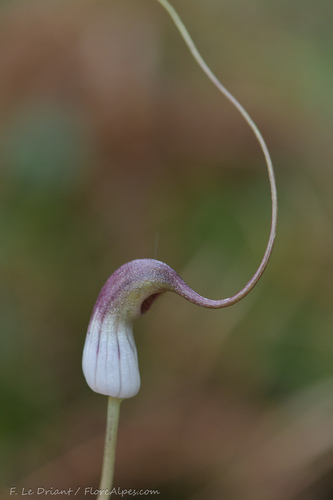
Arisarum proboscideum is a rhizomatous perennial reaching 4–8 inches (10–20 cm) tall with a spread of 12–24 inches (30–60 cm), forming low, dense colonies over time. Leaves are arrow-shaped (sagittate), 3–5 inches (8–13 cm) long and 2–3 inches (5–8 cm) wide, glossy dark green, emerging in early spring and forming a ground-covering mat. The spathe is 1–1.5 inches (2.5–4 cm) long, dark chocolate-brown to maroon at the base, tapering into a long, curved, tail-like appendage 4–6 inches (10–15 cm) long that arches upward from ground level, resembling a mouse tail protruding from beneath the foliage. Flowers are produced at ground level and are largely concealed by the leaf canopy; parting the foliage reveals the spathes at the soil surface. The plant spreads by branching rhizomes, extending 3–6 inches (8–15 cm) per year under favorable conditions, forming a continuous mat within 3–5 years from a single planting. Foliage persists from early spring through mid to late summer, then senesces and disappears by fall in zones 7 and warmer; in cooler zones, dormancy occurs earlier. This species does not produce showy fruit. Summer drought accelerates dormancy and may reduce rhizome expansion.
Native Range
Arisarum proboscideum is native to central and southern Italy and Spain. It grows in deciduous forests and shaded woodland margins in humus-rich, moist soils at elevations from 650 to 3,300 feet (200–1,000 m).Suggested Uses
Planted as a ground cover in shaded woodland gardens at 8–12 inch (20–30 cm) spacing for coverage within 2–3 years. Suitable for underplanting beneath deciduous trees and shrubs where a low, dense mat is desired. Grown in containers of at least 3 gallons (11 L) in a humus-rich, moisture-retentive mix; shallow containers or troughs suit the low growth habit.How to Identify
Appearance
Size & Dimensions
Height4" - 8"
Width/Spread1' - 2'
Bloom Information
Flowers appear in March–April in zones 7–9 and April–May in zones 5–6. The spathe persists for 3–4 weeks at ground level beneath the leaf canopy. Flowers are pollinated by fungus gnats attracted to the dark, mushroom-like spathe. Fruit is rarely produced in cultivation outside its native range.
Detailed Descriptions
Flower Description
Dark chocolate-brown to maroonFoliage Description
Glossy dark greenGrowing Conditions
Sun Requirements
Requires 2-4 hours of direct sunlight daily
• Full Sun: 6+ hours of direct sunlight
• Partial Shade: 3-6 hours of direct sunlight
• Full Shade: Less than 3 hours of direct sunlight
Care & Maintenance
Care Guide
Plant rhizomes 2–3 inches (5–8 cm) deep in humus-rich, consistently moist soil in fall. Consistent moisture during the growing season is essential; dry conditions trigger early dormancy and slow colony expansion. Winter drainage is less critical than for tuberous Arisaema species, as rhizomes tolerate moderately moist winter soils. Slugs feed on emerging foliage in spring. The colony expands slowly, covering approximately 1 square foot (0.09 sq m) per year under favorable conditions. Plants take 3–5 years to form a dense ground cover from initial planting.Pruning
No pruning required. Foliage yellows and senesces in summer; spent leaves can be removed once brown or left to decompose in place. No deadheading is needed as fruit is rarely produced. Rhizome spread can be managed by lifting and dividing sections in fall if the colony exceeds desired bounds.Pruning Schedule
Prune: July–August
summer
Container Growing
Suitable for container growing
Minimum container size: 3 gallons