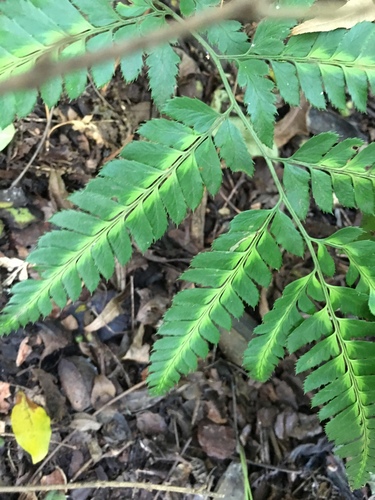
Arachniodes, Genus, simplicior, Species,
- Genus & species
variegated holly fern
East Asia — Japan, China, Korea, and northern India
Overview
Arachniodes simplicior is an evergreen fern in the Dryopteridaceae family that grows 12-18 inches (30-45 cm) tall and 18-24 inches (45-60 cm) wide. The primary ornamental feature is the characteristic variegation: each dark green bipinnate frond has a prominent pale yellow to chartreuse stripe running along the central axis (rachis) of each pinna, creating a two-toned striped effect rare among commonly grown ferns. The species name 'simplicior' means 'simpler', referring to the less-divided frond structure compared to related species. The genus name Arachniodes means 'spider-like', referencing the small, web-like indusial covering over the spore cases. Glossy, leathery, holly-like pinnae with pointed tips give the frond a refined, somewhat spiny appearance. The evergreen fronds persist through mild winters, providing year-round structure in shade gardens. The rhizome creeps slowly, expanding the clump gradually. Once established, the species is more drought-tolerant than many shade ferns, tolerating brief dry periods without immediate browning. In zone 6, the fronds may suffer winter burn but the rhizome typically survives with mulch protection. The variegated pattern brightens dark shade areas where most plants would be uniformly green. Deer rarely browse ferns.
Native Range
Arachniodes simplicior is native to East Asia, occurring in Japan, China, Korea, and northern India. It grows in moist, shaded forests and rocky woodland slopes.Suggested Uses
Used in shade gardens where the variegated fronds brighten dark areas. Container culture works in pots of 3 gallons (11 liters) or more in shaded positions. The year-round evergreen presence adds winter interest in mild zones. Pairs with solid dark-green ferns, hostas, and blue-flowered shade perennials for foliage contrast.How to Identify
Appearance
Size & Dimensions
Height1' - 1'6"
Width/Spread1'6" - 2'
Colors
Foliage Colors
Fall Foliage Colors
Reproduction
Spores are produced on the undersides of fertile fronds in midsummer.
Detailed Descriptions
Foliage Description
Dark green with a prominent pale yellow to chartreuse central stripe along each pinnaGrowing Conditions
Sun Requirements
Requires 2-5 hours of direct sunlight daily
• Full Sun: 6+ hours of direct sunlight
• Partial Shade: 3-6 hours of direct sunlight
• Full Shade: Less than 3 hours of direct sunlight
Care & Maintenance
Care Guide
Plant in partial to full shade with 2-5 hours of filtered light. Moist, humus-rich, well-drained soil. Watering during dry spells matters, though established plants tolerate brief drought. Mulching with 2-3 inches (5-8 cm) of leaf mold is helpful. Winter-damaged fronds are removed in early spring. In zone 6, winter mulch is applied over the rhizome. The variegation is brightest in moderate shade — deep shade reduces contrast.Pruning
Brown or winter-damaged fronds are removed in early spring before new fronds emerge. No other seasonal maintenance is needed.Pruning Schedule
Prune: March
early spring
Container Growing
Suitable for container growing
Minimum container size: 3 gallons