Arachniodes, Genus, spp., Multiple species,
- Genus
- Multiple species
holly fern
East and Southeast Asia, with species in the Americas, Africa, and the Pacific
Overview
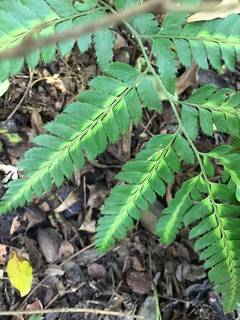
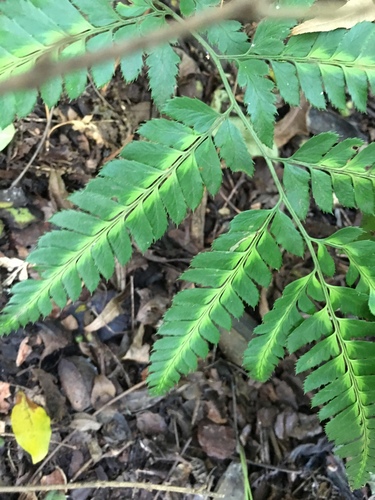
Arachniodes is a genus of about 50 evergreen ferns in the wood-fern family Dryopteridaceae, found mainly in East and Southeast Asia with a few species in the Americas, Africa, and the Pacific. Plants grow from a creeping or short-creeping rhizome and form tufts or spreading patches of glossy, leathery fronds 12-36 inches (30-90 cm) long. The fronds are two to four times divided, triangular to lance-shaped in outline, with stiff, pointed segments that give many species a slightly spiny, holly-like texture. Frond color is a deep, polished green, sometimes with a paler central band in variegated forms such as A. simplicior. As ferns, the genus bears no flowers or seeds, reproducing by spores carried in round sori on the frond undersides, each covered by a small kidney-shaped shield. New fronds unfurl from coiled crosiers in spring and persist through the year, while the rhizome slowly extends the clump. The genus grows in moist, shaded forest, on slopes, and along stream banks in humus-rich soil. Most species are woodland plants of mild, frost-free to lightly frosted climates, though a few tolerate harder winters. The tough, lasting fronds keep the genus present on the shaded ground through every season.
Native Range
Native mainly to East and Southeast Asia, with scattered species in the Americas, Africa, and Pacific islands. Plants grow in moist, shaded forest, on slopes, and along streams in humus-rich soil.Suggested Uses
Arachniodes is grown in shade and woodland gardens, along shaded paths, and in mixed plantings with hostas, hellebores, and other ferns. The glossy evergreen fronds give structure and winter presence in the shade garden. Lower species are also grown as groundcover and in containers for shaded patios.How to Identify
Appearance
Size & Dimensions
Height1' - 3'
Width/Spread1' - 2'6"
Bloom Information
As a fern, the genus produces no flowers. Spores ripen in round sori on the undersides of mature fronds, mainly in late summer and autumn, and are shed to grow into tiny separate plants. New fronds uncurl from crosiers in spring.
Detailed Descriptions
Foliage Description
deep glossy greenGrowing Conditions
Sun Requirements
Tolerates up to 4 hours of direct sunlight daily
• Full Sun: 6+ hours of direct sunlight
• Partial Shade: 3-6 hours of direct sunlight
• Full Shade: Less than 3 hours of direct sunlight
Care & Maintenance
Care Guide
Plants grow in part to full shade in moist, well-drained, humus-rich soil with a pH near 5.5 to 7.0. The genus prefers steady moisture and shelter from drying wind and direct midday sun, which can scorch the fronds. Hardiness varies by species, with many suited to USDA zones 6 to 9 and some tender types needing frost-free conditions. Propagation is by spores or by dividing the rhizome in spring. A mulch of leaf litter conserves moisture and feeds the shallow roots, and established clumps need little care beyond removing old fronds. Dry soil, deep frost, and full sun are the main limits on the genus.Pruning
Old, damaged, or winter-worn fronds are cut away at the base in late winter or early spring before the new crosiers unfurl. No other pruning is needed. Removing tattered fronds through the year keeps the clump looking fresh.Container Growing
Suitable for container growing
Minimum container size: 3 gallons