Image 1 of 13
1 / 13
© Credit: Phyzome is Tim McCormack, some rights reserved (CC-BY-SA) · Wikimedia Commons
Arabidopsis, Genus, thaliana, Species,
- Genus & species
mouse-ear cress
SunFull Sun – Part Shade
WaterLow
Overview
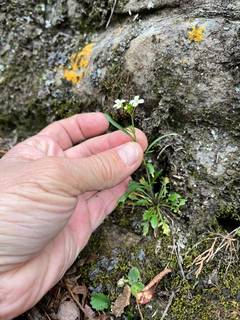
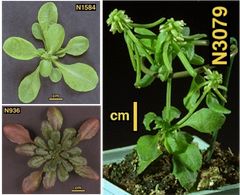
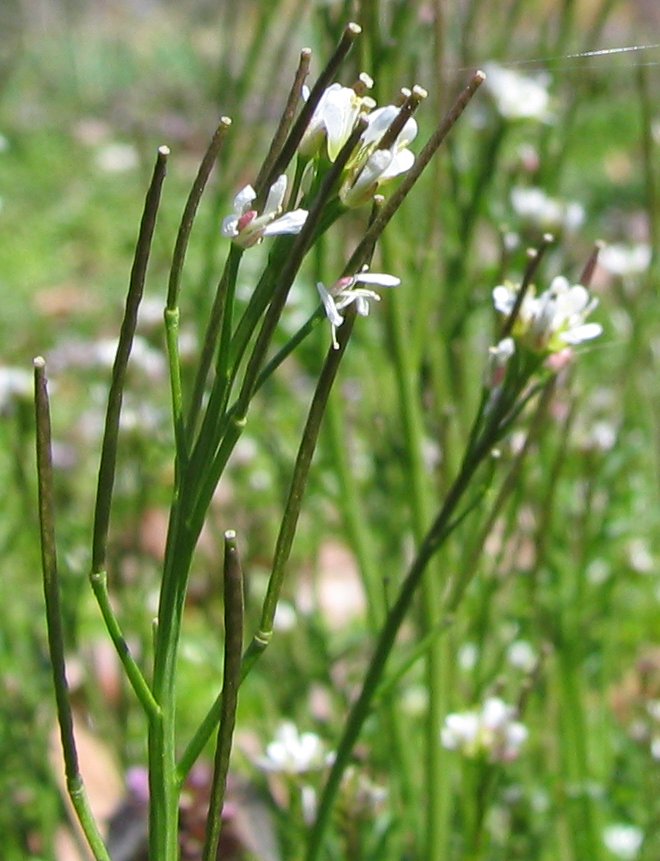
Arabidopsis thaliana is a small, short-lived annual of the cabbage family, 2-12 inches (5-30 cm) tall, growing from a flat basal rosette of spoon-shaped, slightly toothed leaves. From the rosette rise one or more slender, sparsely leafy stems carrying loose clusters of tiny white four-petalled flowers, each about 0.1 inch (3 mm) across. The flowers give way to narrow, upright seed pods 0.4-0.8 inch (10-20 mm) long that split to release many minute seeds. It completes its whole life cycle in as little as six weeks, germinating in autumn or spring, flowering quickly, and dying after seed set. The plant grows on dry, open, disturbed ground such as walls, banks, paths, sandy fields, and rocky slopes, on poor, well-drained soil. It is shallow-rooted, easily pulled, and rarely persists in closed turf or rich borders. With its small genome and rapid generations it became the main model plant of laboratory genetics, which accounts for much of its fame. In the garden it appears mainly as a minor early weed.
Native Range
Arabidopsis thaliana is native across Europe, Asia, and parts of North Africa, and has spread widely as a weed into North America and other temperate regions. It grows on dry, open, sandy or rocky ground, walls, and disturbed soil.Suggested Uses
Rarely grown for ornament, it is used mainly as a model organism in plant science teaching and research. In the garden it occurs as a small spring weed of walls, paths, and bare, sandy ground.How to Identify
Appearance
Size & Dimensions
Height2" - 1'
Width/Spread2" - 4"
Bloom Information
Small white flowers open from March to May, and sometimes again in autumn from late-germinating plants. Each plant blooms briefly before turning to seed. The flowers self-pollinate, so seed sets reliably without insect visits.
Detailed Descriptions
Foliage Description
greenGrowing Conditions
Sun Requirements
Requires 4-12 hours of direct sunlight daily
• Full Sun: 6+ hours of direct sunlight
• Partial Shade: 3-6 hours of direct sunlight
• Full Shade: Less than 3 hours of direct sunlight
Water & Climate
Water Needs
Care & Maintenance
Care Guide
As a fast annual it needs no cultivation and grows on poor, dry, well-drained soil in full sun to light shade. Seed germinates in autumn or spring, and plants complete flowering and seeding within a few weeks. It needs no feeding or watering and self-sows from a persistent seed bank. In research and teaching it is sown thinly in trays of free-draining compost and grown under bright light. Where unwanted in beds, seedlings are hoed or pulled before the pods ripen.Pruning
No pruning applies to this tiny annual. Plants are pulled or hoed off before the seed pods shed where self-sowing is unwanted. The whole plant dies back naturally once seed is set.Toxicity
Non-toxicPlanting Guide
Planting Methods & Timing
Planting Method
direct sow
Direct Sow Timing
Sow autumn or early spring; self-sows freely
Days to Maturity
42–56 days