Image 1 of 3
1 / 3
© Credit: Phyzome is Tim McCormack, some rights reserved (CC-BY-SA) · Wikimedia Commons
Arabidopsis, Genus, spp., Multiple species,
- Genus
- Multiple species
SunFull Sun – Part Shade
Overview
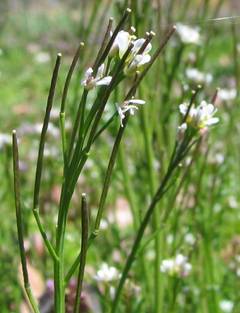
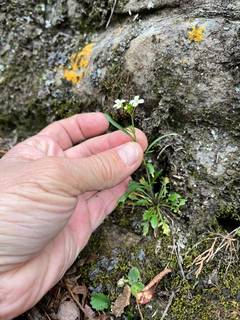
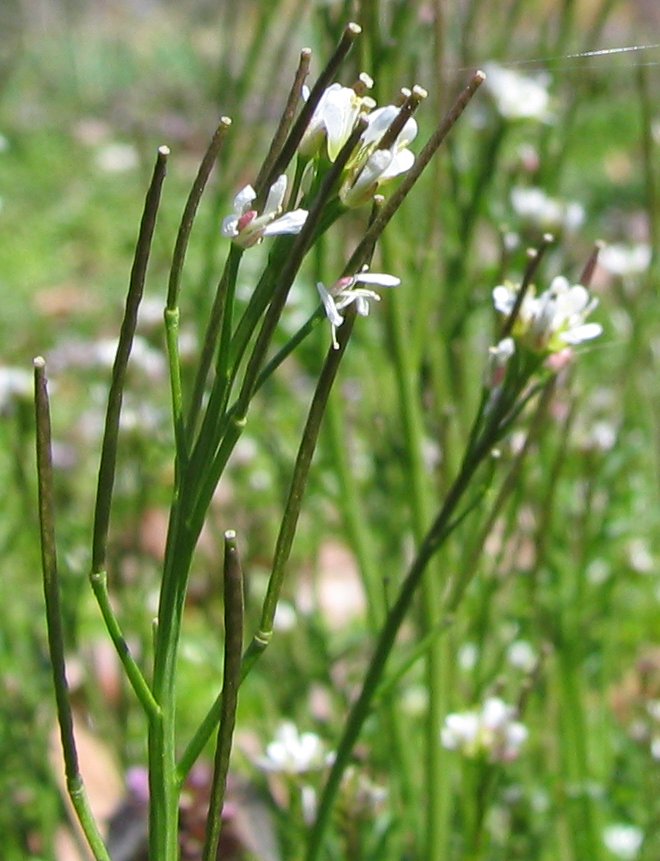
Arabidopsis is a genus of about nine species of small annual and short-lived perennial herbs in the mustard family, native to Europe, Asia, and North Africa, with some species naturalized more widely. Plants begin as a flat basal rosette of small, oval to lobed leaves, then send up slender, branching flower stems 2-16 in (5-40 cm) tall. The flowers are tiny, 0.1-0.2 in (3-5 mm) across, with four white petals in the cross shape typical of the family, carried in small clusters at the stem tips. Each flower forms a narrow, upright seed pod, or silique, 0.4-0.8 in (10-20 mm) long, splitting to release many minute seeds. The thale cress, A. thaliana, completes its entire life cycle in as little as six weeks and is a widely used model plant in genetics and molecular biology, with a small, fully sequenced genome. Most species grow as weeds of disturbed ground, rock outcrops, sandy soil, and roadsides. Arabidopsis grows in full sun to part shade on poor, well-drained soil, needs little care, and self-seeds freely, but the plants are short-lived and grown for study rather than ornament.
Native Range
Native to Europe, central and northern Asia, and North Africa, growing in open, disturbed, and rocky places; several species, including thale cress, have naturalized across temperate regions of the world. The genus is common on sandy soil, walls, and waste ground.Suggested Uses
Grown chiefly as a laboratory and teaching model in plant genetics, development, and molecular biology rather than as a garden plant. In the wild and in restoration settings it appears as a minor component of sandy grassland and disturbed ground.How to Identify
Appearance
Size & Dimensions
Height2" - 1'4"
Width/Spread2" - 8"
Bloom Information
Flowering occurs mainly in spring, generally March to May, though the rapid annual species can flower in any season when conditions allow. The small white flowers open over a few weeks at the stem tips. Seed pods ripen quickly, often while the plant is still flowering.
Detailed Descriptions
Foliage Description
Green, rosetteGrowing Conditions
Sun Requirements
Requires 4-10 hours of direct sunlight daily
• Full Sun: 6+ hours of direct sunlight
• Partial Shade: 3-6 hours of direct sunlight
• Full Shade: Less than 3 hours of direct sunlight
Care & Maintenance
Care Guide
Grow in full sun to part shade on poor to average, well-drained soil; the genus tolerates dry, sandy, and rocky ground and needs little fertility or water. Most species are annuals or short-lived perennials that complete their cycle quickly and then die, relying on abundant self-sown seed to return. Seed is sown on the soil surface, as it needs light to germinate, and many seeds sprout within days. In research, plants are grown in pots or trays under controlled light and temperature. The genus self-seeds freely and can become weedy in open ground. Hardiness spans USDA zones 4-9 depending on species.Pruning
Pruning is not required for these small, short-lived plants. Spent stems can be removed to reduce self-seeding. Whole plants are cleared once they have set seed and died back.Container Growing
Suitable for container growing
Minimum container size: 1 gallons
Toxicity
Non-toxicPlanting Guide
Planting Methods & Timing
Planting Method
direct sow
Direct Sow Timing
Spring or autumn, surface sown
Days to Maturity
40–60 days
Plant Spacing
4 inches