Apopellia, Genus, endiviifolia, Species,
- Genus & species
endive pellia
SunPart Shade – Full Shade
WaterHigh
Overview
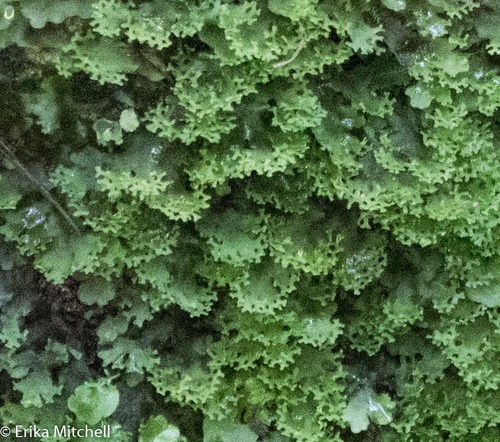
Apopellia endiviifolia is a thallose liverwort in the Pelliaceae, a non-vascular plant that grows as a flat, branching, ribbon-like thallus rather than as stems and leaves. Each green to dark green strap is about 0.2–0.4 inch (5–10 mm) wide and several inches long, with a thickened midrib and a wavy margin; in autumn the tips divide into many narrow, curled branchlets that resemble curly endive and give the plant its name. It attaches to the ground by slender rhizoids on the underside and spreads into overlapping patches. Reproduction is mainly vegetative through the autumn branchlets, with spores released from a stalked capsule in spring on separate female plants. It grows on damp, shaded, often lime-rich ground, including stream banks, ditches, wet rock, dune slacks, and bare soil across Europe and much of the temperate Northern Hemisphere. It needs constant moisture and shade and shrivels where the surface dries or is exposed to strong sun. Patches are easily damaged by disturbance and competition from larger plants.
Native Range
Native across Europe and much of the temperate Northern Hemisphere, on damp, shaded, often lime-rich ground. It occurs on stream banks, ditches, wet rock, and bare moist soil.Suggested Uses
Grown on the damp, shaded margins of ponds, streams, and bog gardens, and on moist rock or soil in terrariums. It is also used in naturalistic and conservation plantings of wet, shaded habitats.How to Identify
Growing Conditions
Sun Requirements
Tolerates up to 4 hours of direct sunlight daily
• Full Sun: 6+ hours of direct sunlight
• Partial Shade: 3-6 hours of direct sunlight
• Full Shade: Less than 3 hours of direct sunlight
Water & Climate
Water Needs
Care & Maintenance
Care Guide
Grows in full to partial shade on constantly damp, neutral to lime-rich soil, rock, or peat. Water needs are high, and the surface is kept moist at all times, since the thallus dries and dies quickly when exposed. It is increased by lifting and spreading pieces of thallus or the autumn branchlets onto damp ground, as it has no roots. Strong sun, drought, and rich competing vegetation all cause it to fade. It needs no feeding and takes up water and minerals over its whole surface. It tolerates winter cold while kept damp.Pruning
No pruning is needed for this liverwort. Overgrown or damaged patches can be lifted or trimmed to keep growth fresh. Removed pieces can be used to start new colonies on damp ground.Container Growing
Suitable for container growing
Minimum container size: 1 gallons