Apocynum, Genus, ×, Hybrid, floribundum, Species,
- Genus & species
- Hybrid
intermediate dogbane
Overview
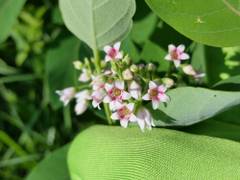
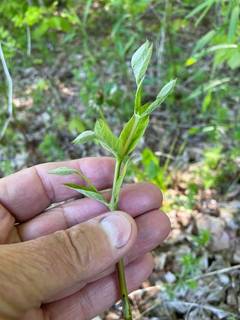
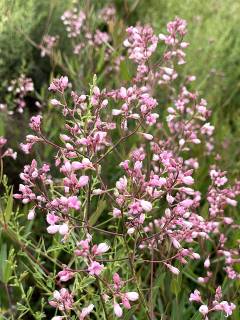
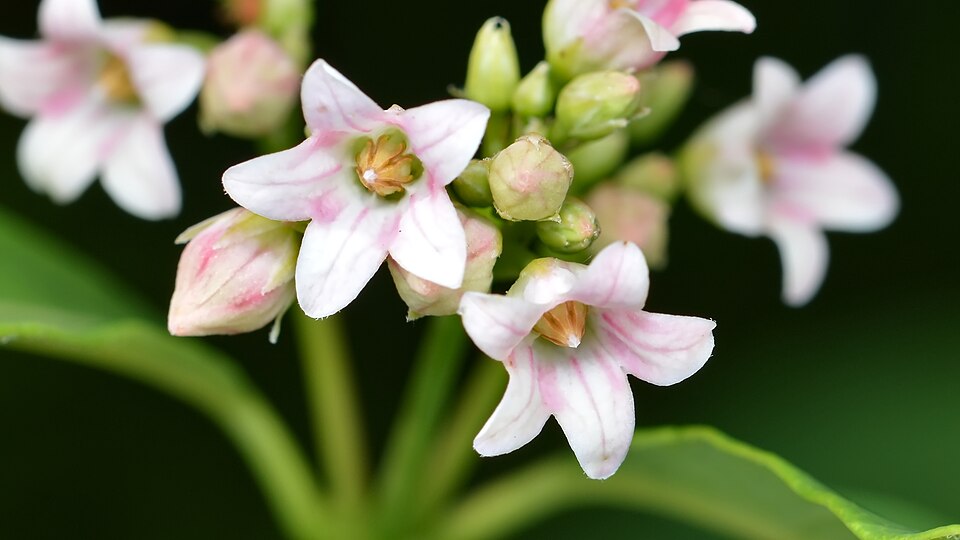
Apocynum × floribundum is a naturally occurring hybrid between A. androsaemifolium and A. cannabinum, intermediate between the two dogbanes. It grows as an herbaceous perennial 1–4 feet (30–120 cm) tall, with branching reddish stems that exude milky white sap when cut. Leaves are opposite, oval to lance-shaped, 1.5–4 inches (4–10 cm) long, with smooth margins and a pale underside. Small bell-shaped flowers, 0.2–0.3 inch (5–8 mm) long, appear in branched terminal clusters and range from white to pale pink with darker internal stripes. Bloom occurs in summer, from June to August, followed by slender paired seed pods 3–6 inches (8–15 cm) long that split to release silk-tufted seeds. All parts contain cardiac glycosides and milky latex that are toxic to humans, livestock, and pets if ingested. The plant spreads by deep rhizomes and can form colonies, which makes it persistent once established. It occurs in dry to moist open ground, field edges, and roadsides across much of North America.
Native Range
Apocynum × floribundum occurs across temperate North America where its parent species A. androsaemifolium and A. cannabinum grow together. It is found in dry to moist open habitats including fields, thickets, roadsides, and woodland edges.Suggested Uses
Occurs in naturalized and restoration plantings on dry banks and field margins. The flowers draw butterflies and other insects. The rhizomatous spread fills open areas, with plants spaced 24–36 inches (60–90 cm) apart.How to Identify
Appearance
Size & Dimensions
Height1' - 4'
Width/Spread1'6" - 3'
Bloom Information
Flowering runs through summer, from June to August. The small bell-shaped flowers open in branched clusters at the stem tips. Paired narrow seed pods develop afterward and split open in autumn to release seeds carried on silky tufts.
Detailed Descriptions
Flower Description
white to pale pinkFoliage Description
greenGrowing Conditions
Sun Requirements
Requires 6-10 hours of direct sunlight daily
• Full Sun: 6+ hours of direct sunlight
• Partial Shade: 3-6 hours of direct sunlight
• Full Shade: Less than 3 hours of direct sunlight
Care & Maintenance
Care Guide
Grows in full sun to light shade in dry to moderately moist soil of low to average fertility. It tolerates a soil pH from 5.5 to 7.5 and a range of soil types including sandy and rocky ground. Water needs are low once established, as deep rhizomes reach soil moisture. Hardy in USDA zones 3–9. Rhizome spread is vigorous and can become difficult to contain in cultivated beds. All parts contain cardiac glycosides that are toxic to people, livestock, and pets.Pruning
Stems are cut to the ground in late autumn or early spring after they die back. Rhizome spread can be limited by severing root runners at bed margins. No other pruning is required.Pruning Schedule
Prune: March & November
fallearly spring