Apios, Genus, americana, Species,
- Genus & species
American groundnut
Overview
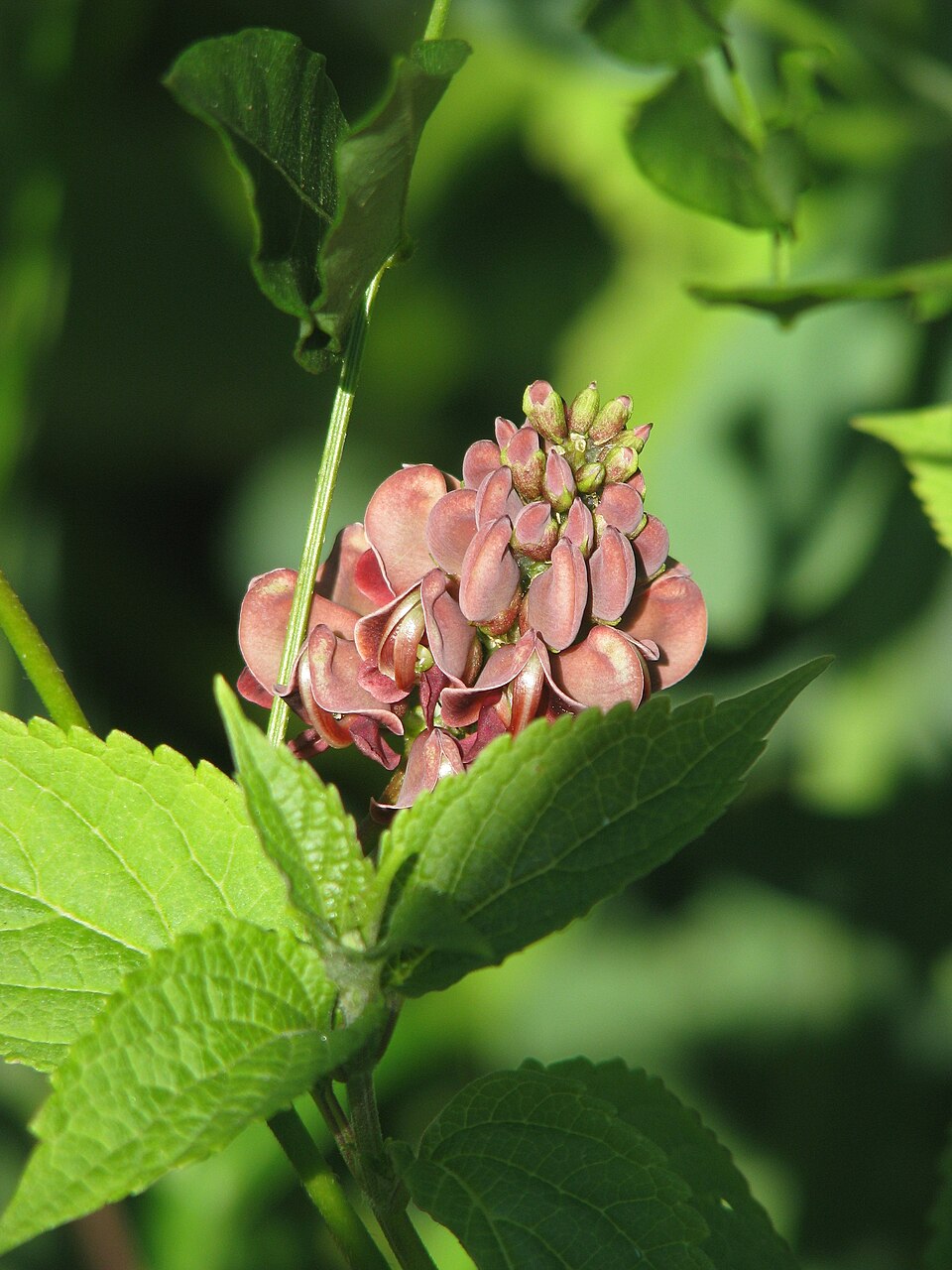
Apios americana is a herbaceous perennial vine in the pea family, twining 3-10 feet (1-3 m) over other plants from a string of edible underground tubers. The compound leaves have five to seven oval leaflets 1.5-3 inches (4-7.5 cm) long along a slender stem. From midsummer into early fall it produces dense clusters of fragrant pea-shaped flowers in maroon, brown, and pink, each about 0.5 inch (12 mm) long, with a strong sweet to musky scent. Flat seed pods 2-5 inches (5-13 cm) long follow, though many plants set little seed and spread mainly by tubers. The walnut-sized to egg-sized tubers strung along the roots are starchy and edible, long used as food by Indigenous peoples of eastern North America. Native to moist woods, thickets, stream banks, and marsh edges across central and eastern North America, it climbs into shrubs and fences in damp, sunny to part-shaded sites. It fixes nitrogen through root nodules and can spread widely by tubers. Top growth dies back in winter.
Native Range
Native to central and eastern North America, from eastern Canada south to Florida and Texas. It grows in moist woods, thickets, stream banks, marsh edges, and low meadows.Suggested Uses
Apios americana is grown as an edible-tuber crop, a nitrogen-fixing vine, and a screen on trellises and fences in moist, naturalized plantings. Its fragrant flowers draw bees and other pollinators. The tubers and seeds are edible cooked.How to Identify
Appearance
Size & Dimensions
Height3' - 10'
Width/Spread2' - 4'
Bloom Information
Detailed Descriptions
Flower Description
maroon to brownFoliage Description
greenGrowing Conditions
Sun Requirements
Requires 4-10 hours of direct sunlight daily
• Full Sun: 6+ hours of direct sunlight
• Partial Shade: 3-6 hours of direct sunlight
• Full Shade: Less than 3 hours of direct sunlight
Care & Maintenance
Care Guide
Apios americana grows in full sun to part shade in moist, fertile, slightly acidic soils, and tolerates wet ground and clay. It needs steady moisture and climbs by twining, so it benefits from a trellis, fence, or supporting shrubs. The plant spreads aggressively by tubers and can crowd neighbors, so a contained bed or buried barrier keeps it in check. It fixes its own nitrogen and needs little feeding. Tubers can be dug in fall or early spring for eating or replanting.Pruning
No formal pruning is needed. Stems can be cut back to the ground after they die in fall. Thinning or digging tubers helps control its spread.Container Growing
Suitable for container growing
Minimum container size: 5 gallons