Apios, Genus, spp., Multiple species,
- Genus
- Multiple species
groundnut
Eastern North America and eastern Asia
Overview
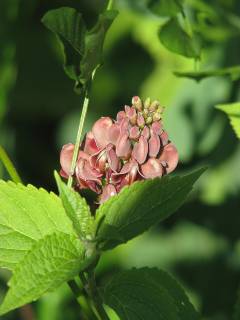
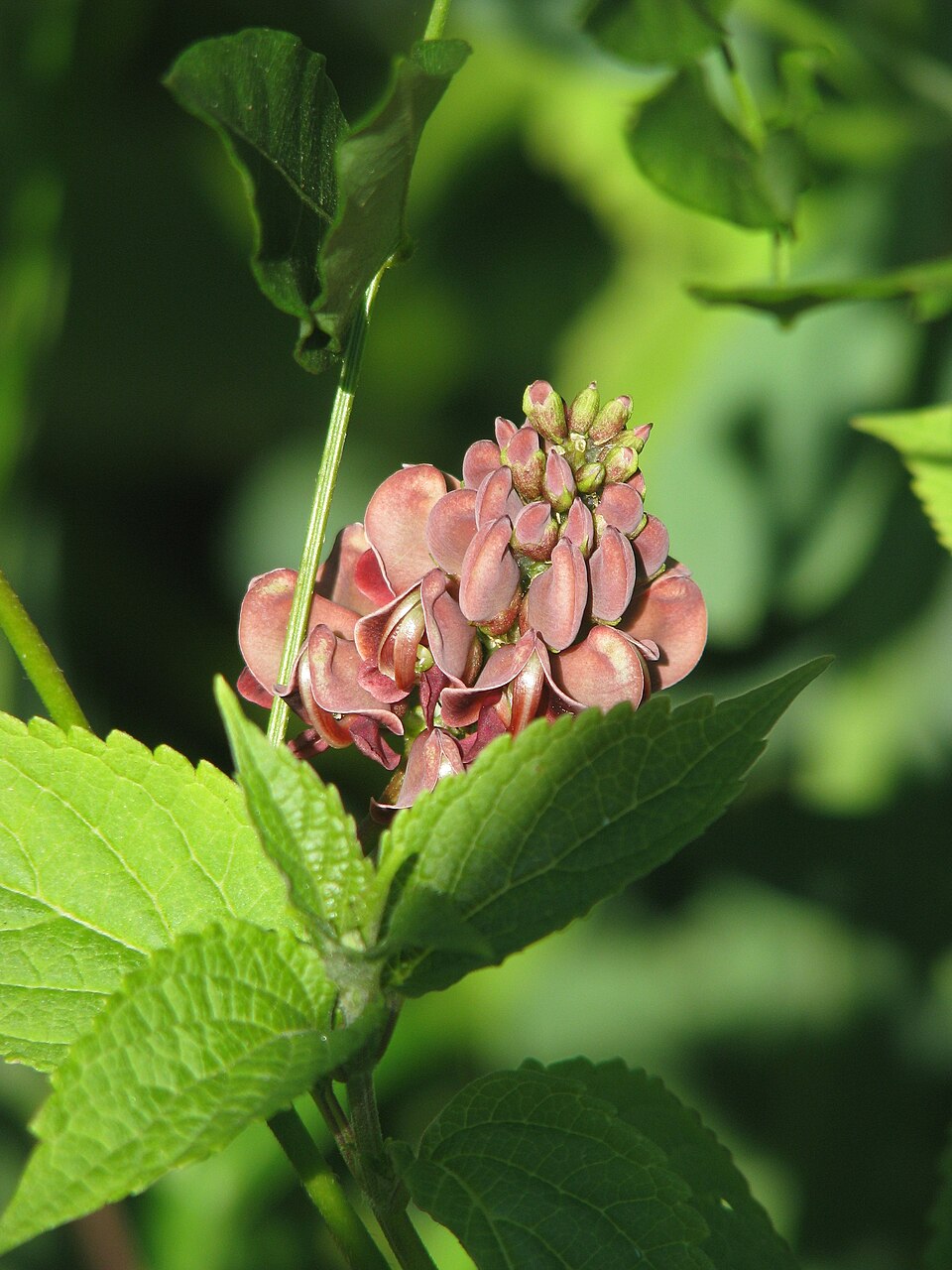
Apios is a genus of twining, herbaceous perennial vines in the pea family Fabaceae, with about ten species native to eastern North America and eastern Asia. Plants climb 3-13 feet (1-4 m) by twining stems that rise each year from a chain of starchy underground tubers strung along slender rhizomes. The compound leaves are pinnate, with five to seven oval leaflets each 1-3 inches (2.5-8 cm) long. In summer the vines produce dense clusters of pea-shaped flowers in maroon, brown-purple, or pink-red, 0.4-0.5 inch (10-13 mm) long and often fragrant, followed by narrow pods 2-4 inches (5-10 cm) long. A. americana, the groundnut or potato bean of eastern North America, was a food plant of Indigenous peoples and early colonists, its tubers eaten boiled or roasted and high in protein and starch. The genus grows in moist woods, thickets, marsh edges, and streambanks, generally in damp, fertile soil. Top growth dies back to the tubers each autumn and resprouts in late spring. Where conditions suit it, the spreading tuber chains let a single plant colonize a wide area over several seasons, which can make it weedy in cultivated ground.
Native Range
Native to eastern North America and eastern Asia. Plants grow in moist woodland, thickets, wet meadows, marsh margins, and along streams and riverbanks.Suggested Uses
Apios is grown on trellises and fences as an edible perennial vine and in native, woodland-edge, and rain-garden plantings. The tubers are harvested as a starchy root vegetable, and the summer flowers draw bees. The genus also stabilizes moist banks, where its tuber chains knit the soil.How to Identify
Appearance
Size & Dimensions
Height3' - 13'
Width/Spread2' - 6'
Bloom Information
Flowering occurs in mid to late summer, generally July to September. The fragrant flower clusters open over several weeks, drawing bees and other insects. Pods ripen in autumn, though many plants spread mainly by their tubers rather than by seed.
Detailed Descriptions
Flower Description
maroon to brown-purpleFoliage Description
greenGrowing Conditions
Sun Requirements
Requires 4-10 hours of direct sunlight daily
• Full Sun: 6+ hours of direct sunlight
• Partial Shade: 3-6 hours of direct sunlight
• Full Shade: Less than 3 hours of direct sunlight
Care & Maintenance
Care Guide
Plants grow in full sun to part shade in moist, fertile soil and tolerate wet ground and seasonal flooding, with a pH near 5.5 to 7.0. A. americana is hardy across USDA zones 3 to 9 and dies back to the tubers each winter. A trellis, fence, or neighboring shrubs support the twining stems, which can reach 13 feet (4 m) in a season. Propagation is easy from the tubers, which are simply replanted, or from seed and rhizome division. In rich, damp soil the tuber chains spread widely and can become weedy among cultivated plants. Little care is needed beyond support and containing the spread.Pruning
Stems are cut to the ground after they die back in autumn or in late winter before new growth begins. Thinning the twining shoots in spring keeps the vine from overwhelming its support. Lifting and dividing the tuber chains controls how far the plant spreads.Container Growing
Suitable for container growing
Minimum container size: 7 gallons