Image 1 of 10
1 / 10
Patrick Alexander from Las Cruces, NM, no rights reserved (CC0) · Wikimedia Commons
Aphanostephus, Genus, ramosissimus, Species,
- Genus & species
lazy daisy
South-central United States and northern Mexico
SunFull Sun
Overview
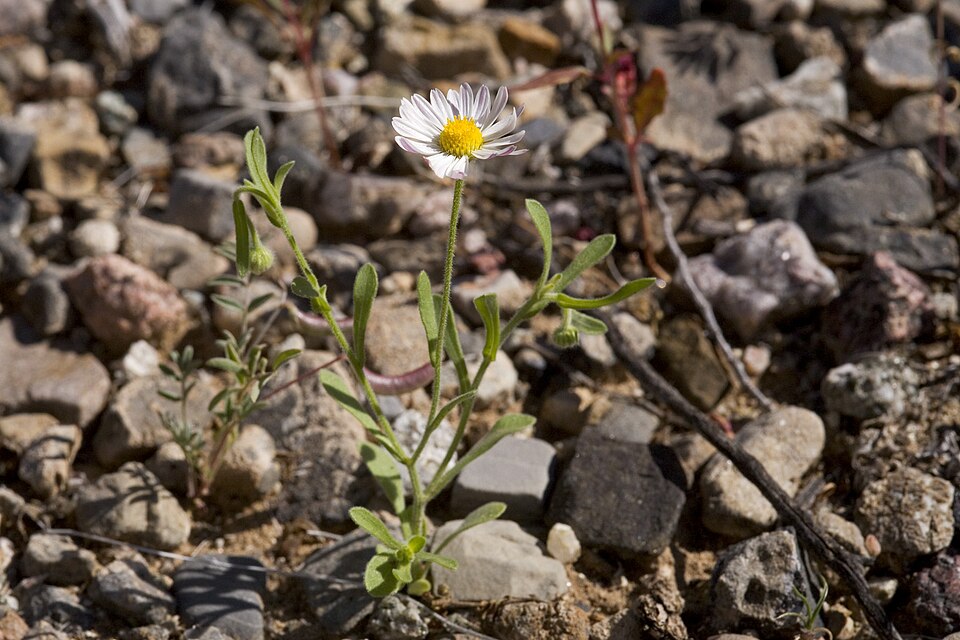
Aphanostephus ramosissimus is an annual, sometimes short-lived perennial, wildflower of the southern Great Plains, the southwestern United States, and northern Mexico, forming a branching, mounded plant 6-16 inches (15-40 cm) tall and 8-14 inches (20-35 cm) wide. The gray-green leaves are hairy and lobed to coarsely toothed, 1-3 inches (2.5-8 cm) long, mostly toward the base. From spring into summer it bears many daisy-like flower heads about 1-1.5 inches (2.5-4 cm) across, with white ray florets, often tinted pink or lavender beneath, around a yellow disk. The heads close at night and on cloudy days and droop in bud, which gives the plant its common name lazy daisy. A. ramosissimus grows in sandy and gravelly soils on prairies, plains, roadsides, and disturbed open ground, tolerating heat, drought, and alkaline soil. As a cool-season to summer annual it depends on seasonal rainfall and finishes after setting seed. Bees and small butterflies visit the open flowers. It self-sows readily and can fill in bare, sunny ground, returning from seed each year. It is typically grown massed in meadow plantings rather than as a single specimen because of its short stature and modest flower size.
Native Range
Aphanostephus ramosissimus is native to the south-central United States and northern Mexico, from Kansas and Colorado south through Texas, New Mexico, and Oklahoma into Mexico. It grows on sandy and gravelly prairies, plains, roadsides, and disturbed open ground.Suggested Uses
Grown in wildflower meadows, native and pollinator plantings, dry sunny borders, and roadside seedings for spring and summer color. It is spaced about 8 inches (20 cm) apart or broadcast as seed in open ground. The flowers support bees and small butterflies and the plant reseeds to maintain a stand.How to Identify
Appearance
Size & Dimensions
Height6" - 1'4"
Width/Spread8" - 1'2"
Bloom Information
Flowering runs from spring into summer, depending on rainfall, and can begin again after summer rains. The white, yellow-centered heads are 1-1.5 inches (2.5-4 cm) across, droop in bud, and close at night and in dull weather. Bees and small butterflies visit the open flowers for pollen and nectar.
Detailed Descriptions
Flower Description
white with yellow centerFoliage Description
gray-greenGrowing Conditions
Sun Requirements
Requires 6-12 hours of direct sunlight daily
• Full Sun: 6+ hours of direct sunlight
• Partial Shade: 3-6 hours of direct sunlight
• Full Shade: Less than 3 hours of direct sunlight
Water & Climate
Water Needs
Drought Tolerance
Drought tolerant when established
Care & Maintenance
Care Guide
Aphanostephus ramosissimus grows in full sun with 6 or more hours of direct light and well-drained sandy, loamy, rocky, or clay soil at pH 6.5 to 8.0. As a drought-adapted annual it relies on seasonal rainfall, tolerates heat and alkaline ground, and needs little or no irrigation. It grows on poor and disturbed soil and self-sows freely once established. Rich soil and frequent water produce leafy growth with fewer flowers. Plants finish and die after setting seed, so the planting renews itself from self-sown seedlings.Pruning
No routine pruning is needed. Light shearing after the first flush of bloom can tidy the plant and encourage more flower heads. Spent plants are left to self-sow or pulled once the seed has dropped.Container Growing
Suitable for container growing
Minimum container size: 1 gallons
Toxicity: Not assessed
UnknownPlanting Guide
Planting Methods & Timing
Planting Method
direct sow
Direct Sow Timing
Sow in fall or early spring on the soil surface
Days to Maturity
60–90 days
Plant Spacing
8 inches
Companion Planting
Good Companions