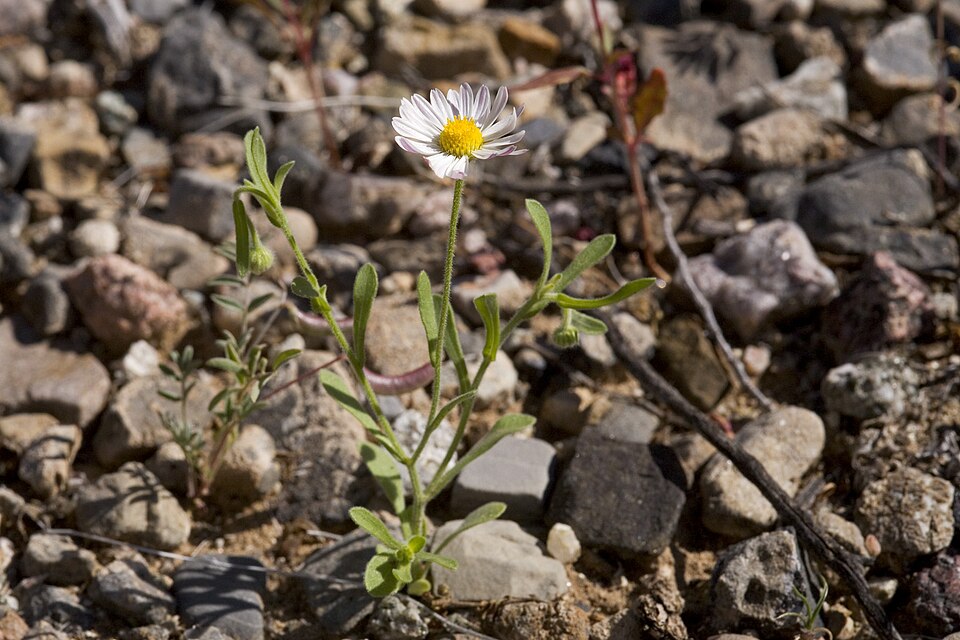
Aphanostephus, Genus, spp., Multiple species,
- Genus
- Multiple species
lazy daisy
South-central United States and Mexico
SunFull Sun
Overview
Aphanostephus is a genus of low-growing herbs in the daisy family Asteraceae, native to the south-central United States and Mexico and containing roughly four to six species. Plants are annuals or short-lived perennials forming clumps 4-16 inches (10-40 cm) tall, with branching, softly hairy stems and narrow, lobed or toothed leaves mostly gathered toward the base. From spring into summer the stems bear solitary flower heads 1-1.5 inches (2.5-4 cm) across, each ringed by 20 to 50 slender ray florets that are white above and often flushed pink or lavender on the reverse, surrounding a yellow central disk. The common name lazy daisy refers to the nodding flower buds, which droop on the stalk and straighten as the head opens each morning, the rays closing again by late afternoon. The genus grows on sandy plains, prairies, roadsides, and open disturbed ground, usually in dry, sunny sites. Seeds are small dry achenes topped with a low crown rather than a parachute of bristles, and plants self-sow freely where soil is bare. Several species bloom over a long season when soil moisture allows, persisting into autumn in milder areas. Heat and poor soil are tolerated, but the plants flop or rot in rich, damp ground.
Native Range
Native to the south-central United States, from Texas and the southern Great Plains into the Southwest, and through much of Mexico. Plants grow on sandy prairies, plains, roadsides, and other open, disturbed ground.Suggested Uses
Aphanostephus is grown in wildflower meadows, rock gardens, and the front of sunny borders, and is used in restoration of prairie and sandy open ground within its native range. The long succession of small daisies draws bees and other pollinators. Low and self-seeding, the genus also fills gaps between larger plants in dry, informal plantings.How to Identify
Appearance
Size & Dimensions
Height4" - 1'4"
Width/Spread6" - 1'
Bloom Information
Flowering runs from early spring through summer, often March to July, and can resume after late-season rains. Each head lasts several days, opening and closing with the daily light cycle, while a succession of new heads extends the display for weeks. Dry achenes ripen a few weeks after each flush of bloom.
Detailed Descriptions
Flower Description
white with yellow diskFoliage Description
green to grey-greenGrowing Conditions
Sun Requirements
Requires 6-10 hours of direct sunlight daily
• Full Sun: 6+ hours of direct sunlight
• Partial Shade: 3-6 hours of direct sunlight
• Full Shade: Less than 3 hours of direct sunlight
Water & Climate
Water Needs
Drought Tolerance
Drought tolerant when established
Care & Maintenance
Care Guide
Plants grow in full sun and sandy, sharply drained soil of low to moderate fertility, with a pH near 6.0 to 7.5. The genus tolerates heat, drought, and poor ground once established and tends to flop or rot in rich, moist, or shaded conditions. Annual species complete their cycle in a single season, while short-lived perennials may persist two to three years. Seed is sown directly in autumn or early spring in the final location, since the genus resents root disturbance from transplanting. Little feeding or watering is needed, and self-sown seedlings often carry a planting from year to year. Removing faded heads prolongs flowering but also reduces the self-seeding that renews short-lived plants.Pruning
No woody pruning applies. Shearing plants lightly after the first flush encourages branching and a second round of bloom. Leaving some seed heads to ripen lets annual and short-lived species renew themselves by self-sowing.Container Growing
Suitable for container growing
Minimum container size: 1 gallons
