Aphananthe, Genus, spp., Multiple species,
- Genus
- Multiple species
Muku tree
Eastern Asia, eastern Australia, Madagascar, and Mexico
SunFull Sun – Part Shade
Overview
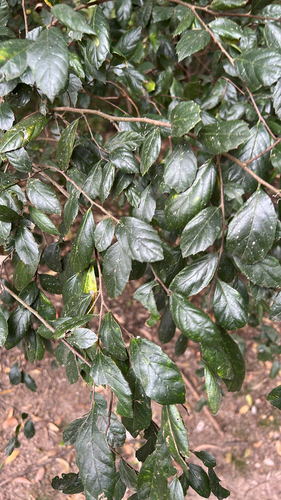
Aphananthe is a small genus of trees and shrubs in the hemp family Cannabaceae, with about five species spread disjunctly across eastern Asia, eastern Australia, Madagascar, and Mexico. Plants range from large deciduous trees reaching 50-65 feet (15-20 m) to smaller evergreen species of warmer forests. The alternate leaves are 2-4 inches (5-10 cm) long, oval with a tapering tip and sharply toothed margins, and in several species the upper surface is rough with silica-stiffened hairs, giving a sandpapery texture once used to smooth wood and bone. Small greenish flowers open with the new leaves in spring, with separate male and female flowers borne on the same tree, the males in clusters and the females single in the leaf axils. The genus is wind-pollinated and produces a small fleshy drupe 0.2-0.4 inch (5-10 mm) long that ripens black or dark purple and is eaten by birds. A. aspera of Japan, Korea, and China is the species seen most in cultivation, grown as a shade and street tree and used in timber for its hard, tough wood. Plants grow in moist valley forest and along streams, generally on fertile, well-drained soils. Old trees develop a broad, rounded crown and a straight, grey-barked trunk.
Native Range
Native to scattered regions of eastern Asia, eastern Australia, Madagascar, and Mexico, a distribution reflecting an ancient, once-continuous range. Plants grow in moist broadleaf forest, valley bottoms, and along streambanks.Suggested Uses
Aphananthe is planted as a shade tree, street tree, and parkland specimen, with A. aspera also trained for bonsai. The fruit feeds birds, and the dense canopy shelters nesting birds. In its native regions the tough wood is worked into tool handles, flooring, and turnery.How to Identify
Appearance
Size & Dimensions
Height10' - 65'
Width/Spread20' - 40'
Bloom Information
Flowering coincides with leaf-out in spring, typically March to May in the northern part of the range. The small green flowers are wind-pollinated and pass largely unnoticed. Fruit develops over summer and ripens to purple-black by early autumn, when it is taken by birds.
Detailed Descriptions
Foliage Description
greenGrowing Conditions
Sun Requirements
Requires 4-10 hours of direct sunlight daily
• Full Sun: 6+ hours of direct sunlight
• Partial Shade: 3-6 hours of direct sunlight
• Full Shade: Less than 3 hours of direct sunlight
Water & Climate
Water Needs
Drought Tolerance
Drought tolerant when established
