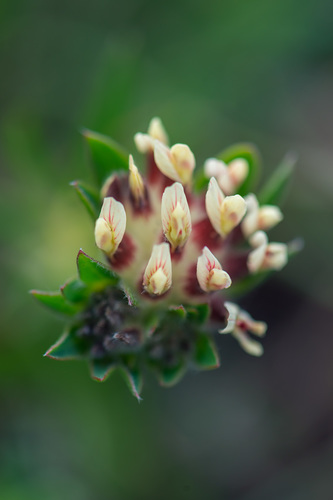
Anthyllis, Genus, vulneraria, Species,
- Genus & species
common kidney-vetch
Europe, North Africa, and western Asia
Overview
Anthyllis vulneraria is a low-growing, short-lived perennial legume in the family Fabaceae, forming a loose tuft 4-12 inches (10-30 cm) tall and wide. The pinnate leaves have a large terminal leaflet and several smaller side leaflets, and the stems and calyces are covered in soft, silky white hairs. In late spring and summer it bears rounded, clover-like heads 0.75-1.5 inches (2-4 cm) across packed with small pea-type flowers, usually yellow but sometimes orange, red, or cream, each cradled in a woolly, inflated calyx. As a legume it fixes nitrogen through root nodules, enriching poor soils. Anthyllis vulneraria grows on dry, lime-rich grassland, dunes, and rocky slopes and is a larval food plant for several blue butterflies. The seeds form in small pods held within the persistent calyces. Limitations include a short lifespan, a need for sharp drainage and lime, and a dislike of rich, wet, or acidic soils.
Native Range
Anthyllis vulneraria is native to Europe, North Africa, and western Asia, from the Mediterranean north to Scandinavia and east to the Caucasus. It grows on dry, calcareous grassland, sea cliffs, sand dunes, and rocky slopes, usually on thin, lime-rich soils.Suggested Uses
Anthyllis vulneraria is used in wildflower meadows, gravel and rock gardens, green roofs, and coastal and pollinator plantings, spaced 8-12 inches (20-30 cm) apart. It suits dry, lime-rich sites and is included in conservation seed mixes for chalk grassland and butterfly habitat.How to Identify
Appearance
Size & Dimensions
Height4" - 1'
Width/Spread6" - 1'
Bloom Information
Anthyllis vulneraria blooms from late spring into summer, roughly May to August, with rounded heads of pea flowers opening over several weeks. The flowers are pollinated by bees and other long-tongued insects. Seed pods develop inside the woolly calyces and ripen by late summer.
Detailed Descriptions
Flower Description
Yellow, sometimes redFoliage Description
Grey-green, silky-hairedGrowing Conditions
Sun Requirements
Requires 6-12 hours of direct sunlight daily
• Full Sun: 6+ hours of direct sunlight
• Partial Shade: 3-6 hours of direct sunlight
• Full Shade: Less than 3 hours of direct sunlight
Care & Maintenance
Care Guide
Anthyllis vulneraria grows in full sun on dry, sharply drained, neutral to alkaline soil and tolerates thin, stony, low-fertility ground. Rich or damp soil shortens its already brief life and encourages soft, floppy growth. As a nitrogen-fixing legume it needs no feeding and grows poorly with added fertiliser. It withstands drought, wind, and coastal salt once established but resents acidic or waterlogged conditions. Plants are often short-lived but renew themselves from self-sown seed where the ground is open. Few pests trouble it beyond occasional powdery mildew in still, humid air.Pruning
Anthyllis vulneraria needs little pruning. Shearing the plant lightly after the first flush of bloom can prompt a second, smaller flush and tidies the spent heads. Leaving some heads to ripen allows self-seeding, which sustains the planting as old plants fade.Pruning Schedule
Prune: June–July
summer
Container Growing
Suitable for container growing
Minimum container size: 1 gallons