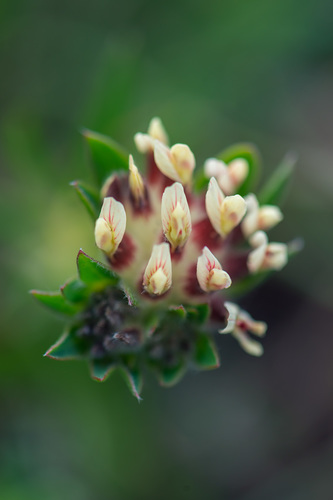
Anthyllis, Genus, spp., Multiple species,
- Genus
- Multiple species
kidney vetch
Europe, Mediterranean, North Africa, and western Asia
SunFull Sun
Overview
Anthyllis is a genus of about twenty to twenty-five species of annual and perennial herbs and small shrubs in the pea family, Fabaceae, native to Europe, the Mediterranean region, North Africa, and western Asia. Members range from low mat-forming herbs a few inches high to rounded silvery shrubs 2-4 ft (60-120 cm) tall, with pinnate or simple leaves often covered in silky hairs. The pea-shaped flowers are packed into dense, rounded or paired heads, each bloom backed by an inflated, woolly calyx, and come in yellow, orange, red, pink, or cream depending on the species. A. vulneraria, kidney vetch, is a variable grassland and coastal herb with yellow to red flowers, while A. barba-jovis, Jupiter beard, is a silver-leaved Mediterranean shrub. Flowering occurs mainly in late spring and summer, followed by small pods enclosed in the persistent calyx. Like other legumes, the genus fixes nitrogen through root nodules and grows on poor, dry, often lime-rich soils. Anthyllis tolerates drought and exposure but is short-lived in the herbaceous species and grows poorly on wet, heavy ground.
Native Range
Anthyllis is native to Europe, the Mediterranean basin, North Africa, and western Asia. A. vulneraria ranges widely across Europe into western Asia and North Africa, while the shrubby species are concentrated around the Mediterranean on dry, sunny slopes and coasts.Suggested Uses
Anthyllis is grown in rock gardens, gravel gardens, dry banks, coastal plantings, and wildflower meadows, and A. vulneraria is used in grassland restoration and as a larval food plant for small blue butterflies. The flowers draw bees and other pollinators. The silvery shrubby species suit hot, dry Mediterranean-style borders.How to Identify
Appearance
Size & Dimensions
Height2" - 4'
Bloom Information
Flowering occurs mainly in late spring and summer (roughly May-August in the Northern Hemisphere), when the rounded heads of yellow, red, pink, or cream pea flowers open over several weeks. In warm climates the shrubby species can flower earlier. Small one- to few-seeded pods follow, held within the persistent inflated calyx.
Detailed Descriptions
Flower Description
yellow, red, pink, or creamFoliage Description
green to silverGrowing Conditions
Sun Requirements
• Full Sun: 6+ hours of direct sunlight
• Partial Shade: 3-6 hours of direct sunlight
• Full Shade: Less than 3 hours of direct sunlight
Water & Climate
Water Needs
Drought Tolerance
Drought tolerant when established
Care & Maintenance
Care Guide
Across the genus, Anthyllis grows in full sun on light, sharply drained, low-fertility soils, including sandy, stony, and lime-rich ground, and tolerates drought, heat, and coastal exposure once established. Root nodules fix nitrogen, so the genus needs no feeding and grows poorly with rich soil or heavy watering. The herbaceous species are often short-lived and renew from self-sown seed, while the shrubby species are longer lasting but are damaged by winter wet and root disturbance. Sharp drainage and lean soil matter more than warmth for the hardy species, though the Mediterranean shrubs need frost protection in cool areas. Plants establish quickly from seed sown in spring.Pruning
The shrubby species are lightly trimmed after flowering to keep a compact, rounded shape, cutting into young growth rather than old bare wood, which is slow to reshoot. Herbaceous species need no pruning beyond removing spent flower heads, which can be left to self-seed. Frost-damaged shoots are cut back in spring.Container Growing
Suitable for container growing
Minimum container size: 2 gallons
