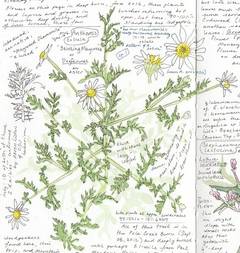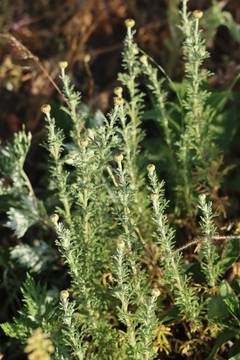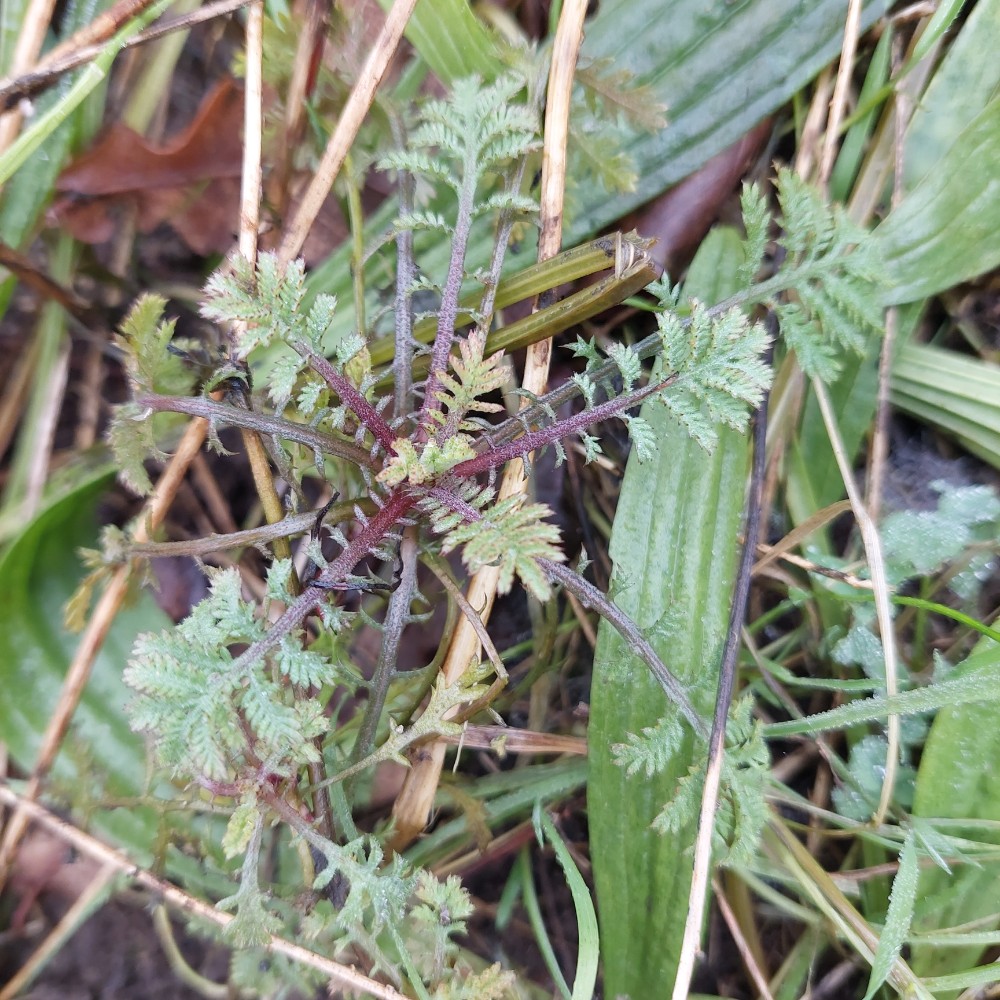
Anthemis, Genus, tinctoria, Species,
- Genus & species
Golden marguerite
Overview
Anthemis tinctoria is a short-lived, clump-forming perennial in the daisy family (Asteraceae), forming mounds 18–36 inches (45–90 cm) tall and 18–30 inches (45–75 cm) wide. Leaves are pinnately divided into narrow, toothed segments, 2–4 inches (5–10 cm) long overall, with a gray-green upper surface, a white-woolly underside, and a pungent, chamomile-like scent when bruised. Branching stems carry solitary, daisy-like flower heads 1–1.5 inches (2.5–4 cm) across, with yellow ray florets and a darker yellow, domed center, from June to September. Plants form a deep taproot and root at stem nodes where stems contact the soil. Clumps decline after 3–4 years and are replaced by self-sown seedlings in most gardens. Stems sprawl and open at the center in rich soil, in shade, and after heavy rain. Foliage is semi-evergreen in zones 6–7 and dies back in colder climates. The flowers were used historically to produce yellow textile dye, which gave the species its name.
Native Range
Anthemis tinctoria is native to Europe and western Asia, from Spain and the British Isles east through the Caucasus to Iran. It grows on dry, stony grassland, road verges, and open scrub on neutral to alkaline soils, and it has naturalized in North America, Australia, and New Zealand.Suggested Uses
Used in cottage gardens, sunny borders, rock gardens, and meadow plantings, spaced 18–24 inches (45–60 cm) apart. Flowers are cut for arrangements and visited by bees, hoverflies, and butterflies in summer. The species is used on dry banks and slopes in poor soil.How to Identify
Appearance
Size & Dimensions
Height1'6" - 3'
Width/Spread1'6" - 2'6"
Colors
Flower Colors
Foliage Colors
Bloom Information
Detailed Descriptions
Foliage Description
Gray-green above, white-woolly beneathGrowing Conditions
Sun Requirements
Requires 6-10 hours of direct sunlight daily
• Full Sun: 6+ hours of direct sunlight
• Partial Shade: 3-6 hours of direct sunlight
• Full Shade: Less than 3 hours of direct sunlight
Care & Maintenance
Care Guide
Grows in full sun in lean, well-drained soil with a pH of 6.0–8.0. Hardy in USDA zones 3–7. Established plants tolerate drought and low soil fertility, while rich soil and shade produce lax, floppy stems and fewer flowers. Soil that stays wet in winter causes crown rot. Plants are divided every 2–3 years in early spring to maintain vigor, and cuttings taken in early summer root in 2–3 weeks. Self-sown seedlings appear near the parent plant and are removed if the plant is not wanted in that location. Aphids and leaf miners occur on stressed plants.Pruning
Stems are cut back by one-third to one-half after the first flush in July to prompt reblooming and limit self-seeding. Plants are cut to 2–3 inches (5–7.5 cm) above ground in late winter or early spring before growth resumes. Dividing every 2–3 years replaces declining crowns.Pruning Schedule
Prune: February–March & July
winterearly springsummer
Container Growing
Suitable for container growing
Minimum container size: 2 gallons