Anisocarpus, Genus, madioides, Species,
- Genus & species
woodland madia
Overview
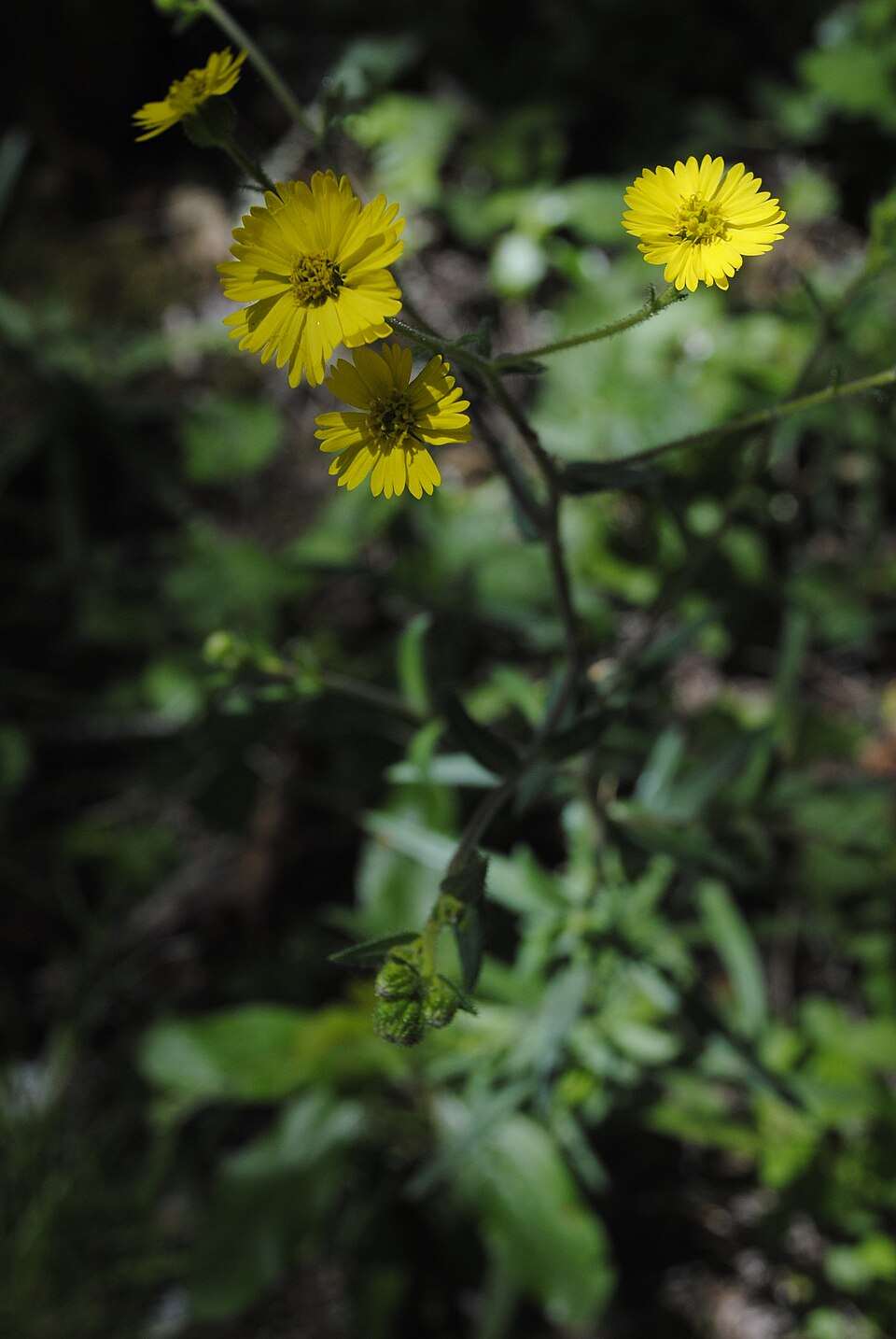
Anisocarpus madioides is a slender perennial herb reaching 1-3 feet (30-90 cm) tall, growing from a woody root crown with thin, sparsely branched stems. Most leaves are clustered near the base, lance-shaped to oblong, 1-4 inches (2.5-10 cm) long, and covered with soft glandular hairs that give the plant a faint resinous scent. The upper stem leaves are smaller and scattered. From late spring into summer it bears small daisy-like heads about 0.5-0.75 inch (1.3-2 cm) across, each with five to thirteen yellow ray florets, sometimes with a reddish base, around a yellow disk. The seeds are small flattened achenes without a pappus. A. madioides grows in the shade and partial shade of dry to medium woodland, forest openings, and chaparral edges from California north to Washington. Unlike most tarweeds of open ground, it grows on shaded forest floors. Top growth dies back after seed set in summer, and the plant regrows from the root crown.
Native Range
Anisocarpus madioides is native to the Pacific Coast of North America, from central California north to Washington. It grows in dry to medium woodland, conifer forest openings, and shaded chaparral edges at low to middle elevations.Suggested Uses
Anisocarpus madioides is grown in woodland and native plant gardens and in shaded restoration plantings, spaced 12-18 inches (30-45 cm) apart. Its summer flowers draw native bees and other pollinators to shaded sites. The aromatic foliage adds interest along woodland paths.How to Identify
Appearance
Size & Dimensions
Height1' - 3'
Width/Spread8" - 1'4"
Bloom Information
Detailed Descriptions
Foliage Description
GreenGrowing Conditions
Sun Requirements
Requires 2-6 hours of direct sunlight daily
• Full Sun: 6+ hours of direct sunlight
• Partial Shade: 3-6 hours of direct sunlight
• Full Shade: Less than 3 hours of direct sunlight
Care & Maintenance
Care Guide
Anisocarpus madioides grows in part shade to shade in dry to medium, well-drained woodland soil with a pH from 5.5 to 7.0. It tolerates summer drought once established and grows under the light shade of oaks and conifers. The plant dies back to a root crown after flowering and regrows the following spring. Self-sown seed adds new plants in suitable shaded ground. Growth is sparse in full sun and on wet soils. It needs no fertilizer in a woodland setting.Pruning
Cutting back the dried stems after seed set clears spent growth before the next season. Spent flower heads can be left to self-sow or removed to limit spread. No other pruning is needed.Pruning Schedule
Prune: August–September
summer