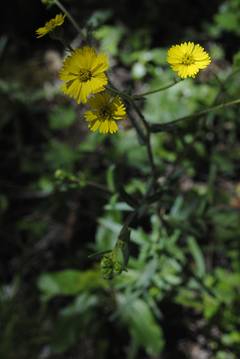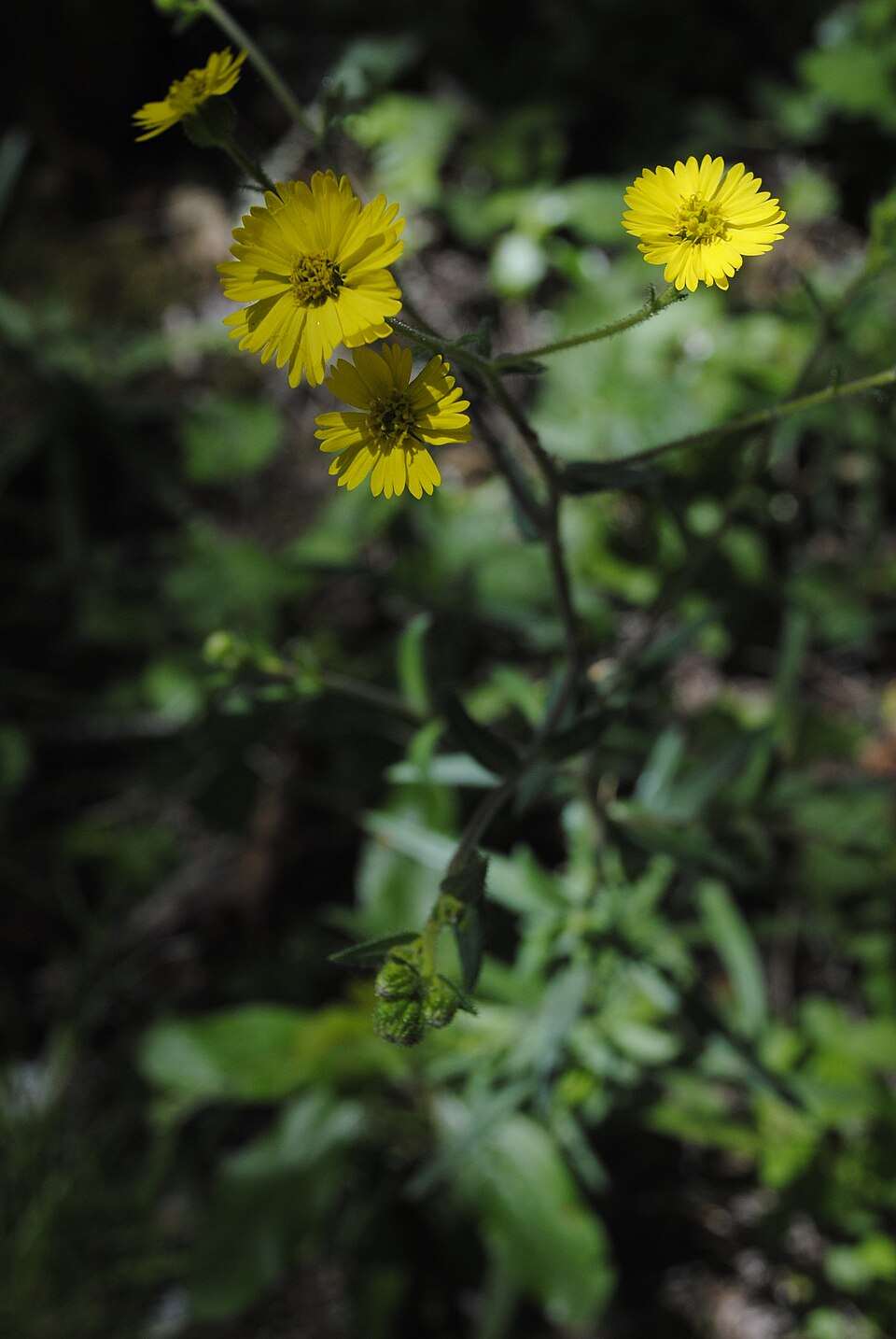
Anisocarpus, Genus, spp., Multiple species,
- Genus
- Multiple species
tarweed
SunFull Sun – Part Shade
Overview
Anisocarpus is a small genus of two species of tarweeds in the daisy family, Asteraceae, native to western North America and segregated from the related genus Madia. The genus includes both an annual and a woodland perennial, with slender, sparsely branched stems 8-40 in (20-100 cm) tall that are glandular and sticky toward the top and carry a strong resinous scent. The leaves are narrow and lance-shaped, mostly toward the stem base, and often clammy to the touch. From late spring into summer the stems bear small daisy-like flower heads with yellow ray florets, sometimes red-marked at the base, surrounding a yellow disc. The bracts around each head are studded with stalked glands. A. madioides, woodland tarweed, is a slender perennial of shaded forest and woodland edges, while A. scabridus is a rough annual of open mountain slopes. The flower heads close in strong midday sun and open toward evening. Anisocarpus sets seed and, in the annual, dies within one season; the sticky foliage can collect dust and small debris.
Native Range
Anisocarpus is native to western North America, with A. madioides ranging through the coastal mountains and forests from British Columbia to California, and A. scabridus restricted to higher elevations in the Klamath and Cascade ranges.Suggested Uses
Anisocarpus is grown in native-plant gardens, woodland edges, and naturalistic meadow plantings in its home region, where the summer flowers draw native bees and other pollinators. The seeds feed small birds. The resinous, sticky foliage limits its use in high-traffic or formal plantings.How to Identify
Appearance
Size & Dimensions
Height8" - 3'4"
Bloom Information
Flowering runs from late spring into late summer (roughly May-August in the Northern Hemisphere), with the small yellow heads opening over many weeks. The flowers tend to open in the cooler parts of the day and close under intense midday sun. Seed follows through summer and autumn, and the annual species relies on this seed to return the next year.
Detailed Descriptions
Foliage Description
greenGrowing Conditions
Sun Requirements
• Full Sun: 6+ hours of direct sunlight
• Partial Shade: 3-6 hours of direct sunlight
• Full Shade: Less than 3 hours of direct sunlight
Water & Climate
Water Needs
Drought Tolerance
Drought tolerant when established