Anethum, Genus, spp., Multiple species,
- Genus
- Multiple species
dill
Southwestern Asia and eastern Mediterranean
Overview
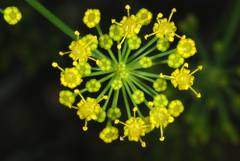
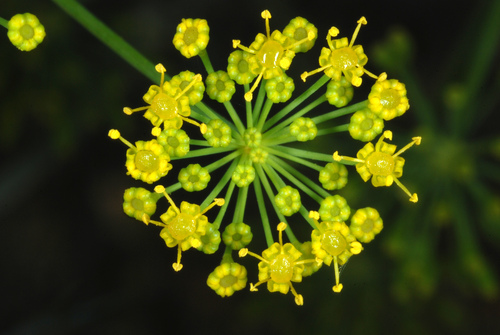
Anethum is a small genus of aromatic annual herbs in the carrot family, Apiaceae, native to south-western Asia and the eastern Mediterranean and grown worldwide as the culinary herb dill. The main species, A. graveolens, forms a single hollow, ribbed stem 24-60 in (60-150 cm) tall, branching toward the top, with feathery, repeatedly divided blue-green leaves whose thread-like segments give the plant a soft, airy outline. In summer the stems are topped by flat compound umbels 2-9 in (5-23 cm) across, carrying many tiny yellow flowers. These ripen to flattened, ribbed, strongly scented seeds. The whole plant is aromatic, with a scent used to flavour the leaves (dill weed) and seeds. Anethum grows quickly from seed, flowers, sets seed, and dies within a single season, and it self-sows readily where seed heads are left. Plants run to flower fast in hot, dry weather or when transplanted, which shortens the leaf harvest. The deep taproot recovers poorly from transplanting, so the genus is sown where it is to grow.
Native Range
Anethum is native to south-western Asia and the eastern Mediterranean region. A. graveolens has been cultivated since antiquity and now grows as a crop and garden escape across temperate and warm regions worldwide.Suggested Uses
Anethum is grown in herb and vegetable gardens, containers, and as a cut herb, with leaves used fresh in cooking and seeds used as a spice and in pickling. The summer umbels draw hoverflies, bees, and parasitic wasps, and the foliage is a larval food plant for swallowtail butterflies. It is often planted near cucumbers and brassicas and kept away from carrots and fennel, with which it can cross or compete.How to Identify
Appearance
Size & Dimensions
Height2' - 5'
Width/Spread10" - 1'6"
Colors
Flower Colors
Foliage Colors
Bloom Information
Flowering occurs in summer (roughly June-August in the Northern Hemisphere), a few months after spring sowing, when the yellow umbels open over three to five weeks. Hot, dry spells push plants into flower sooner. Seeds ripen from late summer into autumn, and successional sowings spread both leaf and flower production across the season.
Detailed Descriptions
Foliage Description
blue-greenGrowing Conditions
Sun Requirements
• Full Sun: 6+ hours of direct sunlight
• Partial Shade: 3-6 hours of direct sunlight
• Full Shade: Less than 3 hours of direct sunlight
Water & Climate
Water Needs
Care & Maintenance
Care Guide
Anethum grows in full sun in light, free-draining, moderately fertile soil, and needs shelter from strong wind because the tall hollow stems bend and snap. Seed is sown directly in spring once the soil warms, since the taproot makes transplanting unreliable. Steady moisture and cooler conditions prolong leafy growth, while heat and drought trigger early flowering. Plants need little feeding, and rich soil produces lax, floppy growth. For a continuous leaf supply, small batches are sown every few weeks. Self-sown seedlings appear where seed heads are left to shatter.Pruning
Pinching out the leading flower stem as it forms delays seeding and extends the leaf harvest. Leaves are cut as needed from the outside of the plant. Once flowering begins, leaf flavour declines, and stems are usually left to set seed or removed at the end of the season.Container Growing
Suitable for container growing
Minimum container size: 2 gallons
Toxicity
Non-toxicPlanting Guide
Planting Methods & Timing
Planting Method
direct sow
Direct Sow Timing
Spring after last frost once soil reaches 60-70 F (16-21 C); successional sowings every 3-4 weeks
Days to Maturity
40–70 days
Plant Spacing
10 inches