Anemopsis, Genus, spp., Multiple species,
- Genus
- Multiple species
yerba mansa
Overview
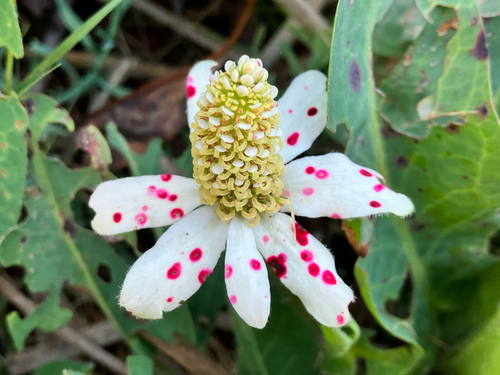
Anemopsis is a genus in the family Saururaceae with a single species, A. californica, known as yerba mansa, native to wet, often alkaline ground in the south-western United States and northern Mexico. It is a low, mat-forming perennial that spreads by red-tinged surface runners and rhizomes to form colonies, with flowering stems 8-24 in (20-60 cm) tall. The thick basal leaves are elliptic to oblong, 2-6 in (5-15 cm) long, on long stalks, and turn red as they age or with autumn cold. From spring into summer each stem bears what looks like a single white flower but is in fact a cone-shaped spike of many tiny flowers, ringed at the base by five to eight white petal-like bracts. The fragrant flower heads are followed by seed. Anemopsis grows in seeps, marsh edges, and seasonally flooded flats, tolerating saline and alkaline soils that few plants accept. Aggressive runners let it spread widely, so it can overrun small or mixed plantings.
Native Range
Anemopsis is native to the south-western United States, from California and Oregon east to Texas, and south into northern Mexico, where it grows in wetlands, springs, and alkaline or saline flats.Suggested Uses
Anemopsis is grown as a wetland and pond-margin groundcover, in rain gardens, and for stabilising damp, saline, or alkaline soils where other plants fail. The fragrant flower heads draw bees and other insects. The aromatic root and leaves have a long history of medicinal use among Indigenous peoples of the south-west.How to Identify
Appearance
Size & Dimensions
Height8" - 2'
Width/Spread2' - 4'
Bloom Information
Flowering runs from spring into summer (roughly March-July in the Northern Hemisphere, depending on latitude and water), with the white-bracted cones held above the foliage for several weeks. A long flooding season can extend bloom. As autumn cools, the leaves redden and the top growth dies back in colder areas.
Detailed Descriptions
Foliage Description
green turning redGrowing Conditions
Sun Requirements
• Full Sun: 6+ hours of direct sunlight
• Partial Shade: 3-6 hours of direct sunlight
• Full Shade: Less than 3 hours of direct sunlight
Care & Maintenance
Care Guide
Anemopsis grows in full sun to partial shade in wet to seasonally flooded soil and tolerates clay, alkaline, and saline ground that defeats many plants. It performs as a marginal or bog plant at pond edges, in rain gardens, and on damp flats, and accepts standing water in the growing season. Established colonies spread quickly by runners and can be hard to contain, so confined beds or pond margins suit it. Plants tolerate periodic drying once established but flower and spread most where moisture is steady. In cold-winter areas the top growth dies down and regrows from rhizomes in spring.Pruning
No formal pruning is needed. Spent flower stems and frost-damaged foliage can be cut back at the end of the season. Lifting and removing spreading runners through the year keeps colonies within bounds.Container Growing
Suitable for container growing
Minimum container size: 3 gallons
