Andersonglossum, Genus, spp., Multiple species,
- Genus
- Multiple species
wild comfrey
Overview
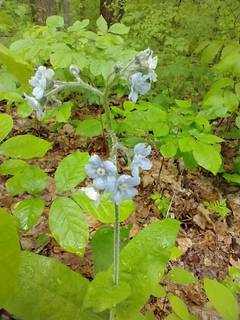
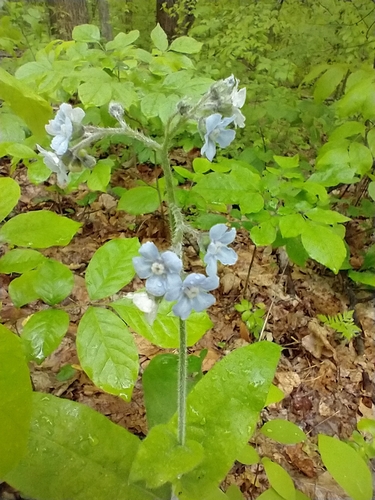
Andersonglossum is a small North American genus of three species of biennial to short-lived perennial herbs in the borage family, Boraginaceae, segregated from the Old World genus Cynoglossum. Plants form a basal rosette of oblong to elliptic leaves 2-12 in (5-30 cm) long, softly hairy on both surfaces, from which rises an erect, sparsely branched flowering stem 12-40 in (30-100 cm) tall. The upper stem carries open, curving racemes of small five-lobed flowers 0.2-0.4 in (5-10 mm) across, pale blue to lavender, occasionally white, each with a short tube and rounded lobes. Flowering is followed by clusters of four nutlets covered in barbed prickles that catch on fur and clothing, dispersing the seed. The most widespread species, A. virginianum, wild comfrey, grows in dry open woodland and along forest edges across eastern North America. Plants die back to the rootstock or set seed and die after flowering. The bristly foliage and clinging burs limit its use in tended borders.
Native Range
Andersonglossum is native to North America, ranging across much of the eastern and central United States and into southern Canada, with A. occidentale extending into the western United States and A. boreale reaching northern and boreal regions.Suggested Uses
Andersonglossum is grown in native-plant gardens, woodland edges, and naturalised dry shade, where the early pale blue flowers draw bees and other small pollinators. The barbed nutlets make it less suited to plantings beside paths or where pets pass.How to Identify
Appearance
Size & Dimensions
Height1' - 3'4"
Bloom Information
Flowering occurs in late spring to early summer (roughly May-June across much of the range), when the curving racemes open their pale blue to lavender flowers over two to three weeks. Barbed nutlets ripen through summer. Plants flower in their second year or later, after building a rosette the previous season.
Detailed Descriptions
Flower Description
pale blue to lavenderFoliage Description
greenGrowing Conditions
Sun Requirements
• Full Sun: 6+ hours of direct sunlight
• Partial Shade: 3-6 hours of direct sunlight
• Full Shade: Less than 3 hours of direct sunlight