Ananas, Genus, spp., Multiple species,
- Genus
- Multiple species
pineapple
Overview
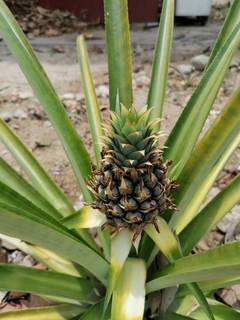
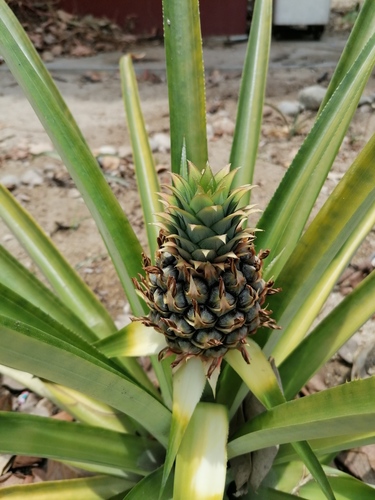
Ananas is a genus of about eight species of terrestrial bromeliads in the family Bromeliaceae, native to South America. Plants form a basal rosette of stiff, sword-shaped leaves 2–5 ft (0.6–1.5 m) long, usually edged with sharp recurved spines, though some cultivated forms are nearly spineless. The rosette produces a single flowering stalk topped by a dense head of small violet to reddish flowers held among colorful bracts. After flowering, the flower head and bracts fuse into a compound fruit, a syncarp, crowned by a tuft of short leaves. A. comosus, the cultivated pineapple, is grown across the tropics for this fruit, while variegated forms such as A. comosus var. bracteatus are grown for foliage. Leaf color spans deep green to grey-green, with cream or rose-pink margins in variegated selections. Ananas needs warmth year-round and is damaged below about 50°F (10°C), so outside the tropics it is grown under glass or as a houseplant. Each rosette flowers and fruits once, then produces offsets that continue the clump. Plants take 18–24 months to reach flowering size from an offset.
Native Range
Ananas is native to tropical South America, centered on southern Brazil and Paraguay, with the cultivated pineapple A. comosus now grown throughout the world's tropics. Wild species grow in open, seasonally dry savanna and forest-edge habitats.Suggested Uses
Ananas is grown as a tropical fruit crop, a warm-climate ornamental, and a houseplant grown for its bold rosette and fruit. Compact and variegated forms are used in containers, conservatories, and bright interiors. In frost-free gardens it is spaced 24–36 inches (60–90 cm) apart in sunny, well-drained beds.How to Identify
Appearance
Size & Dimensions
Height2' - 5'
Width/Spread3' - 6'
Colors
Bloom Information
Ananas flowers once per rosette, with no fixed season in the tropics; flowering is often triggered by day length, plant size, or ethylene exposure. The flower head opens its small violet flowers over two to four weeks. Fruit then develops over a further four to six months before ripening.
Detailed Descriptions
Flower Description
violet to reddish-purpleFoliage Description
green to grey-green, some forms with cream or rose marginsGrowing Conditions
Sun Requirements
Requires 6-12 hours of direct sunlight daily
• Full Sun: 6+ hours of direct sunlight
• Partial Shade: 3-6 hours of direct sunlight
• Full Shade: Less than 3 hours of direct sunlight
Care & Maintenance
Care Guide
Ananas grows in full sun to bright filtered light and free-draining, sandy or loam-based soil with a pH of 4.5–6.5. Plants store water in the leaf bases and tolerate short dry spells, needing water only when the top inch of soil dries. Warmth is essential, as growth stops below about 60°F (16°C) and tissue is damaged below 50°F (10°C). Feeding is light, using a balanced fertilizer during warm-season growth. Indoors, plants need the brightest position available and benefit from high humidity. Propagation is by removing the leafy crown, basal suckers, or stem slips and rooting them in warm, barely moist mix.Pruning
Ananas needs no routine pruning. Old outer leaves are removed once they brown, and the spent fruiting rosette is cut away after it declines to make room for offsets. Spines on the leaf margins make handling the larger forms awkward.Container Growing
Suitable for container growing
Minimum container size: 5 gallons