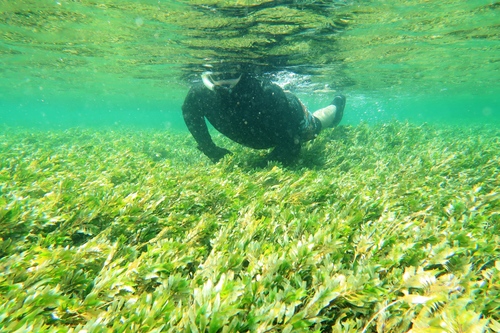
Amphibolis, Genus, antarctica, Species,
- Genus & species
sea nymph
Overview
Amphibolis antarctica is a marine flowering plant (seagrass) that grows fully submerged, anchored to sand and reef by a branching, wiry rhizome and root system. Erect stems reach 0.3-1 m (12-39 in) and are woody at the base, branching repeatedly and bearing clusters of strap-shaped leaves 1-4 cm (0.4-1.6 in) long at their tips. The leaves are mid- to dark green and often carry encrusting algae and small invertebrates. The species is dioecious, with separate male and female plants; pollination occurs underwater by thread-like pollen carried in currents. Fertilised female plants produce viviparous seedlings that develop a grappling structure of barbed bracts, which anchors the dislodged seedling to the seabed. Growth is slow, and meadows expand mainly by rhizome extension over many years. It grows in clear, cool coastal waters to depths of about 30 m (100 ft) and does not withstand prolonged burial, turbidity, or freshwater run-off, which can cause meadow dieback. Meadows stabilise sediment and form habitat for fish and invertebrates.
Native Range
Native to the temperate coastal waters of southern Australia, from Western Australia across South Australia to Victoria and Tasmania. It forms underwater meadows on sand and limestone reef in sheltered to moderately exposed bays.Suggested Uses
Occurs in marine seagrass meadows that stabilise seabed sediment and shelter fish and invertebrates. It is studied and managed in coastal conservation and seagrass restoration, not grown in cultivation. It has no role in terrestrial or container horticulture.How to Identify
Appearance
Size & Dimensions
Height1' - 3'3"
Bloom Information
Reproductive structures form underwater rather than as surface flowers. Female plants release viviparous seedlings mainly in late spring and summer, with timing varying with water temperature. Flowering and seedling release occur below the surface and are inconspicuous.
Detailed Descriptions
Foliage Description
greenGrowing Conditions
Sun Requirements
Requires 6-12 hours of direct sunlight daily
• Full Sun: 6+ hours of direct sunlight
• Partial Shade: 3-6 hours of direct sunlight
• Full Shade: Less than 3 hours of direct sunlight
Water & Climate
Water Needs