Amphibolis, Genus, spp., Multiple species,
- Genus
- Multiple species
sea nymph
Temperate coastal waters of southern and western Australia
WaterHigh
Overview
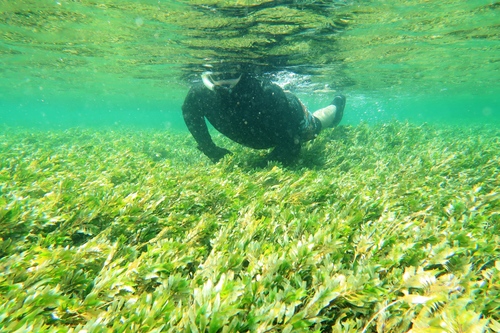
Amphibolis is a genus of two marine seagrass species in the family Cymodoceaceae, distributed along the temperate coasts of southern and western Australia. Plants grow fully submerged in subtidal sandy and rocky seabeds, anchored by branching rhizomes and wiry, woody stems that reach 8-60 in (20-150 cm) in height. The stems carry clusters of strap-shaped leaves 0.4-1.6 in (1-4 cm) long at their tips, each leaf 0.08-0.2 in (2-5 mm) wide. Leaf bases persist as fibrous remnants along older stems. The genus is dioecious, with separate male and female plants, and reproduces by seedlings that develop on the parent plant before release. A. antarctica and A. griffithii form underwater meadows that stabilise sediments and shelter marine invertebrates and fish. Growth is slow, and damaged meadows recover over years to decades. As fully marine plants, Amphibolis cannot be grown in terrestrial gardens or freshwater systems, and propagation outside its native marine habitat is not practiced. Foliage remains green year-round.
Native Range
Amphibolis occurs in the temperate coastal waters of southern and western Australia, from Western Australia across South Australia to Victoria and Tasmania. Both species are endemic to this region.Suggested Uses
Amphibolis meadows function ecologically as sediment stabilisers and nursery habitat for fish and invertebrates in temperate Australian coastal waters. The genus is encountered in marine ecology study and seagrass restoration rather than in horticulture.How to Identify
Appearance
Size & Dimensions
Height8" - 5'
Bloom Information
Flowering occurs underwater and is inconspicuous, with separate male and female plants releasing and receiving pollen through the water in late winter to spring (roughly July-October in the Southern Hemisphere). Fertilised female plants retain developing seedlings for several months before releasing them. No showy floral display is produced.
Detailed Descriptions
Foliage Description
greenGrowing Conditions
Water & Climate
Water Needs